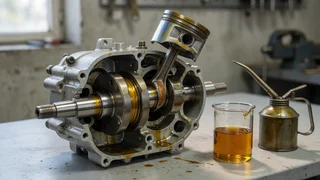
Pressure at Oil Cap / Crankcase Back Pressure
Pressure at the oil cap or measurable crankcase back pressure often points to the way combustion gases are moving inside an engine. A small amount of blowby is normal, but a noticeable pulse, smoke, or a cap that wants to lift suggests the crankcase ventilation path is no longer handling that volume cleanly. The key distinction is between ordinary flow from piston ring seepage and restricted ventilation, excessive ring wear, or a pressurized failure. Understanding that difference helps you judge whether the observation is a maintenance prompt or a sign of deeper mechanical wear.
Essential answer
Crankcase back pressure is the net result of blowby gases entering the crankcase faster than the ventilation system can evacuate them. In a healthy engine, small amounts of combustion gas slip past the piston rings, especially during cold starts or high load. The positive crankcase ventilation system routes those gases back into the intake so the crankcase stays near atmospheric pressure. If that path is restricted or the blowby volume rises sharply, pressure builds and becomes noticeable at the oil fill cap or dipstick tube.
The observation itself is evidence of a pressure imbalance, not proof that one specific part has failed. A clogged PCV valve, collapsed hose, sludge-blocked passage, or overfilled crankcase can all raise back pressure with rings that are still serviceable. Ring sealing problems, cracked pistons, or cylinder bore damage can also produce the same symptom. Because manufacturer-dependent valve and ventilation layouts vary, the cap location and hose routing should be confirmed on the specific vehicle before deciding whether the pulse is normal flow or a restriction.