Exhaust Flange Repair Kits: Choosing a Kit for a Leaking Joint
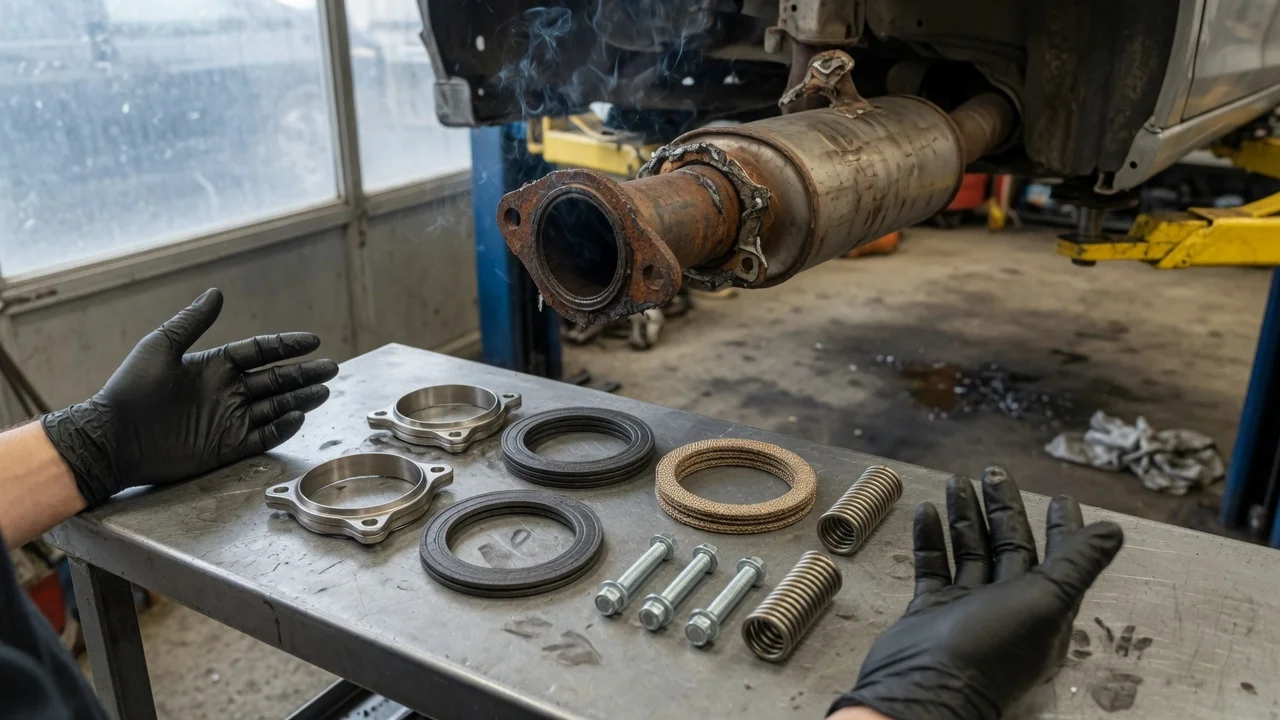
What an exhaust flange repair kit is
An exhaust flange repair kit is a collection of parts used to restore the bolted connection where two exhaust sections meet. The flange itself is the flat mating surface at the end of a pipe or exhaust component. Over time, heat cycling, moisture, road salt, rust and vibration can erode the flange faces, damage the studs or allow the sealing gasket to fail, producing an exhaust leak.
Kits are intended for joints that are otherwise serviceable. The repair usually addresses the connection hardware and gasket rather than replacing the entire exhaust section, but a kit cannot restore a flange that has lost most of its material or a pipe that has rusted through nearby.
When a flange kit is a realistic repair
A flange repair is most appropriate when the leak is at the joint and the surrounding pipe and component bodies are still solid. Common symptoms include an exhaust ticking or puffing noise at the joint, visible soot staining around the mating surfaces, or a broken stud that prevents the flanges from being clamped tightly together.
The repair is not a reliable substitute for replacement when the flange is heavily corroded, the pipe wall is thin or holed a short distance from the joint, or the mating surfaces are so uneven that a new gasket will not seal. In those cases, cutting out the damaged flange or replacing the affected pipe section is the more durable route. Vehicle age, local corrosion exposure and the condition of the adjacent exhaust hangers also affect whether the repaired joint will stay sealed.
Main types of exhaust flange repair kits
The useful choice depends mainly on what has failed at the joint. A kit that supplies a fresh gasket and fasteners may be enough when the flange faces are still sound, while a heavily pitted face or a damaged stud requires more.
Gasket and hardware kits: These contain a replacement flange gasket, bolts or studs, nuts and sometimes spring hardware. They suit leaks caused by an aged gasket or seized fasteners on an otherwise healthy flange. They cannot correct a deeply worn mating face. Flange split or repair plates: These are shaped metal halves or rings placed behind or over a damaged flange to restore clamping surface. They can help a corroded or partly missing flange, but the remaining structure must be strong enough to support the plate, and the pipe must still be sound. Band or clamp repair assemblies: These wrap around the leaking joint and compress it, often using a sealing sleeve. They can seal irregular joint shapes without requiring the original bolt positions to be intact. They are a lower-precision fit and may be less effective where there is heavy movement or very uneven surface damage. Flange repair sections: Some kits provide a short pipe section or weld-on replacement flange. These require cutting and joining rather than simple re-clamping and are effectively a partial exhaust repair rather than a bolt-on joint service.
Choosing a kit for a leaking joint
First inspect the joint to identify what is leaking and what remains reusable. A failing gasket with intact flanges and removable fasteners points to a gasket and hardware kit. A broken stud or heavily damaged fastener boss points to a kit that can restore clamping or a repair plate, provided the surrounding metal is solid. A badly eroded or uneven flange face is more likely to require a plate, a weld-in repair section or replacement of the affected component.
Material fit is also important. The kit must match the joint size, flange shape, stud spacing and the way the connection is intended to move. Some joints use a flexible spring-loaded connection, while others are rigidly clamped. A rigid replacement kit installed at a flex joint can transfer movement to another part of the exhaust and create a new failure. Physical fit alone is not enough: the repair must preserve the joint type and allow the exhaust to move with the engine and suspension.
Because exhaust flanges vary by vehicle, engine and market, compatibility cannot be assumed from generic sizing. Check the kit against the actual flange diameter, bolt spacing and the shape of the mating surface on the vehicle before purchase.
What a kit cannot solve
A flange repair kit treats the joint, not the complete exhaust system. It will not repair holes or thin areas in a pipe away from the flange, failed catalytic converter or muffler internals, broken hangers, or leakage from a different joint that is simply close enough to sound similar. If the leak persists after the joint is sealed, inspect the rest of the system before assuming the kit is defective.
Final selection guidance
Choose the simplest kit that matches the actual failure. A good gasket and fresh fasteners are the best repair when the flange faces are intact and cleanable. Add a repair plate or split flange only when the structure needs it, and move to a repair section or replacement when the surrounding pipe cannot support a clamped repair. Measure the installed joint, confirm the kit matches the original connection type, and replace any fastener that is corroded or stretched rather than reusing it.