Exhaust Flange Repair Kits: Fitment and Repair Limits
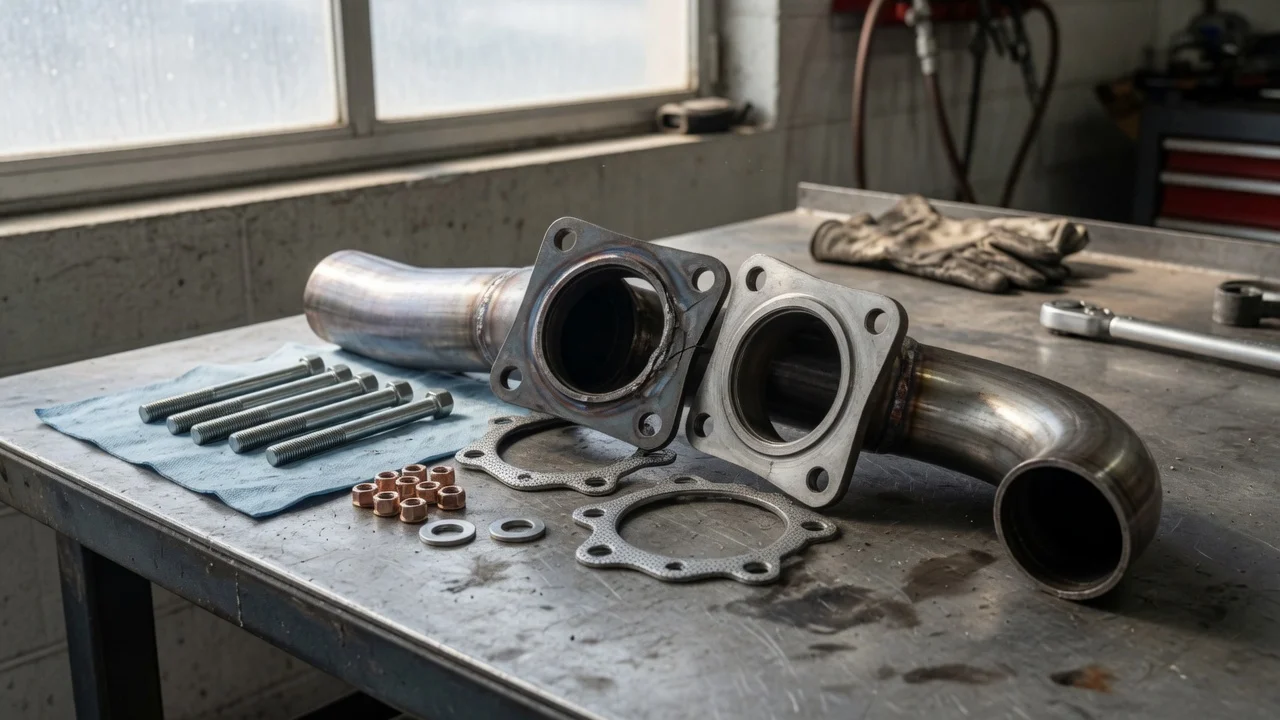
What an exhaust flange repair kit is meant to do
An exhaust flange repair kit supplies parts to restore a bolted joint between two exhaust sections when the original flange has become too thin, cracked, or rusted to hold a gasket and fastener securely. The direct answer to the immediate question is that a repair kit is a viable repair only when the flange face is still accessible and enough surrounding pipe or flange material remains for the replacement parts to clamp or bolt onto. If the pipe has rotted at the joint or the flange has separated from the pipe, a bolt-on kit will not restore a reliable seal by itself.
What the kit actually contains
Typical kits include two flat flange halves or saddle plates, a gasket, fasteners, and sometimes spring hardware. The repair flange halves are usually installed on the outside of the damaged joint after the original fastener ears have deteriorated. Their purpose is to create a fresh clamping surface so the joint can be tightened against a new gasket.
Fitment depends on the joint, not just the pipe diameter
A kit is not universal simply because the pipe diameter matches. The inside opening of the repair flange must fit the outside face of the joint, and the bolt spacing must align with the flared section or gasket land. The component must also clear heat shields, nearby sensors, crossmembers, and the opposite pipe section. Fitment should be confirmed against the specific application whenever possible; if the listed application is not available, measure the bolt center distance and the flange face width before purchasing.
Repair limits and the condition that changes the answer
The main condition that materially changes the answer is the state of the pipe where the flange meets it. Repair flanges work when the pipe wall is still present behind the flange, allowing the kit to be tensioned against it. They do not replace missing pipe metal. If the neck of the pipe is perforated, severely thinned, or broken away near the joint, tightening the fixings may deform the pipe or fail to hold.
A kit is more likely to work when the flange ears or face are corroded but the pipe behind them remains solid. A kit is less appropriate when the pipe has rotted through at the flange neck or the joint has separated. A universal split flange can bridge a damaged original face, but it cannot restore a joint that relies on a missing pipe stub.
Diagnosing the joint before spending money
If the symptom is an exhaust leak at the joint, distinguish a failed gasket or loose fastener from structural flange damage before choosing a kit. Clean the area and inspect for a defined gap at the mating surfaces, broken bolt ears, or a thin, flaking flange face. A gasket-only failure may be corrected with a new gasket if the fasteners can still be removed and tightened. If the bolt heads or flanges crumble during inspection, that points toward structural repair.
What to check next
Check whether the original gasket land is intact and whether the fasteners still have something to bear against. If the metal directly beneath the bolt holes is gone, the kit must sit on a stable section of the joint, not on the same weakened area. If probing the pipe near the flange produces soft spots or holes, stop considering a bolt-on repair and prepare for welding or replacement of that section.
When to weld or replace instead
A welded repair or pipe replacement is the appropriate next step when the pipe has lost structural wall thickness at the joint, when the flange has separated from the pipe, or when the joint is positioned so closely to another component that a repair flange cannot be installed without interference. A kit may also be unsuitable if the original joint uses an unusual shape that the supplied halves cannot capture.
Limits of the available information
No specific fitment details can be stated here without the vehicle year, make, model, engine, and drivetrain configuration. The supplied material does not contain the application list for any particular kit. For an accurate fitment decision, match the repair flange to that vehicle's exhaust joint and confirm the physical measurements of the original flange rather than relying on pipe diameter alone.