Engine Bay Fire Suppression: What It Is and How It Differs
The short answer
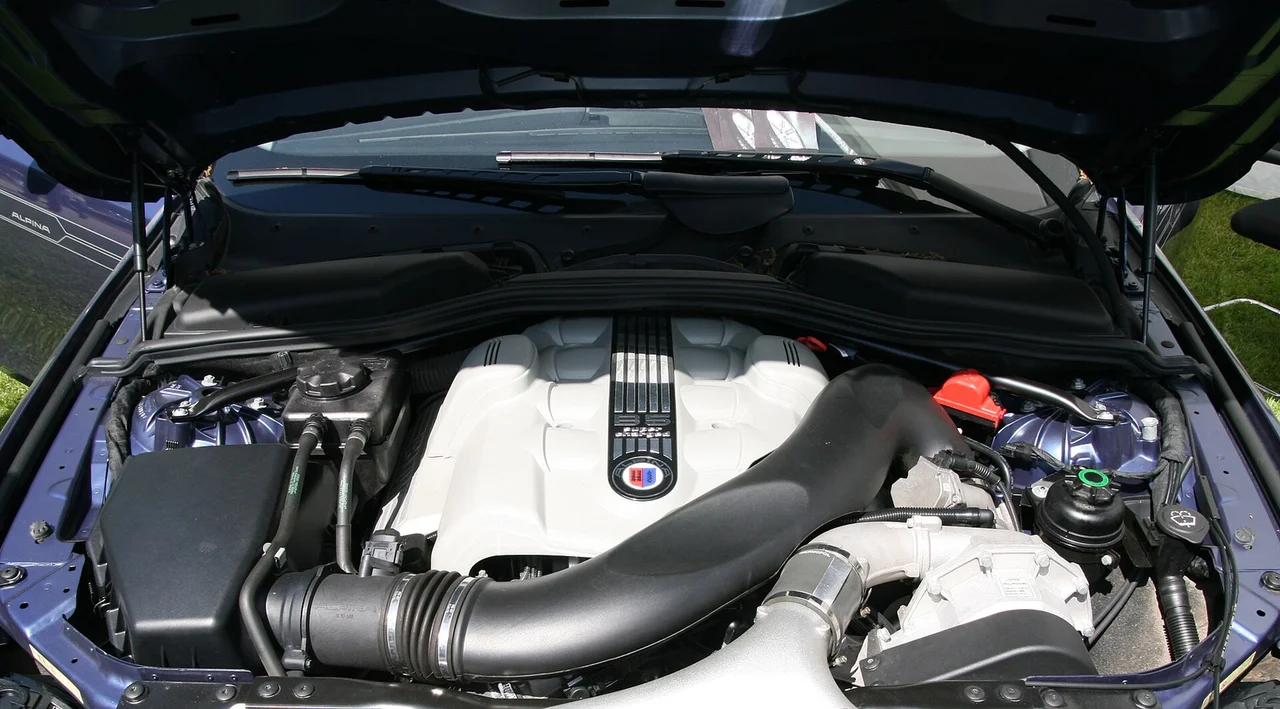
An engine bay fire suppression system is equipment mounted in or near the engine compartment that detects a fire and discharges an extinguishing agent onto the fire zone, either automatically or when the driver activates it. Its purpose is to knock down a fire early, often before it spreads beyond the engine bay, and to buy time for occupants to get out. It is not standard equipment on most passenger cars sold in the US. It is far more common on vehicles where engine fires are a known risk or where evacuation is slow, such as race cars, buses, heavy trucks, and off-road, mining and forestry equipment.
One qualification changes the answer for many readers: these systems protect the engine compartment, not the whole vehicle. On a battery-electric vehicle, an engine bay system would not address a traction battery fire, which behaves differently and is generally not something an onboard suppression system of this type is designed to stop.
How an engine fire suppression system works
Designs vary by manufacturer and application, but most systems combine the same basic parts. The details below describe common approaches in general terms; specific performance depends on the product and installation.
Detection: a heat-sensing element routed through the engine bay. Common types include pressurized polymer tubing that ruptures at high temperature, linear heat-detection wire, or point heat sensors. Agent container: a pressurized cylinder or canister holding the extinguishing agent, mounted where it is protected from the fire zone. Distribution: nozzles or the detection tubing itself, aimed at likely ignition points such as the exhaust manifold, turbocharger, fuel lines and electrical connections. Activation: automatic discharge when heat is detected, a manual pull or push control for the driver, or both. Alerts and shutdown: some systems signal the driver and can be wired to shut down the engine or fuel supply on discharge.
Types of extinguishing agent
The agent determines how the system fights fire and what cleanup looks like afterward. Systems may use one agent or combine two.
Dry chemical: powder that interrupts combustion quickly; effective on fuel and electrical fires but leaves residue that requires cleanup. Wet chemical or foam: liquid agents that cool surfaces and help prevent reignition from hot components. Clean agents: gaseous agents that leave little residue; they work best in enclosed spaces and can be less effective where airflow disperses them. Condensed aerosol: fine particles generated on activation that suppress flame chemistry in an enclosed volume.
Reignition is a recurring concern in engine bays because exhaust parts and turbochargers stay hot after the flame is out. Agents with a cooling effect, or dual-agent systems, are often chosen for that reason.
How it differs from a handheld extinguisher
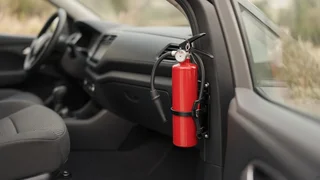
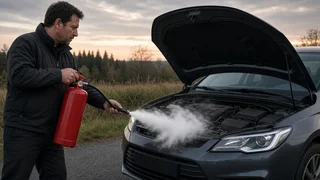
Response time: a fixed system can act as soon as heat is detected, while a handheld extinguisher depends on someone noticing the fire, stopping and reaching it. Access: a fixed system discharges inside the engine bay without anyone opening the hood. Opening the hood on a burning engine feeds the fire with air and exposes the person to flames. Coverage: a handheld unit can be aimed at any part of the vehicle, including the cabin or a tire fire, but only from outside and only with whatever reach the user has. Capacity: fixed systems are sized for a defined protected area; a handheld unit's capacity is limited and the fire may outlast it. Maintenance: both need periodic inspection, but fixed systems also require checks of detection lines, mounts and pressure, typically by a qualified technician.
Who typically uses engine fire suppression systems
Motorsport is the most familiar setting, where sanctioning bodies may require onboard systems depending on the class. Commercial and industrial users adopt them because a fire can destroy an expensive machine, injure an operator who cannot exit quickly, or endanger many passengers. Buses, mining and construction equipment, forestry machines and some heavy-duty trucks fall into this group. Aftermarket kits are also sold for private vehicles, including off-road builds and modified performance cars. Whether a system is required for a given vehicle depends on the jurisdiction, fleet policy, insurer or racing rules, and those requirements should be checked directly.
Limits to understand before relying on one
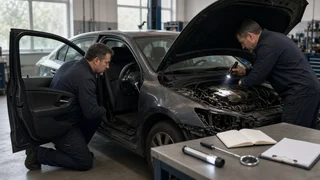
It is a first response, not a guarantee. If a fire starts, the priority remains stopping safely, switching off the engine, getting everyone out and away from the vehicle, and calling 911. Installation quality matters. Poorly routed detection lines or misaimed nozzles can leave ignition points unprotected, and incorrect mounting can affect other vehicle systems. A system covers only its protected zone. Fires in the cabin, cargo area, wheels or fuel tank may be outside its reach. After any discharge, the vehicle should be inspected before it is driven, because the original cause is still present and some agents leave corrosive residue. Systems need ongoing maintenance and recharging after use to remain effective.
What the available information does not cover
No verified data was available for specific products, prices, discharge times, agent capacities, certifications or test results, so this overview does not compare brands or claim performance figures. Anyone choosing a system should ask the manufacturer or installer for documented specifications, the standards the system has been tested against, compatibility with the specific vehicle and powertrain, and the inspection schedule it requires.