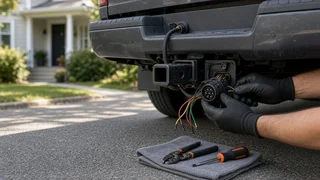
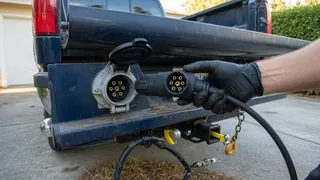
Electric trailer brake wiring connector
When a trailer brake controller sends a signal, the electric trailer brake wiring connector is the critical junction that carries voltage from the tow vehicle to the trailer's brake assemblies. Understanding this connector helps drivers diagnose weak braking, intermittent response, or installation tasks. It differs from a basic lighting plug because it must handle controlled current for braking force, not simply power lamps. The wiring path, pin arrangement, and ground quality all influence how predictably a trailer decelerates.
Essential answer
The electric trailer brake wiring connector is the electrical interface that links a brake controller in the tow vehicle to the electromagnet assemblies inside the trailer's brake drums. Unlike hydraulic surge couplers, this system uses an electrical signal to vary braking pressure. A seven-way round or blade-style connector often carries the brake output wire, typically blue, alongside circuits for tail lights, turn signals, and a 12-volt auxiliary feed. Confirming the correct pin position prevents applying brakes when activating a turn signal.
The connector's role is not to decide how much braking occurs; the controller does that by modulating current based on deceleration or a manual lever. The plug and socket simply provide a clean, low-resistance path. Corrosion, loose terminals, or a poor ground can mimic a failed controller because voltage drop changes how forcefully the brake magnets engage. When diagnosing weak trailer brakes, inspecting this junction and the related brake fluid, caliper, and friction material conditions on the tow vehicle separates trailer-side electrical faults from tow-vehicle hydraulic issues.