What Is a Trailer Wiring Connector?
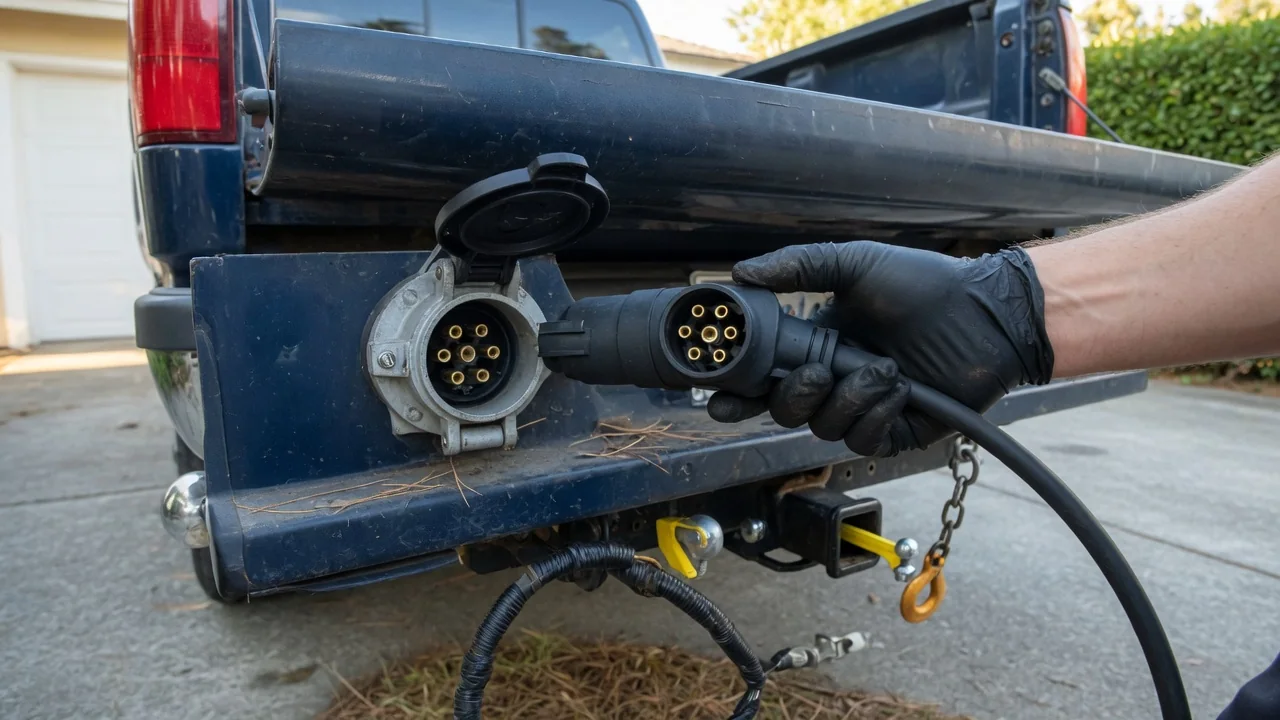
What is a trailer wiring connector? It is the plug-and-socket link that carries electrical signals from a tow vehicle to the trailer behind it. When the driver brakes, signals a turn, or switches on the headlights, matching lights on the trailer respond because each circuit crosses this connection. Understanding how it works makes towing safer and helps explain why trailer lights sometimes misbehave.
Common functions
At its simplest, the connector passes a small group of lighting circuits across the hitch. One terminal typically carries the running or tail lights, others carry the left and right turn signals, and a ground terminal completes every circuit back to the tow vehicle. On many basic setups the brake lights share the turn signal wires, so pressing the pedal lights both sides at once, while a turn signal flashes only one side. This arrangement lets a compact flat plug handle the essential lighting duties for small utility and boat trailers.
Larger round connectors add circuits beyond basic lighting. Depending on the vehicle and trailer, extra terminals may carry an electric brake signal from a brake controller, a power feed for charging a trailer battery, or a reverse light circuit. The brake signal is notable because it varies in strength: the controller sends more output as the driver brakes harder, and the trailer's brakes respond in proportion. Terminal layouts and the functions actually wired differ among vehicles, so the owner's manual or a vehicle-specific wiring diagram is the reliable reference.
Connector care
Because the connector lives near the rear bumper, it is exposed to road spray, salt, dust, and the occasional knock from a loading ramp. Moisture is the main enemy: it encourages corrosion on the metal terminals, which shows up as green or white deposits and raises electrical resistance. A corroded terminal may still pass enough current to make a light glow dimly, yet fail under the heavier load of brake lights or electric brakes. Keeping the protective cover closed whenever the trailer is unhitched goes a long way toward preventing this.
Routine care is mostly inspection and cleanliness. Looking into the socket and at the plug for bent, loose, or discolored terminals takes only a moment before hitching up. Many owners apply a light film of dielectric grease to help shed moisture, and the trailer-side cable deserves attention too, since a plug left dragging on the ground or a cable pinched at the tongue can damage insulation. Some vehicles mount the socket in the bumper and others beneath it on a bracket, which changes how much grime it collects and how often it needs a look.
Test before use
A quick function check before every trip confirms that signals are actually crossing the connection. With the trailer plugged in, switch on the parking lights, then operate each turn signal, the hazard flashers, and the brake pedal while a helper watches from behind; a reflective wall or garage door works when alone. Each trailer light should match what the tow vehicle is doing, at similar brightness on both sides. If the trailer has electric brakes, many brake controllers display a connection indicator, though its appearance varies by brand and vehicle.
When a light fails the check, the pattern of the failure is useful evidence. One dead lamp points toward that bulb or its wire, while every light acting strangely together often suggests a poor ground. A simple circuit tester or plug-in connector tester can show whether the vehicle socket is delivering each signal, which separates a vehicle-side fault from a trailer-side one. Some modern vehicles monitor trailer circuits and display a dashboard warning or store a fault code; such messages indicate where to look rather than proving a specific part has failed.
Everyday Use and Observations
In daily towing, a healthy connector goes unnoticed: the plug seats firmly, a latch or the spring-loaded cover holds it in place, and the trailer lights mirror the vehicle without flicker. The cable should have enough slack to follow tight turns without stretching, yet not so much that it drags on the pavement. Drivers often notice problems first through indirect clues, such as a turn signal indicator flashing faster than normal on some vehicles, a trailer warning on the instrument cluster, or another motorist pointing out a dark lamp.
Intermittent behavior deserves attention because it usually traces back to the connection itself. Lights that flicker over bumps suggest a loose plug or worn terminals that no longer grip tightly, and lights that dim when the brakes are applied can indicate a weak ground path. Vehicles with LED trailer lamps may behave differently from those with incandescent bulbs, since some lighting control modules expect a particular electrical load. How a given vehicle reacts depends on its design, so the same symptom can have different meanings from one tow vehicle to another.
Limits and Next Steps
A connector can only carry the circuits that are wired to it on both sides. A vehicle fitted with a basic lighting socket will not operate electric trailer brakes simply because an adapter makes the plugs fit, and an adapter cannot create a function the vehicle never supplied. Each circuit is also protected by fuses or electronic controls sized for an expected load, so adding lamps or accessories beyond that capacity may blow a fuse or trigger a shutdown. Factory tow packages and aftermarket harnesses differ widely in what they provide.
When problems persist after cleaning and a basic check, the next step is vehicle-specific information. The owner's manual identifies the relevant fuses and the towing equipment installed, and a wiring diagram for the exact model shows which terminal should carry which signal. Faults involving trailer brakes, repeated blown fuses, melted plastic, or stored trailer-related codes are best handled by a qualified technician, since the cause may lie in a module, harness, or the trailer itself. Until lighting and brake signals work reliably, the trailer should stay off public roads.