Electric RV Leveling Jacks
The short answer
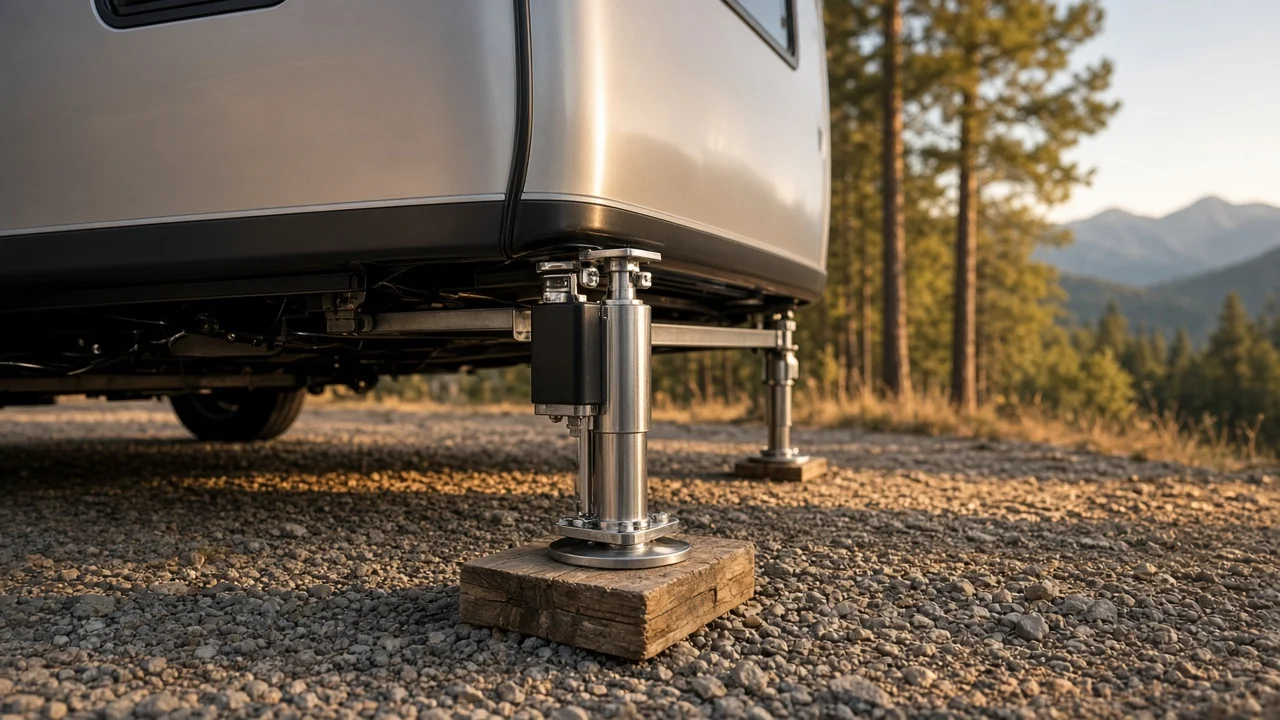
Electric leveling jacks are a sound choice if you want to stop cranking by hand and your RV has a healthy 12-volt battery. The right product depends on one question more than any other: do you need the jacks to lift and level the RV, or only to steady it once it is already level? Many electric jacks sold for RVs, especially scissor-style stabilizer jacks, are designed only to reduce rocking and are not meant to raise the vehicle's weight. If you need true leveling, look at a powered tongue jack or front landing gear for front-to-back adjustment, or a leveling system the manufacturer specifically rates for lifting.
No verified product specifications, prices, capacity ratings or test results were available for this guide. It explains how the categories differ and what to confirm. Take every number you rely on from the manufacturer's documentation for the exact jack and the exact RV, matched to its model year and configuration.
Leveling versus stabilizing
Leveling means bringing the RV to level side to side and front to back, so the floor feels flat, doors swing normally, and appliances such as absorption refrigerators work as intended. Stabilizing means bracing an already-level RV so it moves less when people walk around inside. The two jobs often get mixed up in product names and listings. Before buying, check whether the manufacturer's instructions say the jack may be used to lift the vehicle, or warn against it.
Main types of electric RV jacks
Type | Typical role | Usually fitted to; Electric tongue jack | Raises or lowers the front of the trailer to hitch, unhitch and set front-to-back level | Travel trailers with an A-frame tongue; Electric landing gear | Raises or lowers the front of the trailer for hitching and front-to-back level | Fifth-wheel trailers; Electric stabilizer jacks (scissor or similar) | Reduce movement once the RV is parked and level; generally not for lifting | Corners of travel trailers and fifth wheels; Automatic electric leveling system | Uses a controller and powered jacks to level the RV, often at the push of a button | Motorhomes and some larger towables; check model compatibility
Side-to-side leveling on many travel trailers is still done by driving onto blocks or ramps. A tongue jack or landing gear then handles front-to-back adjustment, and stabilizers are lowered last. If you want to skip blocks entirely, you are shopping for a full leveling system, not a set of stabilizers.
What to check before you buy
Rated capacity: compare the jack's rating with the load it will actually carry. For a tongue jack, that is the trailer's loaded tongue weight, not its empty weight. Allow headroom rather than buying at the limit. Lift or stabilize-only: confirm the manufacturer explicitly permits lifting if you intend to level with it. Frame fit: check frame type (A-frame tongue, straight frame rails, or fifth-wheel pin box area), frame width or profile, and whether the jack bolts on or needs welding. Retracted and extended heights: the retracted height must leave enough ground clearance on the road. The extended reach must cover the uneven sites you expect to use. Power supply: these jacks run from the RV's 12-volt system. Confirm the required wire size, fuse or circuit breaker, and that your battery and charging setup can supply them, especially when you camp without shore power. Manual override: check that there is a hand crank or other backup method in case the motor or battery fails, and that the tool for it is easy to reach. Controls: options include switches on the jack, a wired panel, a remote, or an automatic controller. Confirm the controller supports your RV's layout. Feet and footing: check foot pad size and whether pads or blocks are recommended on soft ground, gravel or grass. Weather and road exposure: tongue and landing-gear motors sit in spray and dust, so look for sealed housings and replaceable parts. Extras: some tongue jacks include a work light or a drop-leg extension. Decide whether these matter to you before paying for them.
Matching a jack to your specific RV
Fitment claims only hold for the exact vehicle they were written for. Before buying, confirm the following against both the jack maker's fitment information and your RV maker's documentation or plate data:
Trailer or motorhome type; Manufacturer, model and model year; Floorplan or length variant; Frame design; Weight ratings; Existing wiring; Whether the jack is a direct replacement or a new installation
Two RVs with the same name can differ by year or floorplan. If the listing doesn't state compatibility for your exact configuration, treat it as unconfirmed until the seller or manufacturer verifies it.
Electric versus hydraulic systems
Electric jacks drive a screw or similar mechanism with a motor, so they have no hydraulic fluid, pump or hoses to maintain. Hydraulic leveling systems are common on larger motorhomes and are generally chosen where heavier loads must be lifted. Which suits you depends on the vehicle's weight, what the RV maker approves for that chassis, and how much installation work you are prepared to take on. No comparative performance data was available for this guide, so check speed, capacity and service needs for each specific system.
Installation and safety points
A bolt-on tongue jack replacement is usually within reach of a careful owner. Full leveling systems and anything needing welding, new wiring runs or frame drilling are better left to a qualified RV technician. Follow the maker's torque and wiring instructions. Never get under an RV supported only by leveling or stabilizer jacks. Chock the wheels before raising or lowering any jack, and keep jacks fully retracted before moving.
Gaps to close before purchase
This guide could not confirm specific brands, prices, capacity figures, lift heights, current draw or warranty terms. Get those details from the manufacturer's specification sheet and installation manual for the exact jack. Check them against your RV's weight ratings and electrical system before committing.