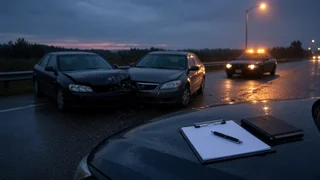
How to Document a Vehicle Accident in an Incident Report
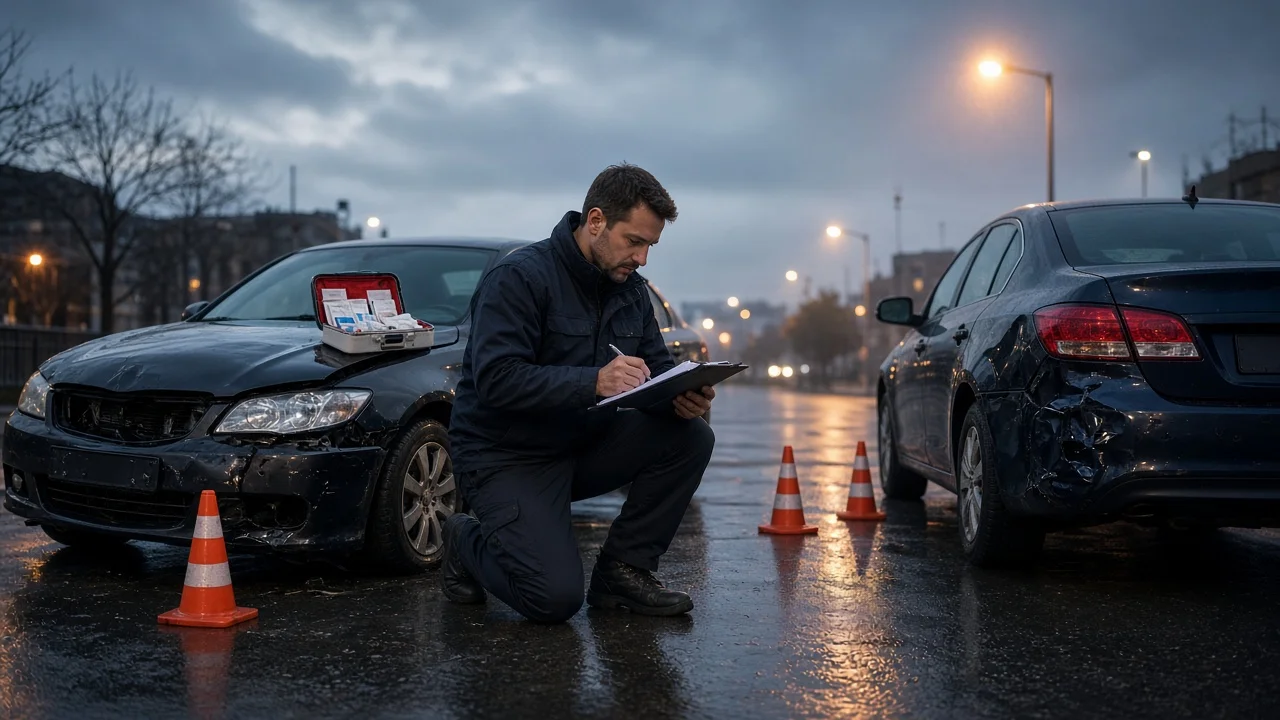
To document a vehicle accident in an incident report, record facts that can be checked, as soon as it is safe to do so. A vehicle accident report, also called a vehicle incident report, is a written record of a collision. It should cover when and where the collision happened, who and which vehicles were involved, what happened in order, what damage and injuries resulted, who saw it, and what evidence supports the account. Write down what you observed, not what you assume. Back the account with photos, a simple diagram and the other parties' details. Do not state or guess who was at fault. Some conditions change what you need to do. If anyone is injured, if the road is blocked, or if local law requires it, police normally prepare their own report. Your incident report sits alongside the police report and does not replace it. Your employer, fleet operator, rental company or insurer may also require its own form, and that form's fields take priority over any general template. Rules on when a crash must be reported to police or a state agency, and how quickly, differ by US state. Confirm the rules where the accident happened.
Which report are you writing?
People involved in a collision may need to complete more than one kind of report. The facts you collect at the scene can feed all of them, so it is worth gathering them once and gathering them well.
Police crash report: prepared by the responding officer. You usually receive a report or case number rather than writing it yourself. State driver report: some states require drivers to file their own report with a state agency in certain circumstances. Thresholds and deadlines vary by state. Insurance claim or notice of loss: your insurer's own record of the incident, usually started by phone, app or claim form. Employer or fleet incident report: required by many organizations when a company vehicle, or a personal vehicle used for work, is involved. Personal record: your own notes and evidence, kept for later reference even if no formal report is required.
What to have ready
A phone or camera with enough battery and storage for photos and video; A notepad and pen, or a notes app, in case your phone fails; Your driver's license, vehicle registration and proof of insurance; Any incident form your employer, fleet or insurer has issued (many fleets keep one in the glovebox); Hazard-warning equipment the vehicle carries, such as warning triangles or flares, and a high-visibility vest if you have one
Step-by-step: documenting the accident
1) Make the scene safe before collecting anything
Turn on your hazard lights and check yourself and your passengers for injuries. Call emergency services, which is 911 in the US, if anyone is hurt, if a vehicle is on fire or leaking fluid, or if vehicles are blocking traffic in a dangerous position. Stop at this point if conditions are unsafe. Do not stand in live traffic to take photos. Do not move an injured person unless they face immediate danger, such as fire. Stay away from a vehicle that is smoking or leaking fuel. If the vehicles can be driven, are not causing a hazard, and local rules allow it, you may need to move them out of traffic. Photograph their positions first if you can do so safely.
2) Record the basic circumstances
Note the date and the time of the collision. Record the exact location, using a street address, intersection, highway and direction of travel, or a nearby mile marker or landmark. Also record the weather, the road surface (dry, wet, icy, gravel), the lighting (daylight, dusk, dark with or without streetlights), and any traffic signals, signs or road work nearby. Write these down while you are still at the scene, because details like these are hard to reconstruct later.
3) Exchange and record information with the other parties
For every other driver involved, collect: • full name and contact number; • driver's license number; • insurance company and policy number; • vehicle make, model, color and license plate, with the issuing state; If the driver is not the vehicle owner, also record the owner's name. Note how many passengers were in each vehicle. If the other party will not share details or leaves the scene, write down the plate and a description, and tell police.
4) Photograph the scene and the vehicles
Start with wide shots that show the whole scene, the positions of the vehicles and the road layout. Then move closer. Photograph damage to every vehicle from several angles, with a close-up and a wider shot of each damaged area so the location on the vehicle is clear. Capture license plates, skid marks, debris, broken glass, fluid on the road, traffic signs and signals, and any obstructions to visibility. If your camera supports timestamps or location data, leave them on. Do not edit or crop the original files; make copies if you need to annotate them.
5) Identify witnesses
Ask anyone who saw the collision for their name and phone number, and note briefly what they say they saw. Record their words as close to how they said them as you can, and do not reword them to fit your own account. Also note any nearby cameras that might have recorded the collision, such as dashcams or cameras on shops or traffic signals. Their footage may only be kept for a limited time.
6) Record the police response
If police attend, write down the officer's name, badge number, agency, and the report or case number. Ask how to get a copy of the police report. If police do not attend, note that, along with whether you reported the incident by phone. You may need to file a report later, depending on state law and the circumstances.
7) Write the narrative
Describe the collision in chronological order and in plain language. State the direction each vehicle was travelling, its lane, approximate position, and what each driver did just before and at the moment of impact. Describe the point of impact on each vehicle, for example the front driver-side corner or the rear bumper. Stick to what you saw, heard and did. If you are unsure of something, such as the other vehicle's speed, say that you are unsure instead of guessing. Do not write statements about fault, blame or apology. Determining fault is for insurers, police and, if needed, courts.
Add a simple diagram showing the road layout, lane markings, the direction of travel, the positions of the vehicles before and after impact, and any signs or signals. Label each vehicle so it matches your written description.
8) Describe vehicle damage and injuries
List the visible damage to each vehicle by location and type: dents, scrapes, cracked or broken lights, broken glass, a displaced bumper. Note whether any airbags deployed, whether warning lights came on, whether fluid is leaking, and whether a wheel or tire looks bent or out of line. Describe only what you can see. Do not judge whether the vehicle is structurally sound or safe to drive. Damage to steering, suspension, brakes, wheels, airbag systems or the vehicle's frame needs inspection by a qualified repair shop. If any of these signs are present, or the vehicle does not drive normally, do not drive it. Arrange a tow instead.
Record any injuries reported by anyone involved, even minor ones, and note whether anyone was taken for medical treatment. Some injuries only become apparent later. If you or a passenger develop symptoms after the accident, seek medical attention and add the details to your report or claim.
9) Assemble, review and sign the report
Transfer your notes onto the required form, or into a clearly organized document if no form is provided. Attach the photos, the diagram, the witness details and the police report number. Read the report through and check that times, names, plate numbers and directions are consistent throughout. Sign and date it if the form requires that. Keep copies of everything you submit, including the original photo files.
10) Submit it to the right people on time
Send the report to every party that needs it, such as your insurer, your employer or fleet manager, and any state agency where required. Deadlines differ between insurers, employers and states, so check each one rather than assuming. Record when and how you submitted each report, and any claim or reference numbers you receive.
What each part of the report should contain
Section | What to record; Circumstances | Date, time, exact location, weather, road surface, lighting, traffic controls; Parties | Each driver's name, contact number, license number and insurer; vehicle owner if different; number of passengers; Vehicles | Make, model, color, license plate and issuing state for each vehicle; Narrative | Chronological, factual account; directions of travel; point of impact; no statements of fault; Diagram | Road layout, vehicle positions before and after impact, signs and signals; Damage | Visible damage by location; airbag deployment; warning lights; leaks; whether the vehicle was towed; Injuries | Any reported injuries and whether medical treatment was sought; Witnesses | Names, contact details, brief note of what each saw; Police | Officer name, badge number, agency, report or case number, or a note that police did not attend; Evidence | List of attached photos, video and any other documents
Completion check
Every field on the required form is filled in, or marked as unknown or not applicable; Date, time and location are specific enough for someone else to find the spot; Every vehicle and driver is identified, and the labels match between the narrative and the diagram; The narrative describes only observed facts and contains no statement of fault; The damage descriptions match what the photos show; The police report number is recorded, or the report says police did not attend; Witness details are included, or the report states there were none; The report is signed and dated where required, and you have kept copies; You have confirmed the submission deadline for each recipient and met it
Common mistakes to avoid
Writing the report days later from memory instead of taking notes at the scene; Admitting fault, apologizing in writing, or speculating about the other driver's intentions; Estimating speeds or distances as if they were measured; Taking only close-up damage photos, with no wider shots showing context; Forgetting to record the police report number; Driving a vehicle with possible steering, brake, wheel or airbag damage before it has been inspected; Missing an insurer, employer or state reporting deadline
What this guide cannot confirm
No authoritative source was supplied for this guide on specific state reporting rules. That includes the damage-value or injury thresholds that trigger a mandatory police or state report, filing deadlines, and the official forms used in each state. These differ across the US, and this guide gives no figures for them. Check the requirements with the state motor vehicle agency or law enforcement where the accident happened, with your insurer, and with your employer if a work vehicle was involved. If the accident involved serious injury, a dispute over fault, or an uninsured driver, consider getting advice from an attorney licensed in that state.