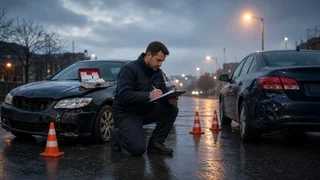
Accident report vs incident report: documenting a collision
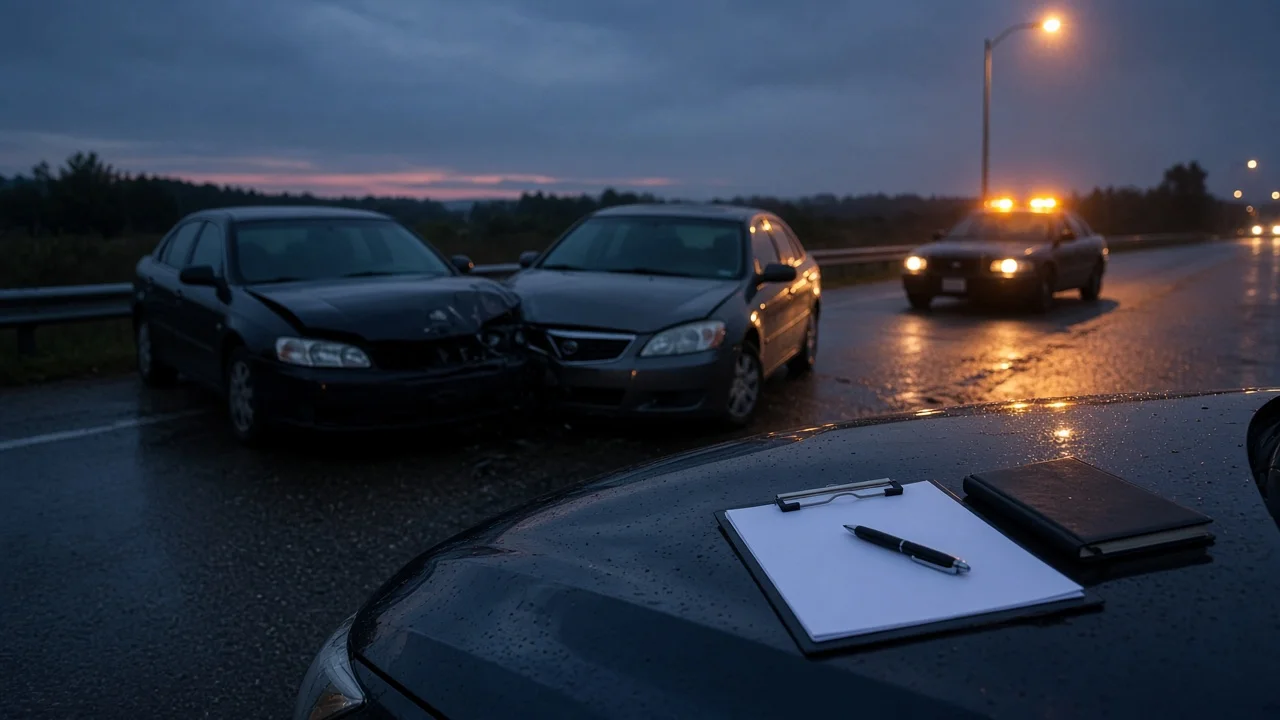
The short answer
In US driving, an accident report usually means an official record of a vehicle collision, typically a police crash report or a report filed with a state motor vehicle agency. An incident report is a broader term for any documented event. It is often an internal form kept by an employer, fleet operator, rental company or insurer, and it can cover events that are not collisions at all, such as a near miss, a vehicle damaged while parked or an injury while loading a vehicle.
One qualification matters: these terms are not used consistently. Many police agencies now say "crash report" instead of "accident report," and some use "incident report" for minor events they record without a full crash investigation. The right document depends on who is asking for it and what your state requires, not on the label alone. After a single collision, you may need to complete more than one.
How the two reports usually differ
Aspect | Accident (crash) report | Incident report; Typical author | Responding police officer, or the driver on a state form | The driver, employee, supervisor or claims representative; Who keeps it | Law enforcement or a state agency | Employer, fleet manager, rental company or insurer; What it covers | A collision involving at least one motor vehicle | Any event worth recording, including non-collision events and near misses; Why it exists | Legal record, state reporting rules, traffic safety data | Internal records, claims handling, safety review and policy compliance; How it is used later | Often requested by insurers and attorneys | Used by the organization that requires it; may also support an insurance claim
When an accident report is likely needed
State laws generally require a collision to be reported to police or a motor vehicle agency when someone is injured or killed, or when property damage is above a set threshold. Those thresholds, the deadlines for filing and the form you use vary by state. No state-specific figures were available for this article, so check your state motor vehicle agency or the local police department for the exact rules that apply to you.
A police report can also be useful when it is not strictly required. Examples include a disputed account of who was at fault, a driver who leaves the scene, a suspected impaired driver or a collision involving an uninsured driver. Police do not respond to every minor crash in every area. If an officer does not come to the scene, ask whether you can file a report afterward.
When an incident report is likely needed
Expect to complete an incident report when an organization has its own reporting rules. Common examples are driving a company or fleet vehicle, driving a rental car, damaging a vehicle on private property such as a parking lot, or being hurt while working in or around a vehicle. These forms are governed by the organization's policy or contract rather than by traffic law, so read the rental agreement or company policy to see what is required and how quickly it must be submitted.
An incident report generally does not replace an official accident report when state law requires one. If you drive a work vehicle and have a reportable crash, you may need to file both the official report and your employer's internal report.
Choosing by situation
Collision on a public road with injuries or significant damage: an official accident report, plus notice to your insurer. Minor collision with another driver and no injuries: exchange information, check your state's reporting rules and notify your insurer as your policy requires. Any collision in a company or rental vehicle: the official report if required, plus the employer's or rental company's incident report. Damage found on a parked vehicle, or a near miss with no contact: usually an incident report for your employer or insurer; ask police whether they will record it, especially if the other party left without leaving information.
What to document at the scene
The same evidence supports any type of report, so gather it once and keep it together. Move to safety and call for medical help first if anyone is hurt.
Date, time and exact location, including the direction of travel and nearby cross streets or landmarks. Names, phone numbers, driver license details and insurance information for every driver involved. Vehicle make, model, color and license plate for each vehicle. Photos of all vehicles from several angles, close-ups of damage, the overall scene, road markings, traffic signals and signs, skid marks and debris. Weather, lighting and road surface conditions. Names and contact details of witnesses, plus a short note of what each one says they saw. The responding officer's name, agency and any report or case number. Your own written account, made as soon as possible while details are fresh.
Stick to observable facts in any report. Describe what happened rather than guessing at causes or speeds, and avoid statements about fault at the scene. Ask for a copy of each report you submit or are given, and keep it with your photos and notes.
Gaps to check for your own case
This article does not include state-specific damage thresholds, filing deadlines, fees for report copies or insurer notification timelines, because no confirmed figures were available. Those details come from your state motor vehicle agency, the local police department, your insurance policy and any employer or rental agreement. If the collision involved injuries or a disputed claim, consider asking a qualified attorney or your insurer about your obligations.