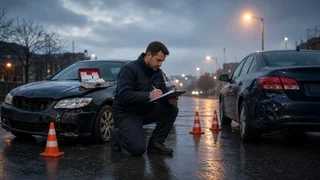
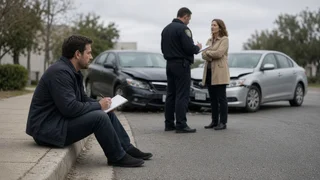
How to Write a Vehicle Accident Report
A written accident report is a factual, time-ordered account of a collision. It records when and where the crash happened, who and what was involved, what you directly saw, the damage and injuries, and how the evidence was preserved. Write it as soon as you safely can, while your memory is fresh. Stick to observable facts, keep opinions and guesses about fault out of it, and attach or reference the original photos, recordings and documents rather than describing them from memory alone. Who the report is for changes the format. A state or police crash form has fixed fields you must complete as printed. An insurance claim statement or an employer or fleet incident report usually allows a free-text narrative. A school assignment that asks you to write a report on a road accident is closer to a short news report. The core method below works for all of them. Reporting duties, deadlines and damage thresholds are set by each US state and sometimes by your insurer or employer, so check the rules that apply to you before relying on any single format.
Types of Accident Reports and When Each Applies
Report type | Who usually asks for it | Format; Police crash report | Responding law enforcement | Completed by the officer; you supply your statement and documents; Driver's report to the state | State motor vehicle agency, where required | Official form with set fields; requirement depends on state rules, injuries and damage; Insurance claim statement | Your insurer or the other driver's insurer | Claim form plus a written or recorded narrative; Employer or fleet incident report | Employer, fleet manager, transit or bus operator | Company form, often with a narrative and supervisor review; School or practice report | Teacher or exam | Short news-style report with headline, place, date and summary
Before You Write: Safety and Evidence at the Scene
The report can only be as good as the information collected at the scene. Do these things only when it is safe. If anyone is hurt, if vehicles are blocking traffic in a dangerous spot, or if there is fire, leaking fuel or a downed power line, call emergency services first and stay clear. Evidence collection always comes second to safety.
Note the incident time and exact location: street names, direction of travel, nearby landmarks, mile markers or intersection. Record vehicle identification for every vehicle involved: make, model, color, license plate and state, and, if you can see it safely, the VIN. For commercial vehicles and buses, also note the company name and any fleet or unit number. Exchange driver details: names, contact information, driver's license details, insurance company and policy number, and the registered owner if different from the driver. Take photos and video of vehicle positions, damage from several angles, skid marks, debris, traffic signals, signs, road surface and weather conditions. Collect witness details: names and contact information, plus a brief note of what each person says they saw, in their own words. Ask responding officers for their names, badge numbers and the report reference or case number. Keep any dashcam footage in its original recording form. Copy it, but do not edit, trim or overwrite the source file.
How to Write the Report Step by Step
Step 1: Confirm the format and deadline
Find out which form or format the recipient expects and whether there is a filing deadline. State crash forms, insurers and employers each set their own requirements. If an official form exists, use it and fill in every field that applies instead of writing a free-form letter.
Step 2: Write the basic facts section
Start with the identifying information a reader needs before the story: date, incident time, location, weather, lighting and road conditions, and the report reference number if police attended. List every vehicle with its identification details and every person involved with their role, such as driver, passenger, pedestrian, cyclist or witness.
Step 3: Write the narrative in time order
Describe what happened in the order it happened: where you were going, your lane and approximate speed if you know it, what you saw, what the other road users did, the moment of impact and what happened immediately after. Use the first person and the past tense. Refer to vehicles consistently, for example Vehicle 1 and Vehicle 2, and match those labels to your vehicle list.
Step 4: Separate facts from opinions
Write what you observed, not what you assume. "Vehicle 2 entered the intersection while my signal was green" is an observation. "The other driver was not paying attention" is an opinion. Do not admit or assign fault, and do not estimate speeds or distances you could not actually judge. If you are unsure of a detail, say so plainly instead of guessing.
Step 5: Record damage and injuries
Describe the visible damage to each vehicle and any property, such as a fence, pole or sign, by location: front bumper, driver-side rear door and so on. Note any injuries reported or observed and whether anyone received medical attention. Do not diagnose injuries yourself. Some injuries appear later, so note if you seek treatment after the report is filed.
Step 6: Reference the evidence
List the photos, videos, witness statements, diagrams and documents you are attaching or keeping. Give each item a short description and, for recordings, the date and time shown. A simple sketch of the scene, showing road layout, vehicle positions, direction of travel and point of impact, often explains the collision better than several paragraphs.
Step 7: Review, sign and date
Read the report against your notes and photos. Correct any inconsistencies, then sign and date it if the format requires. Keep a complete copy of exactly what you submitted.
What to Include: Report Sections at a Glance
Section | What it contains; Header | Report title, your name, date written, report reference or claim number; Incident details | Date, incident time, location, weather, lighting, road surface, traffic controls; Vehicles | Make, model, color, plate, VIN if available, owner, insurer, fleet or unit number; People | Drivers, passengers, pedestrians and witnesses with contact details and roles; Narrative | Time-ordered factual account of events before, during and after impact; Damage and injuries | Visible vehicle and property damage; injuries reported and treatment given; Evidence | List of photos, recordings, diagrams and statements, with the original recordings preserved; Authorities | Responding agency, officer names, badge numbers, report reference; Signature | Your signature and date, if required
Sample of a Vehicular Accident Report
The sample below is a template with placeholders in brackets. Replace every bracketed item with your own facts and delete anything that does not apply. It is illustrative and does not replace an official form.
VEHICLE ACCIDENT REPORT; Prepared by: [Your full name]; Date written: [Date]; Report reference: [Police case number / claim number, if issued]; 1) INCIDENT DETAILS; Date and time: [Date], approximately [time]; Location: [Street / intersection, city, state]; Conditions: [Weather], [daylight / dark / street lighting], [dry / wet road]; Traffic control: [Signal / stop sign / none]; 2) VEHICLES; Vehicle 1 (mine): [Year, make, model, color], plate [number, state],; VIN [if available], insured by [company], policy [number]; Vehicle 2: [Year, make, model, color], plate [number, state],; driver [name], insured by [company], policy [number]; 3) PEOPLE INVOLVED; Driver, Vehicle 1: [Name, contact details]; Driver, Vehicle 2: [Name, contact details]; Passengers: [Names, vehicle, seating position]; Witnesses: [Names, contact details]; 4) DESCRIPTION OF EVENTS; I was driving Vehicle 1 [direction] on [street] in the [left / right] lane. As I approached [intersection], the signal for my direction was [color]. Vehicle 2 was traveling [direction] on [street]. [Describe what you saw; Vehicle 2 do.] The front of Vehicle 2 struck the [side / area] of; Vehicle 1. Both vehicles came to rest [positions]. I [moved / did not; move] my vehicle before police arrived. 5) DAMAGE AND INJURIES; Vehicle 1: [Visible damage by location]; Vehicle 2: [Visible damage by location]; Other property: [If any]; Injuries: [Reported or observed; treatment received, if any]; 6) EVIDENCE; • [Number] photos of vehicles and scene taken at [time]; • Dashcam recording from Vehicle 1, original file retained; • Scene diagram (attached); • Witness statement from [name]; 7) AUTHORITIES; Responding agency: [Name]; Officer(s): [Names, badge numbers]; Signature: ____ Date: __
Short Report Writing on a Road Accident for School
When a class or exam asks you to write a report on a road accident, the expected format is usually a short news report, not an insurance form. Give it a headline, a byline and a dateline with place and date. Open with a sentence that answers who, what, where and when. Follow with how it happened, the injuries and response, and what officials said or plan to do. Keep it in the past tense and third person, and keep it neutral.
[HEADLINE: e.g., Two Cars Collide at City Intersection]; By [Your name]; [City], [Date]: Two vehicles collided at the intersection of [Street A]; and [Street B] at about [time] on [day]. According to witnesses,; [brief description of how the collision occurred]. [Number] people were; taken to [hospital] with [minor / serious] injuries. Police and emergency; services arrived shortly afterward and diverted traffic while the vehicles; were removed. Officials said the cause is under investigation and urged; drivers to [relevant safety message].
Writing a Report on a Bus Accident
A bus accident report follows the same structure, with a few additions. Record the operator or transit company, the route and bus or unit number, and the driver's name if known. Note approximately how many passengers were on board and which of them were injured, and whether passengers were standing, seated or boarding at the time. If you were a passenger, describe where you were seated and what you felt and saw. Ask whether the bus carries onboard cameras; transit and school bus operators often have their own incident procedures and forms, and they control that footage, so request that it be preserved. If you are a bus driver, your employer's incident procedure and any applicable commercial vehicle rules take priority over a general template.
Common Mistakes to Avoid
Waiting days to write it down, which lets details fade and contradict your photos. Apologizing or accepting blame in writing; describe events and let the facts speak. Guessing speeds, distances or times you did not actually observe. Mixing in hearsay without labeling it; attribute statements to the person who made them. Leaving out minor damage or symptoms that may matter later. Editing or trimming dashcam or phone footage before sharing it; always keep the original recording. Giving different versions to police, your insurer and your employer; keep one consistent account.
Completion Check Before You Submit
Date, incident time and location are filled in and match your photos. Every vehicle and person is listed with consistent labels throughout. The narrative is in time order and contains only what you observed or clearly attributes what others said. Damage and injuries are described by location without self-diagnosis. All evidence is listed, and the original recordings are saved in at least two places. The report reference or claim number appears on the report and on every attachment. The report is signed and dated if required, and it meets the recipient's deadline.
Record Retention After Filing
Keep a full copy of the submitted report together with all photos, original recordings, witness details, repair estimates, medical records, receipts and correspondence. Store them digitally and, if practical, as printed copies. Keep the file at least until the insurance claim is closed and any dispute or legal matter is resolved. How long claims or lawsuits can be brought depends on state law, so if injuries, significant damage or disputed fault are involved, ask your insurer or an attorney licensed in your state how long to keep the records.
When to Get Professional Help
A clear written report covers most minor collisions. Consider speaking with an attorney before giving a recorded statement or signing anything from another party's insurer if someone was seriously injured, fault is disputed, an uninsured or commercial vehicle was involved, or you receive a citation. Your own insurer can also confirm exactly what documentation it needs for your claim.