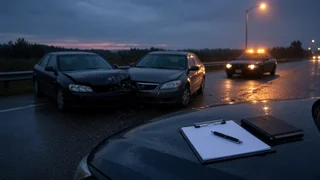
Accident Report vs Police Report After a Collision: What Each One Is and When You Need It
Short answer: a police report is written by a law enforcement officer who responds to or takes a report of a collision. "Accident report" is a broader term. It can mean that same police document, or a report you file yourself with your state motor vehicle agency, your insurer or your employer. After a crash you may need more than one. A police report does not automatically satisfy a state requirement for a driver-filed report, and an insurance claim is not a substitute for either. Rules vary by state, so check what your state requires after a crash.
Why the two terms get confused
Many people use "accident report" and "police report" to mean the same thing, and some agencies label their official form a crash or accident report. The difference that matters is who prepares the document and why. A police report is an official record created by an officer. A driver accident report is your own account, submitted because a law, a policy or an employer requires it. Knowing which one someone is asking for helps you avoid missing a requirement.
What a police report is
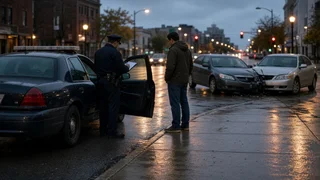
A police report, often called a crash report or collision report, is prepared by a responding officer or at a station or online desk when no officer came to the scene. It usually records the location and incident time, the drivers and vehicles involved, insurance information, road and weather conditions, any injuries, witness details, a diagram or narrative, and any citations issued. The agency gives it a report reference number, which you will need later to request a copy.
Police do not respond to every collision. In many areas officers may not come to a minor crash with no injuries and drivable vehicles. In that case you may be able to file a report yourself with the local agency, or you may simply have no police report at all. An officer's notes about fault are an opinion in an official record. Insurers and courts consider them, but they are not a final legal decision about who is responsible.
What an accident report can mean
Depending on context, an accident report can refer to any of the following.
State driver report: Many states require drivers to file their own report with the motor vehicle agency or another state office when a crash involves injury, death or property damage above a set threshold. Deadlines and thresholds differ by state, and this obligation can apply even when police wrote a report. Insurance claim report: The account you give your insurer when you notify them of the collision. Most policies require prompt notice. This is a claim, not a government filing. Employer or fleet report: If you were driving a company, rental or rideshare vehicle, the employer or company usually has its own incident form and reporting deadline. The police report itself: Some people and some agencies simply call the officer's document an accident report.
Accident report vs police report at a glance
Feature | Police report | Driver-filed accident report; Who prepares it | A law enforcement officer or agency | You, the driver or vehicle owner; Who receives it | Kept by the police agency | State motor vehicle agency, insurer or employer, depending on type; Why it exists | Official public safety and law enforcement record | Legal reporting duty, insurance contract terms or company policy; When it is created | At or after the scene, if police respond or accept a report | After the crash, within whatever deadline applies; Contents | Officer observations, statements, diagram, citations | Your account, vehicle and insurance details, damage and injuries; How you get a copy | Request from the agency using the report reference number | Keep your own copy when you submit it
Which one you need, by situation
Injury, death or a suspected impaired driver: Call 911. Police should respond and create a report. Your state may also require a driver report. Significant damage, no injuries: Request police if your area responds to such crashes, and check whether the damage triggers a state driver report. Minor fender-bender, police do not respond: Exchange information, document the scene, ask whether you can file a report with the local agency, and check your state's driver report rules. Hit-and-run or uninsured driver: A police report is especially important. Insurers often expect one for these claims. Parked car or property damage with the owner absent: Leave your contact information as state law requires and report it to police. Company or rental vehicle: Follow the employer or rental company process in addition to any police or state report.
Details to record at the scene
Whichever reports you end up filing, they will be more accurate if you collect consistent facts while you are still at the scene and it is safe to do so.
Incident time and exact location, including direction of travel and nearby cross streets or landmarks. Vehicle identification for each vehicle: make, model, color, license plate and, if visible, the VIN (vehicle identification number). Driver names, contact details, driver's license information and insurance company and policy number. Witness details: names and phone numbers of anyone who saw the collision, since witnesses often leave before police arrive. Photos of vehicle positions, damage, skid marks, debris, traffic signals, signs and road conditions. The responding officer's name, badge number and agency, plus the report reference number.
Dashcam footage and original recordings
If you have dashcam video or other recordings, save the original recording file before doing anything else. Many dashcams overwrite older footage automatically, and editing, trimming or re-encoding a clip can raise questions about whether it was altered. Copy the untouched file to a second storage location, and share copies rather than the only original. Video does not replace a police or accident report, but it can support the facts in them.
Getting a copy of the police report
Police reports are usually not available immediately, because the officer needs time to complete and file them. To request a copy, contact the agency that handled the crash, such as a city police department, sheriff's office or state highway patrol, and give the report reference number, date and location. Some agencies offer online requests and may charge a fee. Read the report when you receive it. If a factual detail such as a plate number or insurance policy is wrong, ask the agency how to request a correction or add a supplemental statement. Disagreeing with the officer's opinion is a different matter and is usually handled through your insurer or a lawyer.
Record retention: keep your own file
Agencies keep reports according to their own retention schedules, and dashcams and phones can lose data. Keep a personal file with copies of the police report, any driver report you submitted, your insurance claim number and correspondence, photos, original recordings, repair estimates and medical records. Hold on to it at least until the claim and any dispute are fully resolved. A lawsuit deadline may extend well beyond the end of the insurance claim.
Common mistakes to avoid
Assuming the police report covers a state requirement for a driver-filed report. Skipping a police report for a minor crash, then finding the other driver changes their account later. Admitting fault or guessing at facts you are unsure of. Describe what happened and leave conclusions to others. Waiting too long to notify your insurer or file a required state report. Letting dashcam footage be overwritten, or sharing only an edited clip.
Bottom line
A police report is the officer's official record of a collision. An accident report is either that same document or a report you file yourself with the state, your insurer or your employer. After any crash beyond a trivial scrape, try to get a police report, check whether your state requires a separate driver report, notify your insurer, and keep your own records.