Diagnose check engine light on Subaru WRX
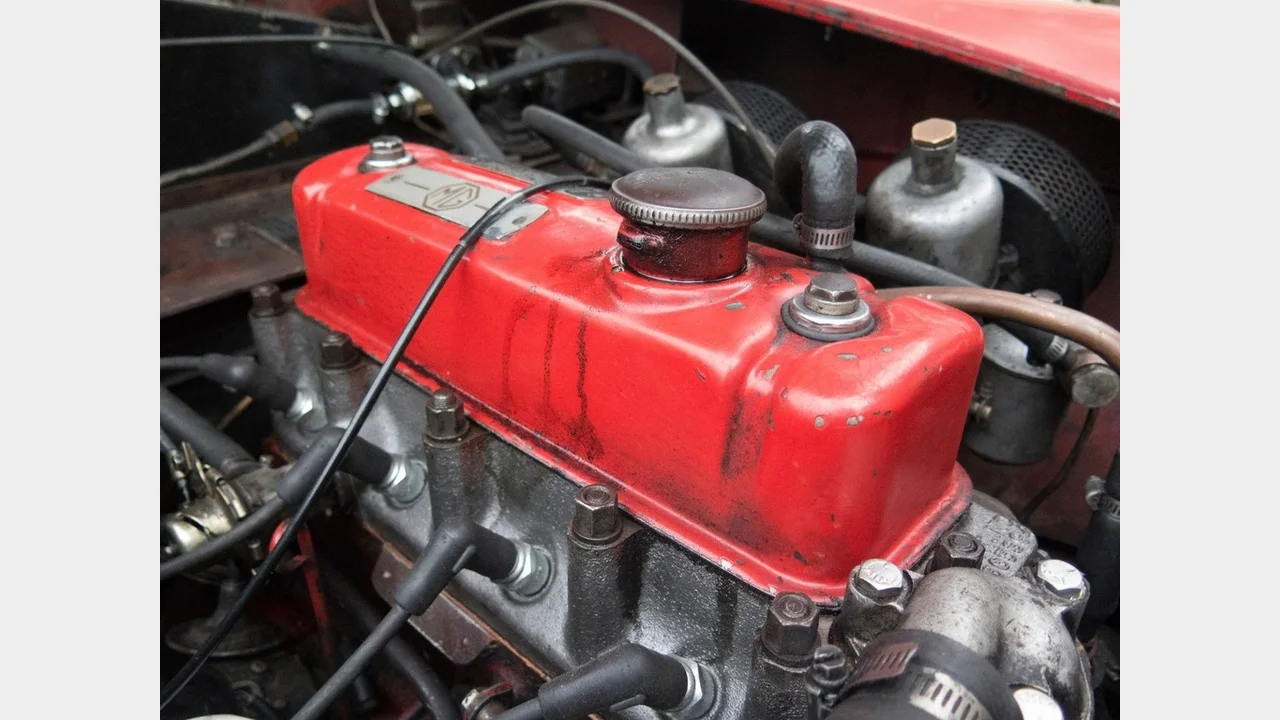
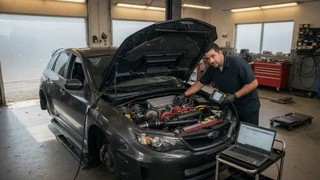
A check engine light on a Subaru WRX is an invitation to read the engine control system before assuming the worst. The warning can appear for a loose fuel cap, a misfire under boost, an emissions sensor drifting out of range, or a fault that only occurs during cold start. The light does not identify a failed part by itself. It stores a trouble code and supporting freeze-frame data that describe the operating conditions when the computer saw an out-of-range signal. Reading that evidence is the fastest way to move from a glowing dashboard symbol toward a useful diagnosis.
Essential answer
The essential answer is that a Subaru WRX check engine light means the ECU has recorded a diagnostic trouble code after a monitored value fell outside its expected range. The light may be steady, indicating a fault that should be investigated soon, or flashing, which typically signals a misfire severe enough to risk the catalytic converter. Because turbocharged WRX engines run with tighter fuel, boost, and knock-control margins, the same warning can feel more urgent than in a naturally aspirated commuter car, but the first step remains the same: retrieve the code and read it as evidence, not as a parts list.
The scope of the concern ranges from a simple evaporative emissions leak to a misfire, boost-control deviation, oxygen-sensor response problem, or camshaft timing error. Some Subaru-specific codes point toward systems such as the secondary air pump or tumble generator valves, while other codes are generic OBD-II values shared across many vehicles. Manufacturer-dependent definitions may require service information for the exact model year. A stored code only records that the ECU saw a condition outside its calibration. The same code can have several causes, so a proper diagnosis begins with the code plus the symptom conditions, not with a guess at the most expensive component.
Diagnosing a problem
Start by recording the exact trouble code, freeze-frame data, and any symptom conditions such as rough idle, hesitation under load, or a recent fill-up. A loose fuel cap is a common and inexpensive cause for an evaporative system code, so check the cap seal before chasing deeper leaks. If the code is a cylinder-specific misfire, note whether it occurs at idle, during wide-open throttle, or when the engine is cold. Ignition components such as spark plugs and coil packs, fueling inconsistencies, or mechanical compression problems can all produce a misfire, but the code alone does not tell you which one is responsible.
Observing live data can distinguish between causes that share a code. Short-term and long-term fuel trims may point toward a vacuum leak or a fueling issue, while front and rear oxygen-sensor behavior can show whether the catalytic converter is reacting normally. A flashing check engine light calls for reduced load and prompt attention because sustained misfire can overheat the catalyst. If a code returns immediately after clearing, treat that repeat condition as a clue that the fault is persistent. Confirmation testing and vehicle-specific service information are valuable when a code has multiple known triggers, especially on a turbocharged engine where boost and fuel corrections interact.