Dana 44 Rear Axle Bearing and Seal Kits: How to Confirm Fit
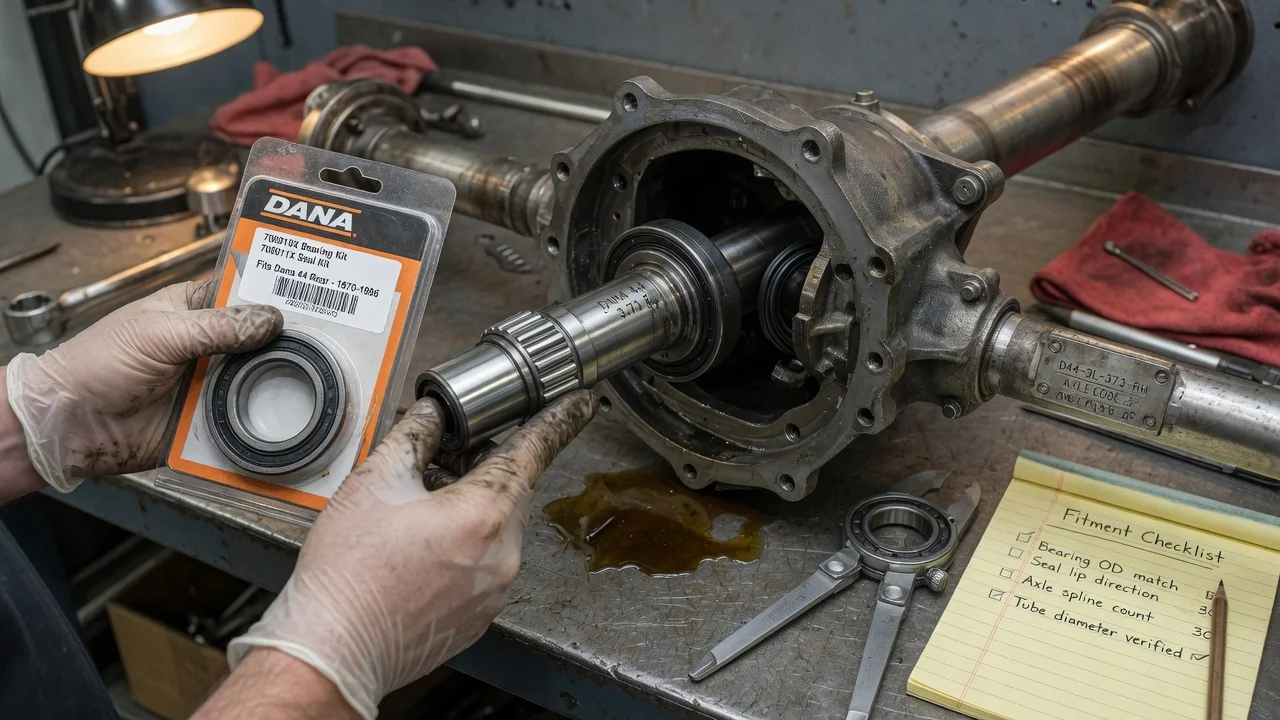
The Dana 44 name covers a family of rear axles used in many trucks and SUVs over several decades, so no single bearing and seal kit fits every one. A kit fits when it matches your axle's shaft-retention design, bearing dimensions and seal style. Those depend on the exact vehicle configuration and on anything changed since the axle left the factory. Here is how to confirm fit before you pull the shafts or order parts.
The short answer: match the axle end, not just the name
A Dana 44 rear axle bearing and seal kit fits only when it matches three things: how the axle shaft is held in the housing, the bearing's dimensions, and the type and size of seal the housing uses. The Dana 44 label identifies the general housing family and ring gear size class. It does not identify the axle-end hardware. Two vehicles with a rear Dana 44 can need completely different bearings, and the same vehicle can differ by model year, options or later modifications.
Kit contents also vary. Depending on the design, a kit may contain only a bearing and seal. Other kits include a bearing, a retaining ring, an inner seal, and a gasket or O-ring for the retainer plate. Before you order, check exactly what the listing includes and compare it with the parts in your axle. Otherwise you can end up with a kit that fits but leaves out a single-use part the job requires.
How a Dana 44 rear axle end works
The axle bearing supports the outer end of the shaft and carries vehicle weight while letting the shaft turn. The seal keeps differential gear oil inside the housing tube and out of the brakes, and it keeps dirt and water away from the bearing. How these parts are arranged depends on how the shaft is retained.
In a C-clip design, a clip inside the differential holds the shaft in place. The bearing's outer race is pressed into the end of the housing tube, and its rollers run directly on a machined surface of the axle shaft. A separate seal is pressed in outboard of the bearing. Because the shaft itself forms part of the bearing surface, a worn or pitted journal on the shaft matters as much as the bearing does.
In a pressed-bearing design, the bearing is pressed onto the shaft and held there by a pressed-on retaining ring, and a retainer plate bolted to the housing flange keeps the shaft in place. These setups may use an inner seal in the tube, a seal built into the bearing, or both. Some older applications use a tapered shaft with a separate hub and tapered roller bearings, and end play on these is set during assembly. Each design uses different parts and a different installation procedure.
What changes the kit you need
The biggest variable is the exact vehicle configuration: make, model, model year and, where relevant, trim or option packages. Axle-end designs have changed within the Dana 44 family over the years. Anti-lock brake equipment, brake type and factory options can also change the shaft, tone ring or retainer hardware that the bearing and seal must work with. A listing that says only "Dana 44 rear" without vehicle data cannot confirm fit.
Service history matters just as much. Rear axles are often swapped between vehicles, and aftermarket axle shafts may be built for different bearings than the factory parts they replaced. A previous owner may also have installed a repair-style bearing with its own inner race to get around a worn shaft journal, which changes which replacement parts will work. If the axle or shafts are not original, identify what is actually installed rather than what the vehicle came with.
Operating conditions do not change the part number, but they do affect how you approach the job. Water crossings, heavy loads, towing and larger tires add stress or contamination risk. On a vehicle used this way, a seal leak or bearing noise calls for a prompt inspection of both sides rather than a wait-and-see approach.
Identifying your axle and the parts installed
Start with identification. Many Dana axles carry a metal tag under a differential cover bolt or a stamped code on the housing tube, and the housing has casting marks. Together with the vehicle identification number and original build information, these narrow down which axle and axle-end design you have. Write everything down before cleaning the housing, because tags and stampings are easy to lose or damage.
Then compare against the existing parts. Once a shaft is out, note whether a C-clip or a retainer plate held it, and look for manufacturer numbers on the bearing and seal. If the numbers are worn off, use suitable measuring tools to record the bearing's inner and outer diameters and width, along with the seal dimensions. Matching a kit to these numbers and measurements, together with the vehicle details, is the most reliable way to confirm fit.
While the shaft is out, check the bearing journal or bearing seat for wear, grooves or pitting, and check the end of the housing tube for damage. A new bearing will not cure a damaged shaft surface, and a new seal can still leak if the surface its lip contacts is scored.
Inspection and installation points for owners
Common reasons to replace a rear bearing and seal include a growl or hum that changes with road speed, gear oil on the inside of the wheel, backing plate or brake parts, and noticeable play at the axle end. Tires or differential problems can cause similar symptoms, so confirm the source through inspection before buying parts. If gear oil has reached the brakes, the contaminated friction material needs to be dealt with as part of the same repair.
Installation depends on the design. C-clip bearings and seals are typically driven into the housing with the correct installer tools. Pressed bearings and retaining rings require a hydraulic press. A pressed retaining ring is never reused, and a bearing pressed off a shaft is normally replaced. Tapered designs require setting end play. For torque values, end play, gear oil type, fill level and any friction modifier a limited-slip differential needs, follow the manufacturer specifications for your exact vehicle.
Limitations and next step
This guide explains how to confirm fit, but it cannot identify your specific axle. There is no universal maintenance schedule for rear wheel bearings and seals. Replacement is normally based on inspection, symptoms and the manufacturer's service information for your vehicle. Kit contents and descriptions also vary between suppliers, so treat any listing as a claim to verify against your own parts.
If your axle has been swapped, has aftermarket shafts or has an unclear service history, have a qualified shop identify it. The same applies if you lack a press and the correct installers. Bring the vehicle details, any axle tag information and the old parts if they are already out. That combination usually gives the parts counter or the shop enough to supply the right Dana 44 rear axle bearing kit the first time.