Dana 44 Rear Axle Shafts: Use Length and Fitment Information to Choose a Shaft
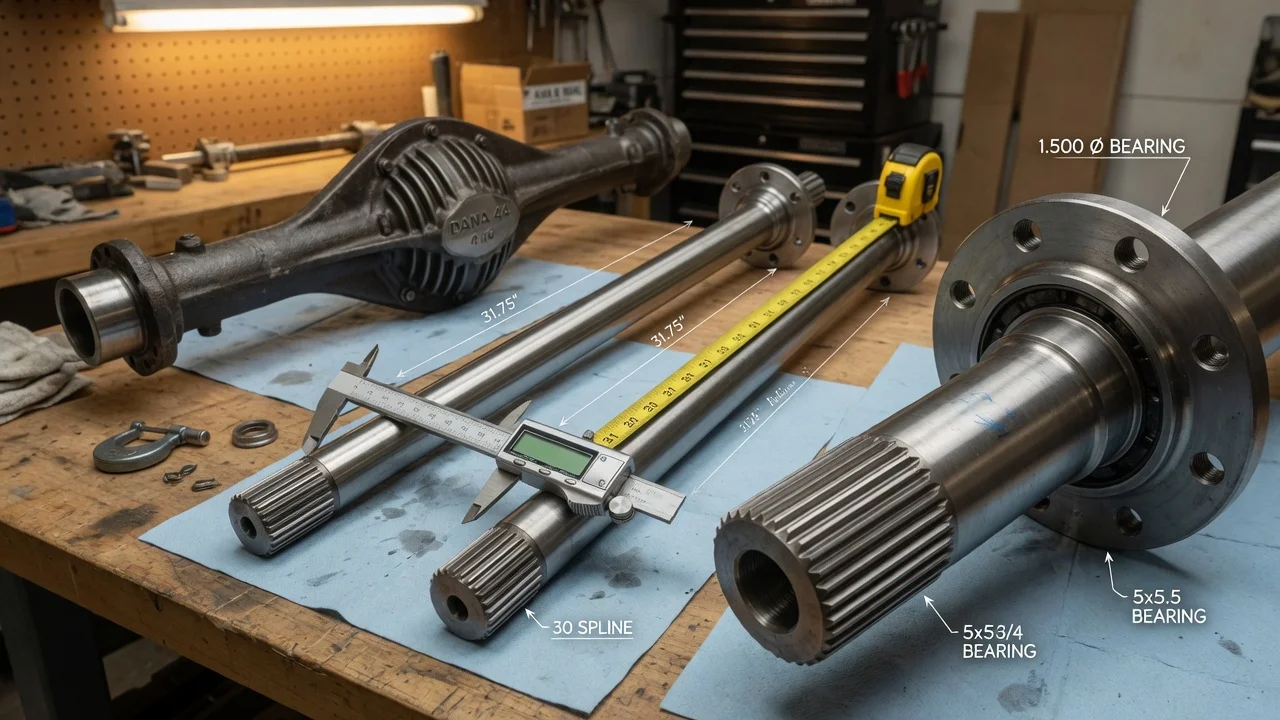
Choosing a Dana 44 rear axle shaft is mostly about measuring and matching. The Dana 44 name covers many housings built for different trucks, Jeeps and SUVs over several decades, so two shafts sold under the same label can differ in length, spline count, flange pattern and bearing retention. This guide covers which details to collect from your own axle, how to read a length chart, and how to narrow the options before you order.
Define the job the product must do
Start with the reason you need a shaft. Replacing a bent, broken or worn stock shaft on an unmodified axle is the simplest case, because the goal is to duplicate what came out. Upgrading for larger tires, a locker or harder off-road use adds requirements, because the new shaft may need to match a different carrier or a higher spline count. Building or swapping an axle from another vehicle is the most demanding case. The housing may have been narrowed, widened or fitted with different ends, so the original vehicle's catalog data may no longer describe it.
Write down the practical constraints too. Note the exact vehicle configuration and whether the axle is original, and check the service history for earlier swaps or differential changes. Decide whether you will keep the current wheels, brakes and ABS. Also consider whether you can press bearings yourself or will pay a shop, and how long the vehicle can be out of service. These answers decide which fitment details matter most and how much flexibility you have when a part is back-ordered.
Check compatibility
Length is the first filter. Many Dana 44 rear housings place the differential off-center, so the left and right shafts are often different lengths. Measure and order each side separately, even if you think your housing is centered. A modified housing makes your own measurement more reliable than any catalog entry, because narrowing or widening changes the required length directly. Remove the old shaft and measure it on a flat surface, keeping it straight. A bent shaft gives a misleading figure, so measure the opposite side or the housing if you suspect damage.
The inner end must match the differential. Count the splines on the old shaft, or confirm the count for your carrier or locker, because the shaft has to engage the side gears. Changing spline count usually means changing side gears or the carrier as well. Also identify how the shaft is retained. C-clip shafts are held by clips inside the differential and need a matching groove at the inner end. Bearing-retained shafts are held at the housing end by a pressed-on bearing and a retainer plate. The two designs are not interchangeable without a conversion, and some lockers are only offered for one type.
The outer end must match the wheel and brake hardware. Check the bolt pattern, stud size and thread, flange diameter and center pilot. Check whether the axle uses drum or disc brakes and how the parking brake works. Find out whether an ABS tone ring sits on the shaft or elsewhere. Confirm the bearing and seal size the housing ends require. Axle tags, build records and manufacturer specifications help, but a previous owner's swap can override all of them, so compare paperwork against the physical parts.
Reading a Dana 44 rear axle shaft length chart
A length chart is a useful starting point, especially for an unmodified axle, but read its notes before trusting a number. Suppliers do not all measure the same way. Some measure from the wheel mounting face of the flange to the inner tip of the shaft, while others use a different reference point. Comparing your measurement against a chart that uses another method can leave you with a shaft that is noticeably too long or too short.
Match the chart row on more than vehicle and model year. Confirm the side, spline count, retention type and brake type for that row, because one model year can include several axle versions. If your measurement falls between listed lengths, or the chart has no row for your housing, contact the supplier with your measurements and ask about custom-length shafts. Do not pick the nearest entry.
Features that affect the choice
Material and processing claims matter only when they are specific. A listing that names the alloy, states the heat treatment and gives the spline count lets you compare products. Labels such as heavy-duty, extreme or pro-grade say nothing measurable on their own. Higher spline counts are typically associated with a larger spline diameter, which is why they are common in upgrade shafts. They only make sense if your differential is matched to them.
Check what comes in the box. Some shafts arrive with bearings, seals, studs and retainer rings already pressed on. Others are bare shafts that need a press and extra parts. Find out whether the shaft is sold singly or as a pair, whether the tone ring is installed, and what the warranty covers and excludes. A stronger shaft also does not strengthen the rest of the axle. Housing tubes, side gears and the carrier still have their own limits.
Limitations and ownership costs
Budget for more than the shaft. Expect new axle seals, possibly bearings and retaining rings, a cover gasket or sealant, and gear oil to refill the differential. On C-clip axles you must remove the differential cover and cross shaft to release the clips. Bearing-retained shafts need a press to remove and install the bearing and retaining ring, which often means shop labor. During the job, inspect the bearing journals, seal surfaces, housing ends and side gear splines. A damaged sealing surface or worn housing end can ruin a new shaft and seal quickly.
A new shaft cannot fix a bent housing, a worn or cracked carrier, wrong gearing or loose wheel bearings elsewhere. Inspection and service timing should follow the manufacturer's maintenance schedule for your vehicle, adjusted for your operating conditions such as towing, water crossings or heavy off-road use. There is no universal replacement interval for axle shafts. Record the part details and installation date in the vehicle's service history so the next repair starts with accurate information.
Build a practical shortlist
Before comparing products, confirm these points for each side: shaft length by the supplier's measuring method, spline count, C-clip or bearing-retained design, bolt pattern and stud size, flange pilot, brake and parking brake type, ABS tone ring requirements, and bearing and seal size. Then check what is included and whether the shaft is pre-assembled. Look for stated material and heat treatment, warranty terms and the return policy for parts that do not fit.
Compare only the candidates that pass every item, and treat any unknown as a reason to measure or ask the supplier, not to guess. Keep the old shafts until the new ones are installed and checked for correct engagement, seal fit and wheel fitment. A careful measurement and a confirmed match on splines, retention and the outer flange will matter more to the result than any product ranking.