Dana 60 Rear Axle Shafts: Checking Length and Fitment
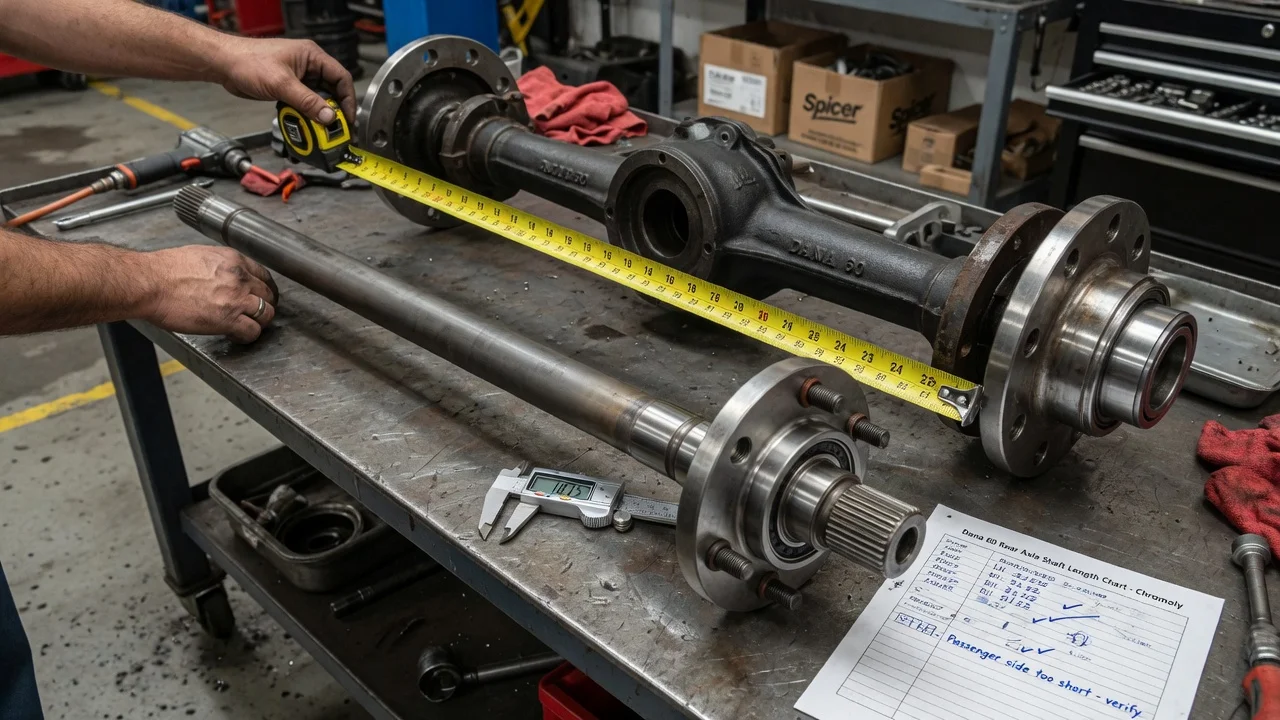
A Dana 60 rear axle shaft with the wrong length, spline count or float type can cause leaks, noise, wheel play or a shaft that never seats properly. This axle was installed under many trucks and vans in several configurations, so a part listed as fitting a Dana 60 is not automatically correct for yours. This guide covers recording symptoms, separating likely causes, checking length and fitment in a sensible order, and deciding what to do next.
Establish the symptoms
Start by writing down exactly when the problem appears. Note whether it began immediately after a shaft, bearing, seal, carrier or brake job, or developed gradually. Record the conditions: cold or warm, loaded or empty, straight-line cruising, turning, accelerating or coasting. Typical complaints linked to shaft fitment include gear oil seeping past the hub or wetting the brake components, a clunk or click when taking up drive, a wheel that feels loose when rocked by hand, a new shaft that will not slide fully home, or a flange that stands off the hub instead of sitting flush. Also note which side is affected, since many installations use different left and right shaft lengths.
Recent changes matter as much as the symptom itself. List any parts swapped, including whether the replacement shaft came from a different vehicle, a salvage axle or an aftermarket kit. Note changes to the differential carrier, such as a locker or limited-slip unit, because the carrier side gears must match the shaft spline count. If the housing has been narrowed, widened or swapped from another vehicle, the original shaft listings for your truck may no longer apply. A short service history, even a rough one, saves time later.
Distinguish plausible causes
The most common fitment problem is simply the wrong shaft. Dana 60 rear axles were built in semi-float and full-float versions, with different spline counts and different lengths depending on the vehicle and the side. A shaft from another application may share the axle name yet differ in length, spline count, flange shape or bolt pattern. Evidence that supports a wrong-part cause: the trouble started right after installation, the new shaft looks different from the old one when laid side by side, or the flange will not mate cleanly with the hub or brake assembly.
A spline mismatch is a separate cause. If the shaft and carrier side gear do not share the same spline count, the shaft will not engage at all, or it may enter only partway if forced, which risks damaging both parts. Length problems behave differently: a shaft that is too long can bottom out inside the differential and hold the flange away from the hub, while one that is too short may engage too little of its spline. A housing that has been altered points toward a length issue rather than a part numbering error.
Not every symptom is fitment. A worn wheel bearing, a failed seal, incorrect hub adjustment on a full-float axle, a bent shaft or a bent axle tube can produce leaks, play or vibration with a correct shaft installed. These causes become more likely when the symptoms developed gradually, after heavy loads, towing or an impact, rather than immediately after a parts change.
Checks in a useful order
Begin with observations that need no disassembly. Locate the axle identification tag, often attached under a differential cover bolt, and record any numbers stamped on it; also note the vehicle identification number and build data. Look at the wheel ends: on a full-float axle the shaft flange bolts to the outside of a hub that carries the wheel on its own bearings, while a semi-float shaft supports the wheel directly. Check for wet spots around the hub, backing plate or brake parts, and with the vehicle parked safely, note whether the wheel shows play when rocked.
Measuring requires removing the shafts, which means lifting and supporting the vehicle on rated stands and, on many configurations, draining gear oil and disturbing brakes or hub hardware. With a shaft out, measure overall length from the flange mounting face to the end of the splines, count the splines, and record the flange bolt pattern and diameter. Measure old and replacement shafts the same way and compare them, then check both sides, since Dana 60 rear axle shaft lengths often differ left to right. Inspect the splines for twisting and the shaft for visible bends. Runout checks with a dial indicator and verification of bearing adjustment or fastener torque require the manufacturer specifications for your exact vehicle.
Leave reassembly involving full-float hub bearing adjustment, pressed-on bearings, carrier work or brake components to a qualified technician unless you have the tools, specifications and experience. Errors in these steps can create the same symptoms you are trying to diagnose.
Interpret the findings
A matching tag, part number and measured length on both old and new shafts largely rules out a wrong-part cause and shifts attention to bearings, seals, hub adjustment or damage. A clear difference in length, spline count or flange pattern establishes a fitment mismatch, but confirm the correct dimension from the original shaft or manufacturer data before ordering, rather than guessing from a single measurement. If the shaft is correct yet still will not seat, look for debris, damaged splines, a carrier problem or a modified housing.
Be cautious about conclusions drawn from leaks or noise alone. A leak at the hub can come from a seal damaged during installation, an overfilled differential or a blocked vent as easily as from an incorrect shaft. A visibly bent shaft or tube confirms damage but not why it happened. Before replacing parts, make sure the finding explains every symptom you recorded, including which side is affected and under what operating conditions.
Urgency and next action
Stop driving and have the vehicle inspected if a wheel wobbles or moves noticeably when rocked, if gear oil is soaking the brakes, if you hear grinding or loud clunking from a wheel end, or if a shaft has broken or will not seat. On a semi-float design the shaft retains the wheel, so a failure can allow the wheel to separate. A full-float design keeps the wheel on the hub if the shaft breaks, but drive to that side is lost and the hub still needs attention. No remaining distance can be considered safe once these signs appear.
When ordering a part or booking a repair, bring the year, make, model and vehicle identification number, the axle tag information, whether the axle is semi-float or full-float, the spline count, the measured length of each shaft and which side it came from, the carrier type, and any housing or gearing modifications. Include the recent service history and your symptom notes. With that vehicle configuration documented, a parts supplier or technician can confirm the correct shaft instead of relying on a generic listing.