How to Measure Rear Axle Shaft Length
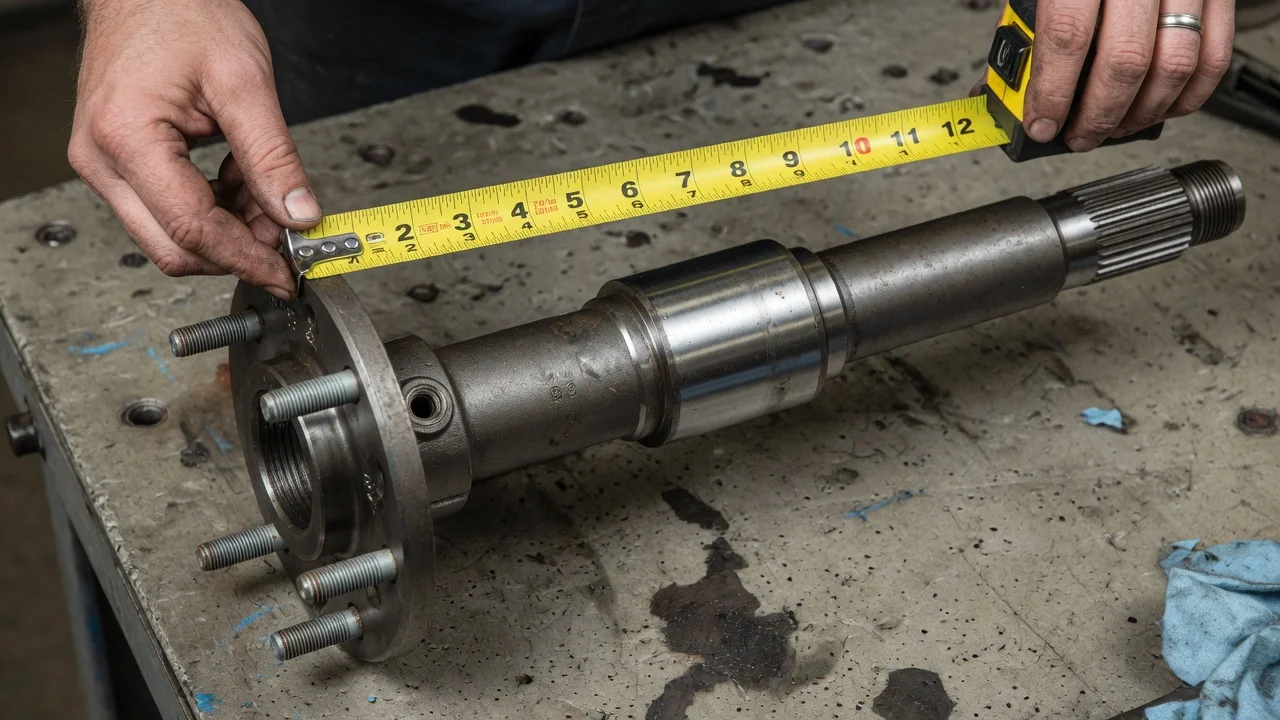
An accurate rear axle shaft measurement decides whether a replacement shaft drops straight in or causes fitment trouble inside the differential. The usual method is simple. With the shaft out of the housing, measure in a straight line from the wheel mounting face of the flange to the tip of the inner splines. This guide explains why that reference point is used, what can change it, and which other details a parts supplier will expect you to provide.
The Short Answer: Flange Face to Spline Tip
For most solid rear axles, measure the shaft after removing it and laying it on a flat bench. Hold a straightedge or carpenter's square against the outer wheel mounting surface of the flange. This is the face that the wheel and the brake drum or rotor sit against. Run a tape measure or long steel rule along the shaft to the very end of the inner splined section. Keep the tape parallel to the shaft and straight, not sagging or following a curve. Read the value where the tape meets the spline tip, then measure again to confirm it.
Two qualifications matter. First, catalogs and axle builders do not all use the same reference points. Some measure from the back side of the flange, and some include a pilot or stub. Check the seller's convention before you compare your number with a listing. Second, the left and right shafts on many axles are different lengths, so measure each side separately and label it.
How a Rear Axle Shaft Fits the Housing
A rear axle shaft carries torque from a side gear in the differential out to the wheel. Its inner splines engage that side gear, and its outer end carries the flange and wheel studs. How the shaft is held in place depends on the design. On a semi-floating C-clip axle, a clip sits in a groove at the inner end of the shaft and locks it against the side gear. On a semi-floating bearing-retained axle, a bearing is pressed onto the shaft near the flange and held by a retainer plate bolted to the housing end. On a full-floating axle, the hub rides on its own bearings on the axle tube. The shaft only transmits torque and bolts to the hub.
Length matters because the retention feature and the spline engagement both depend on where the inner end of the shaft sits. A shaft that is too long can interfere with parts in the differential center or keep its retention groove from lining up. A shaft that is too short may not engage the side gear splines fully, and its clip or retainer may not seat as designed.
What Changes the Measurement
Many differential housings sit off center, so one shaft is noticeably longer than the other. The axle design also changes the method. The flange-to-spline approach applies to solid axles. Independent rear suspension uses half-shafts with constant velocity joints, and those are measured to whatever reference the part maker specifies, often between joint centers or overall in a stated position. Do not apply the solid-axle method to a CV half-shaft.
The same model can use different axle assemblies depending on its configuration. Drivetrain, differential option, towing equipment, body or wheelbase, and production period can all make a difference. Two shafts of identical length can still have different spline counts. Service history matters too. A previous owner may have installed a narrowed or widened housing, custom shafts or parts from another vehicle, in which case the original specification no longer describes what is under the car.
Some features do not change length but still decide whether a shaft fits. These include bolt pattern, stud size, flange diameter, the bearing and seal surfaces, brake type and any ABS tone ring pressed onto the shaft.
Taking the Measurement Step by Step
Park on level ground, chock the front wheels, then raise the rear axle and support it on rated jack stands. Never work under a vehicle held only by a jack. Remove the wheel and then the brake drum, or the caliper and rotor. The removal steps depend on how the shaft is retained. On a C-clip axle, drain the differential and remove its cover. Remove the pinion cross shaft lock bolt and the cross shaft, push the axle inward, take out the C-clip, then slide the shaft out. On a bearing-retained axle, remove the retainer plate nuts through the flange access holes and pull the shaft with a suitable puller or slide hammer. Follow the service procedure for your vehicle, and avoid dragging the splines across the axle seal.
Wipe the shaft clean and lay it on a flat surface. Square a straightedge against the flange's wheel mounting face and measure parallel to the shaft to the spline tip, using one unit system throughout. Count the splines by marking one tooth and counting around until you return to it. A caliper reading of the splined section's outside diameter and a few photographs of both ends will help a supplier confirm the match.
If the shafts cannot come out, for example when you are planning custom axles for a housing swap, measure the installed assembly instead. Measure from one wheel mounting surface across to the other, and also measure the housing from end to end. Give those numbers to the axle builder together with the differential details, and let the builder calculate the individual shaft lengths.
Details to Record Alongside Length
Length alone rarely identifies the correct shaft, so record the following for each side: • overall length; • spline count and splined-section diameter; • bolt pattern, stud diameter and thread; • flange diameter; • retention type; • bearing type, and any part number visible on the bearing; • whether an ABS tone ring is present; Add the axle housing tag or code and the vehicle identification number so a parts counter can check its records.
With the shaft out, inspect it as well. Look for pitting or a worn track where the bearing rides, a groove worn into the seal surface, twisted or chipped splines, damaged studs, and visible bending. Hard operating conditions such as heavy towing or off-road use can bend a shaft. A bent or damaged shaft should be replaced and should not be used as a pattern for ordering.
Limitations and When to Get Help
Measuring a shaft only tells you what is currently installed, which may not be what the factory fitted. Before ordering, compare your numbers with the manufacturer's specifications or a parts catalog lookup by VIN or axle code, and confirm the supplier's measuring convention. Axle shafts do not have a universal replacement interval on a maintenance schedule. Replacement normally follows inspection findings such as noise, leaks, bearing wear or damage.
Get professional help in these situations. You cannot lift and support the vehicle safely. The bearing must be pressed off and on, which takes a press and the correct retaining ring procedure. You have a full-floating axle that needs hub bearing adjustment. Or the measurements do not match any listed part. Incorrect retention or bearing installation can let a shaft move outward in service, so work with that risk deserves a qualified shop.