CVSA Brake Safety Week Inspections: What They Are and How They Differ
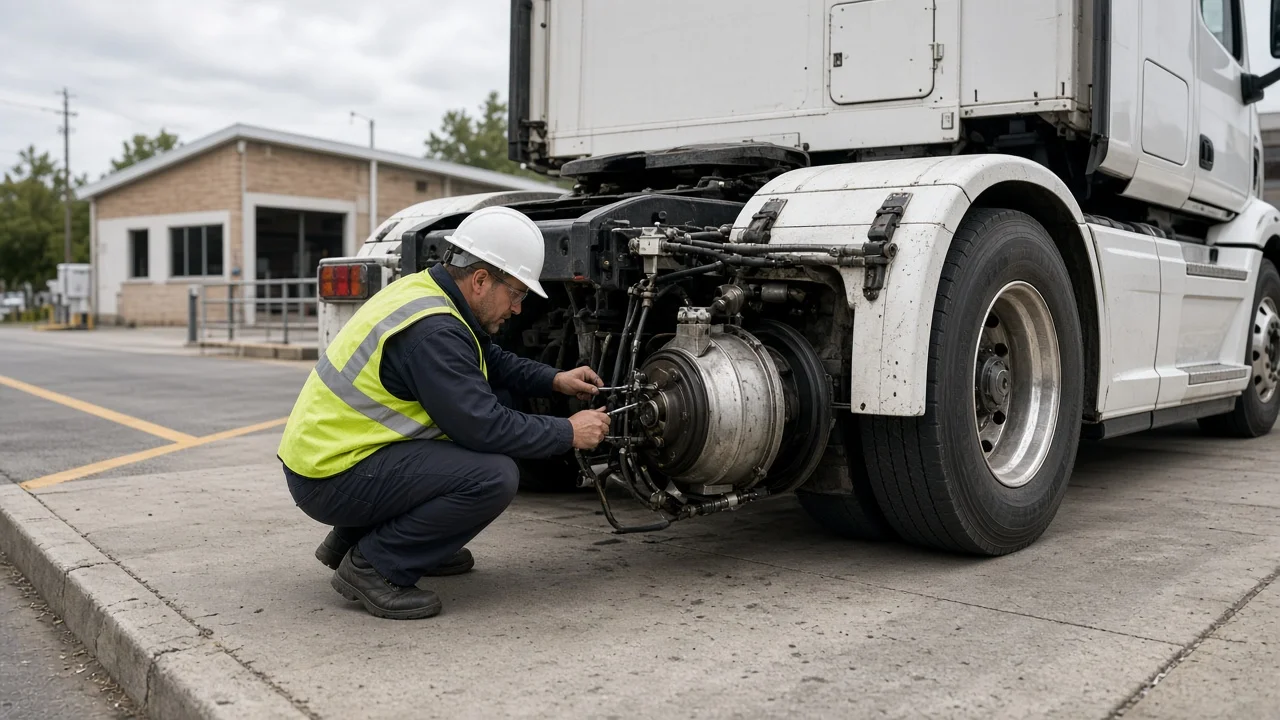
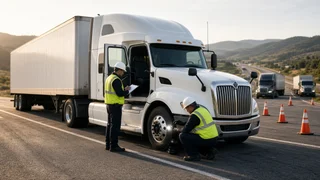
CVSA Brake Safety Week is an annual enforcement and awareness campaign run by the Commercial Vehicle Safety Alliance (CVSA), a nonprofit group of commercial vehicle safety officials and industry representatives. During the campaign, inspectors in participating jurisdictions across North America inspect commercial motor vehicles, focusing on brake systems and components. Vehicles with serious brake defects can be removed from service until they are repaired. The campaign applies to commercial trucks and buses. It does not apply to private passenger cars, and it is not a periodic roadworthiness test that issues a pass certificate.
The Short Answer
If you searched for the CVSA brake check week, you are most likely looking for Brake Safety Week. It is a concentrated period of roadside and fixed-site safety inspections of commercial vehicle brakes, carried out by state, provincial, territorial and federal enforcement personnel. It has two goals: finding and removing vehicles with dangerous brake conditions, and encouraging carriers and drivers to maintain brakes proactively. CVSA announces the dates in advance each year, and the announcement usually names a particular brake component or condition as that year's focus area.
Who and What Is Covered
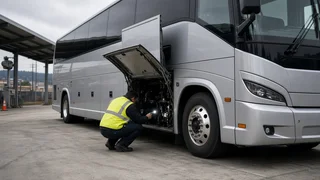
The campaign targets commercial motor vehicles as defined by the regulations of each participating jurisdiction. These are typically heavy trucks, tractor-trailers and motorcoaches or other buses. Both air brake systems, which are common on heavy vehicles, and hydraulic brake systems can be inspected. Owners of ordinary personal cars and light trucks are generally not part of Brake Safety Week. Requirements for those vehicles come from state safety inspection or emissions test programs, where such programs exist.
Participation is decided jurisdiction by jurisdiction. The number of inspection sites, how they are staffed and the methods used therefore vary from place to place and from year to year.
How the Inspections Work
Inspectors follow the North American Standard Inspection Program procedures. These are standardized inspection levels that define how thorough an inspection is and whether it covers the driver, the vehicle or both. Brake Safety Week relies mainly on vehicle-focused inspections:
Level I (North American Standard Inspection): the most comprehensive level. It covers both the driver's credentials and a detailed examination of the vehicle, including the brakes. Level V (vehicle-only inspection): a full vehicle inspection done without the driver present, often at a carrier's facility. Other levels: some jurisdictions also use other inspection levels or specialized equipment during the campaign.
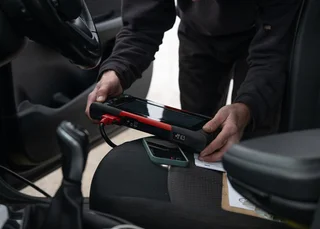
Some jurisdictions use performance-based brake testers. These are devices that measure a vehicle's actual braking force rather than relying only on a visual and manual check. Where this equipment is available, it gives inspectors a direct measure of braking efficiency in addition to the component inspection.
Inspection Criteria: What Inspectors Look At
The exact checklist depends on the brake system type and the inspection level. A brake-focused inspection typically examines the following areas:
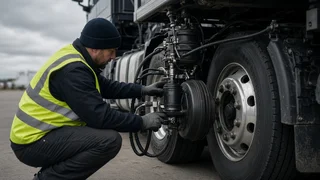
Brake adjustment: on air-brake vehicles, the pushrod stroke of each brake chamber is measured to see whether the brakes are out of adjustment. Slack adjusters: these are the levers that translate pushrod movement into brake application. Inspectors check their condition and operation. Friction material and drums or rotors: linings and pads are checked for wear, contamination or missing pieces. Drums and rotors are checked for cracks or other damage. Air hoses and tubing: lines are checked for chafing, kinks, cracks, bulges or improper routing. Air system performance: air pressure buildup, leaks and the operation of the low-air warning device. Parking brakes: the components are checked to confirm they function and are in good condition. Antilock braking system (ABS): inspectors check whether the ABS malfunction warning lamp works and indicates a fault where ABS is required. Hydraulic components: on hydraulic systems, inspectors check fluid levels, leaks, and the condition of lines and other parts.
Each year's announced focus area does not narrow the inspection to that one item. CVSA typically collects and reports extra data on the focus area, while inspectors continue to examine the rest of the brake system.
What Happens After the Inspection
Defects are judged against the North American Standard Out-of-Service Criteria. A vehicle with a condition severe enough to meet those criteria is placed out of service. It cannot continue operating until the violation is corrected, either through a repair on site or by arranging transport to a repair facility as the jurisdiction permits. Less serious defects may be recorded as violations without taking the vehicle off the road. Inspection results become part of the carrier's safety record.
There is no formal retest in the sense used by state inspection programs. A vehicle placed out of service must have the defect repaired before it returns to operation. A vehicle that passes a qualifying Level I or Level V inspection with no critical violations may receive a CVSA decal. Inspectors generally use the decal to recognize recently inspected vehicles, and it is valid for a limited period of up to three months.
After the campaign, CVSA publishes aggregated results. These typically include the number of vehicles inspected, the share placed out of service for brake-related violations, and findings on the focus area. Figures differ every year, so consult the current release for specific numbers.
How Brake Safety Week Differs From Other Vehicle Inspections
Brake Safety Week is often confused with routine registration-related inspections. The main differences:
Aspect | CVSA Brake Safety Week | State periodic safety inspection | Emissions test; Vehicles | Commercial trucks and buses | Varies by state; often passenger and commercial vehicles | Varies by state; usually passenger vehicles and light trucks; Purpose | Enforcement and awareness focused on brakes | Confirming general roadworthiness for registration | Confirming compliance with exhaust emission standards; Timing | Annual campaign on announced dates | On a set schedule, such as annually or at registration renewal | On a set schedule tied to registration in participating areas; Who performs it | Certified enforcement inspectors | Licensed inspection stations or state facilities | Licensed or state testing facilities; Outcome | Out-of-service order, recorded violation, or a CVSA decal if no critical violations | Pass certificate or sticker, or failure requiring repair and retest | Test certificate or record of compliance, or failure requiring repair and retest; Vehicle identification | Vehicle and carrier details recorded in the inspection report | Vehicle identification number verified and linked to registration | Vehicle identification number verified and linked to registration
Commercial vehicles are usually also subject to separate periodic or annual inspection requirements under federal or state rules. Brake Safety Week does not replace those requirements, and a decal from the campaign is not a substitute for a required periodic inspection record.
How Carriers and Drivers Can Prepare
Because the campaign is announced in advance, it is often treated as a reminder to verify brake condition. Its real purpose, however, is to encourage maintenance practices that should be followed year-round. Practical steps include:
Do thorough pre-trip and post-trip inspections, paying particular attention to brake adjustment, air leaks and hose condition. Confirm that the ABS warning lamp lights at startup and goes out, and fix any active fault. Check that automatic slack adjusters are working correctly, rather than repeatedly adjusting them by hand to hide an underlying problem. Replace worn, damaged or contaminated friction material and damaged drums or rotors. Keep maintenance and inspection records current and accessible. Review the year's announced focus area and give that component extra attention.
Key Takeaways
CVSA Brake Safety Week is a yearly, North America-wide inspection campaign for commercial vehicle brakes. Certified inspectors use standardized procedures and out-of-service criteria. It differs from state safety inspections and emissions tests: it targets commercial vehicles, does not issue a pass certificate for registration, and removes vehicles with critical defects from the road until they are repaired. For carriers and drivers, the most reliable way to get through the week without problems is consistent brake maintenance and careful daily inspections.