Where to Find CNG Stations in California
The Short Answer
The most dependable way to find compressed natural gas (CNG) fueling in California is a dedicated alternative-fuel station locator, such as the one maintained by the US Department of Energy's Alternative Fuels Data Center, which lets you filter by fuel type and access. Once you find a station, confirm it before driving there: CNG stations differ in whether they are open to the public, how they take payment, when they are open and which vehicles their dispensers serve.
This guide does not list individual stations, station counts, prices or operating hours, because no verified data of that kind was available for it. Those details change, so treat a current locator listing, checked against the station operator, as the authority.
What Counts as a CNG Station
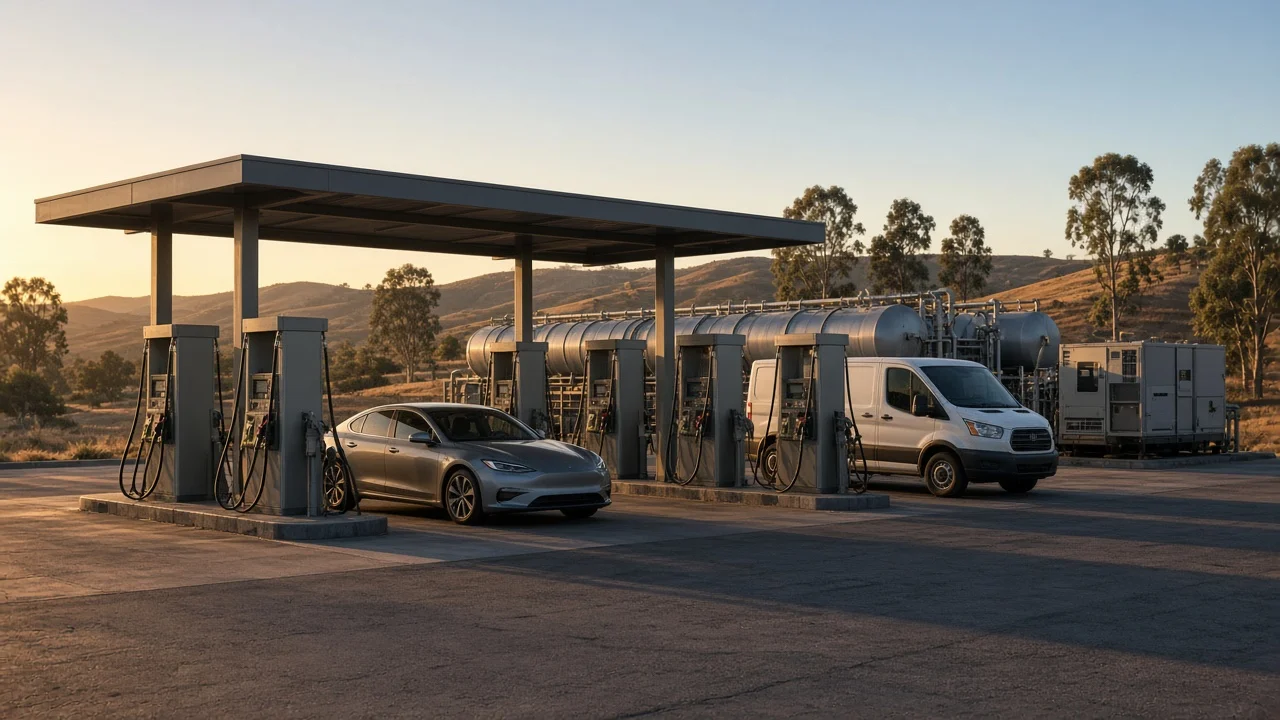
A CNG station dispenses natural gas that has been compressed to high pressure and stored as a gas in the vehicle's tanks. It is a separate fuel system from gasoline and diesel. A CNG vehicle can use it only if the vehicle was built or properly converted to run on CNG, and bi-fuel models may also be able to run on gasoline.
Three fuels are easy to mix up when searching:
CNG (compressed natural gas): natural gas stored as a high-pressure gas. This is the fuel CNG cars, vans, pickups and many fleet vehicles use. LNG (liquefied natural gas): natural gas chilled into a cryogenic liquid. It is used mainly by some heavy-duty trucks and needs a different vehicle tank and dispenser. An LNG-only station cannot fuel a CNG vehicle. LPG (liquefied petroleum gas, also called propane or autogas): a different fuel altogether, stored as a liquid under moderate pressure. LPG dispensers and nozzles are not compatible with CNG vehicles.
When you use a locator, select CNG specifically rather than a general natural gas or alternative fuel category so that LNG-only and propane sites are filtered out.
How to Locate a Usable Station
Filter by fuel and access: choose CNG and, unless you operate a fleet vehicle with the right credentials, choose public access only. Check the listing details: locator entries often note access restrictions, payment methods, hours, and whether the site is set up for light-duty vehicles, heavy-duty trucks or both. Confirm with the operator: listings can lag behind closures, maintenance outages or changes in access. Check the station network's own app or contact the operator before relying on a station, especially for long trips. Plan around gaps: CNG fueling is far less widespread than gasoline. Map stations along your whole route, and on a bi-fuel vehicle know how much gasoline range you have as a backup.
Public, Private and Fleet-Only Sites
Many CNG fueling sites serve commercial or government fleets such as transit buses, refuse trucks and delivery vehicles. Some of these are private and closed to the public. Others are public but require a fleet card or an account with the station network. A station appearing on a map does not mean a private motorist can fuel there, so read the access and payment notes before you go.
Some private fleet sites use time-fill, where vehicles are left connected for hours, often overnight. Public retail sites are generally fast-fill, refueling a vehicle in a single stop. A station's listing or operator can tell you which it offers.
Recognizing a CNG Dispenser and Confirming Compatibility
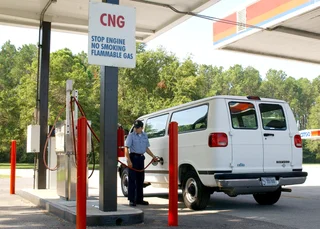
At the station, CNG dispensers are labeled for compressed natural gas and use a nozzle that locks onto the vehicle's fueling receptacle. They look nothing like a gasoline handle. CNG is usually sold by gasoline gallon equivalent (GGE) or diesel gallon equivalent (DGE), which express the amount of natural gas holding the same energy as a gallon of gasoline or diesel. That lets you compare cost and range against liquid fuels.
Dispensers and vehicle tanks carry pressure ratings, and a nozzle must match the vehicle's rated fill pressure. Find your vehicle's CNG receptacle location, its rated fill pressure and any fueling cautions in the owner's manual or on the labels near the receptacle and tank for your specific model year, configuration and conversion. Many CNG vehicles also carry an external CNG identification label, often diamond-shaped, which helps confirm that a vehicle is CNG-equipped. Follow the instructions posted on the dispenser, and if a nozzle does not seat properly, do not force it.
What This Guide Cannot Confirm
No verified figures were available for the number of CNG stations in California, their regional distribution, current fuel prices, renewable natural gas content, or the hours and payment terms of particular sites. Check all of these against a current station locator and the station operator before you rely on a stop.