Where to Find CNG Refueling Stations
The short answer
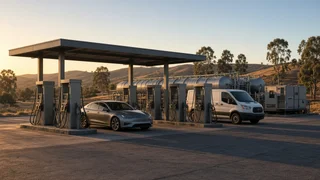
In the US, compressed natural gas (CNG) is sold at a limited network of stations rather than at most ordinary petrol stations. Some CNG dispensers sit alongside gasoline and diesel pumps at conventional fuel stations or truck stops. Others are standalone sites run by fuel retailers, gas utilities, transit agencies, municipalities or fleet operators. The most reliable way to find one is a dedicated alternative-fuel station locator, such as the one maintained by the US Department of Energy's Alternative Fuels Data Center, or a fueling app that filters by fuel type. Check station details before you drive there.
One qualification changes the answer for many drivers: a station appearing on a map does not mean you can use it. Some CNG sites are private or restricted to specific fleets, some require a fleet fuel card, and some are designed for heavy-duty vehicles. Finding a station is only half the task. The other half is confirming that it is open to the public, accepts your payment method and dispenses at a pressure your vehicle is rated for.
What CNG is, and what it is often confused with
CNG is natural gas, mostly methane, compressed to high pressure and stored on the vehicle in cylinders. Several similar-sounding fuels are sold at different equipment and are not interchangeable.
CNG (compressed natural gas): gaseous natural gas under high pressure. This is the fuel this guide covers. LNG (liquefied natural gas): natural gas cooled to a liquid. It is used mainly by some heavy-duty trucks, and stations may list it separately from CNG. LPG, propane or autogas: a different fuel, liquefied petroleum gas, with its own dispensers and vehicle fuel systems. In the US it is usually listed as propane. A propane station cannot refuel a CNG vehicle. RNG (renewable natural gas): natural gas from sources such as landfills or digesters. Some stations sell it compressed as CNG, so the dispensing equipment is the same as for fossil CNG.
How to find CNG stations
Use a fuel-specific station locator. Filter by CNG, and where the option exists, by public access. Use route planning. CNG coverage is uneven, so plan longer trips around known stations rather than expecting to find one on the way. Check truck stops and travel centers along freight corridors. Some offer CNG, though the equipment may be aimed at heavy-duty trucks. Ask local sources. Your vehicle's dealer, your gas utility or a local fleet operator may know which nearby stations are public and reliable. Call the station when you can. Status, hours and access can change, and listings are not always current.
What to check in a station listing
Locator listings usually include details that tell you whether a station will work for you. Read them before you set off.
Access: public, limited-access or private. Private and fleet-only sites are often included in station maps. Hours: some public stations are open around the clock, while others keep restricted hours. Payment: whether the station takes standard credit or debit cards, or requires a fleet card or account. Fill type: fast-fill dispensers refuel a vehicle in one stop, much like a petrol pump. Time-fill equipment refuels vehicles slowly, typically overnight at fleet depots, and is generally not usable for a quick public fill. Pressure rating: dispensers are rated for specific fill pressures. The station's rating must be compatible with your vehicle's fuel system. Vehicle size and nozzle type: some sites or lanes are built for heavy-duty trucks and may use a higher-flow nozzle that does not fit light-duty vehicles. Status: whether the station is operational, temporarily unavailable or planned.
How to recognize a CNG dispenser on site
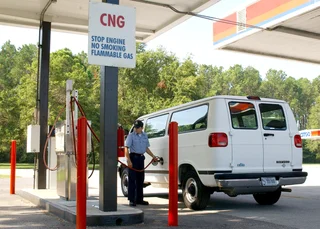
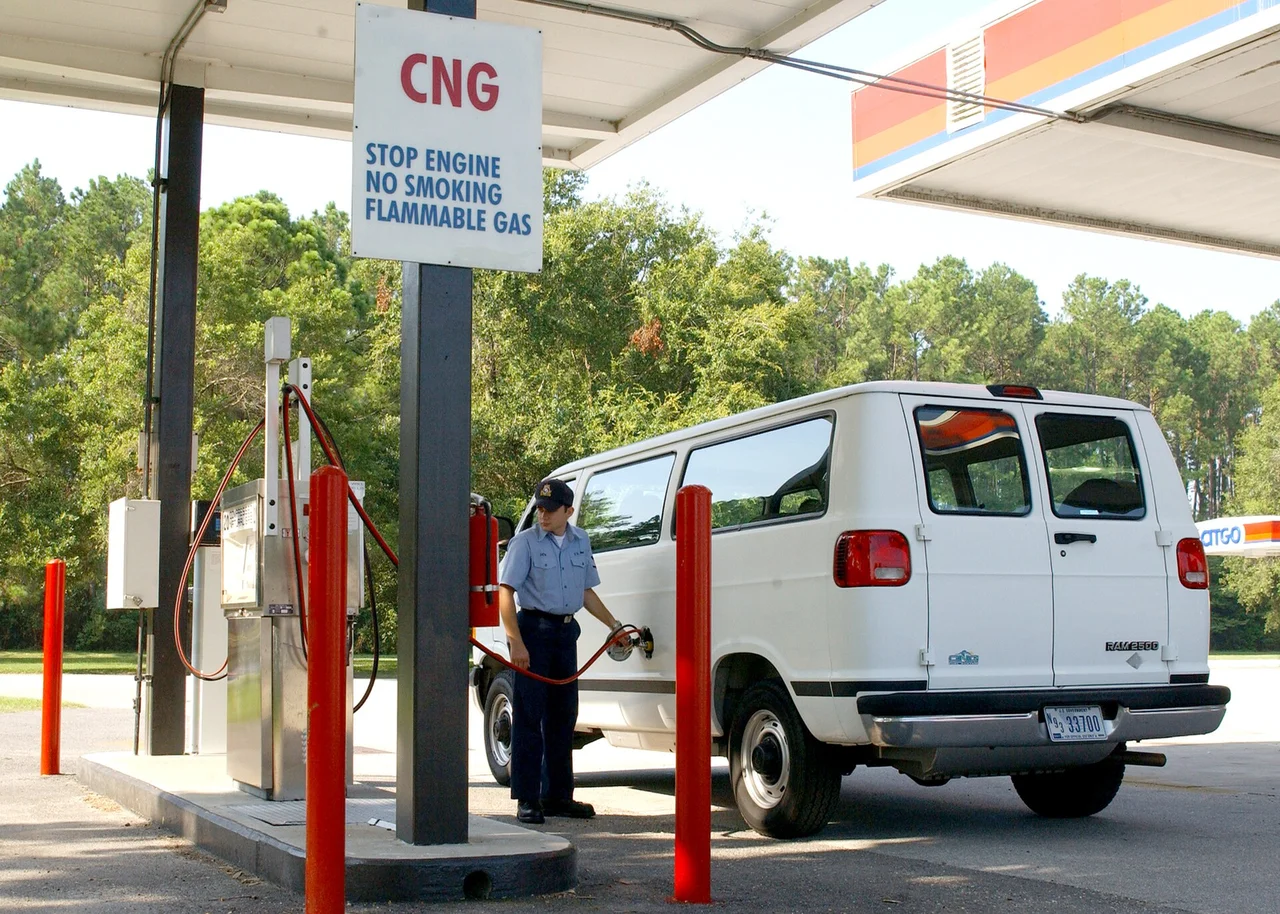
At a mixed fuel station, the CNG dispenser is usually a separate unit labeled CNG or compressed natural gas. Look for that marking and do not assume any unusual-looking pump is the right one. A CNG nozzle locks onto the vehicle's receptacle. It is not a liquid-fuel nozzle, and it differs from a propane nozzle. The dispenser should show its rated fill pressure, often alongside operating instructions and safety warnings.
Many US light-duty CNG systems are rated for 3,600 psi service pressure, and some older or specific systems are rated lower. Treat that as a general pattern, not a rule for your vehicle. Your vehicle's fuel system label and owner's documentation state its rated pressure. Use a dispenser whose rating matches what the vehicle documentation specifies.
Finding the fill receptacle on your vehicle
The receptacle's location depends on the vehicle. On factory-built and bi-fuel vehicles it may sit behind the fuel door next to a gasoline filler, or in a separate location. On converted vehicles it may be somewhere else entirely. Labels near the receptacle or on the CNG system typically identify the fuel and pressure rating. Confirm the location and markings in the owner's manual or conversion documentation for your exact model year, powertrain and configuration rather than relying on another vehicle's layout.
Gaps in this guide
This guide does not include current station counts, regional coverage figures, fuel prices, specific station names or locations, or opening hours, because no verified data for these was available. Check those details directly in an up-to-date station locator or with the station operator before relying on any site.