Natural Gas Station for Cars: How CNG Refueling Works
The short answer
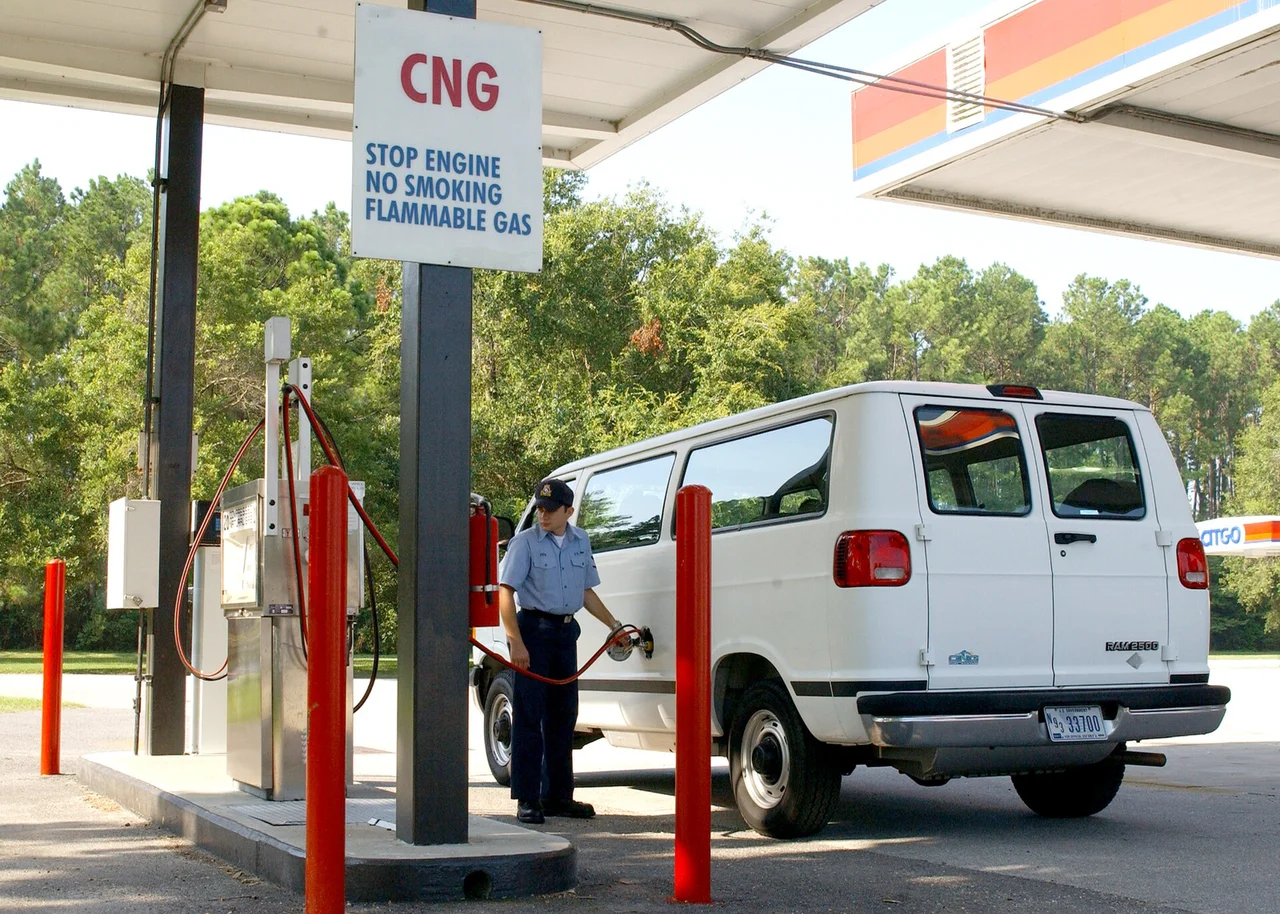
A natural gas station for cars is a fueling site with a dedicated dispenser for compressed natural gas, usually shortened to CNG. CNG is natural gas, mostly methane, stored on the vehicle as a gas under very high pressure in reinforced cylinders. Only a vehicle built for natural gas or properly converted to it can refuel at one of these pumps. A standard gasoline or diesel car cannot.
Two conditions shape the answer more than anything else. First, the vehicle and the pump must match in fuel type and pressure rating. Second, the station must be one you are allowed to use. In the US, natural gas stations are far less common than gasoline stations, and many serve commercial fleets, so some limit access or accept only specific fuel cards. Always confirm both points before you drive to a station.
Natural gas is not the same as LPG
Several gaseous fuels are easy to confuse, and their pumps are not interchangeable. The table below sets out the basic differences.
Fuel | What it is | How it is stored on the vehicle | Typical use; CNG (compressed natural gas) | Natural gas, mainly methane | As a high-pressure gas in cylinders | Passenger cars, light trucks, buses, fleets; LNG (liquefied natural gas) | Natural gas cooled until it becomes a liquid | As a very cold liquid in insulated tanks | Mainly heavy-duty trucks; LPG (liquefied petroleum gas, or propane autogas) | Mainly propane | As a liquid under moderate pressure | Some fleets, conversions and specialty vehicles
When people search for a natural gas pump for a car, they almost always mean a CNG dispenser. An LPG or propane station cannot refuel a CNG vehicle, and a CNG station cannot refuel an LPG vehicle.
Check that your vehicle can use CNG
Whether a car can use a natural gas pump depends on its powertrain and equipment, not just its make or model name. Some vehicles were sold from the factory as dedicated CNG models, which run on natural gas only. Others are bi-fuel and can switch between natural gas and gasoline. Still others were converted after purchase. Before you refuel, confirm the following:
The vehicle has a natural gas fuel receptacle. This is a dedicated filling connection, separate from any gasoline filler. The label near the receptacle states the fuel type and the vehicle's rated service pressure. The label on the CNG cylinder shows it is still within its stated service life or expiration date. Natural gas cylinders are built for a limited service life and need periodic inspection. If the vehicle was converted, the conversion system is certified for that vehicle. Your owner's documentation or the installer can confirm this.
If you cannot confirm any of these points, do not refuel until a qualified technician has checked the system.
Finding a natural gas pumping station
Because CNG stations are relatively sparse, plan around them rather than counting on finding one along the way. In the US, the Department of Energy's Alternative Fuels Data Center runs a station locator that lists CNG stations. Some fuel-finding apps also include natural gas. When you check a listing, look for these details:
Access: whether the station is public, or private and limited to certain fleets. Payment: whether it takes standard credit cards or requires a specific fleet or fuel card. Hours: some stations are unattended, and some have restricted hours. Pressure rating: which nozzle pressures the dispenser offers, so you can match it to your vehicle's label. Current status: stations can be temporarily out of service, so call ahead or check recent status updates where possible.
Stations also differ in how they fill. Fast-fill stations, the type you will usually find at public sites, refuel a vehicle in a session similar to a liquid fuel stop. Time-fill setups refuel vehicles slowly, often overnight, and are mostly used by fleets at their own depots.
How to refuel at a CNG pump, step by step
Dispenser designs vary by manufacturer and station operator. Follow the instructions posted on the pump wherever they differ from this general sequence.
1) Park so the vehicle's natural gas receptacle is within reach of the hose, then switch off the engine. 2) Do not smoke or create any ignition source, and follow any posted rules about phones. 3) Find the dispenser's emergency shutoff button before you start, so you know where it is. 4) Start the transaction by inserting or tapping the accepted card and selecting the correct pressure grade, if the pump offers more than one. 5) Remove the cap or dust cover from the vehicle's receptacle and check that the receptacle is clean and undamaged. 6) Check that the nozzle is the correct pressure rating for your vehicle, then push it firmly onto the receptacle until it locks in place. 7) Move the nozzle's handle or lever to the fill position, as marked on the nozzle. 8) Start the dispenser if it does not start on its own. The pump stops automatically when the fill is complete. Do not try to top off. 9) Move the handle or lever to the vent or off position. A short release of gas from the nozzle is normal at this point on many designs. 10) Remove the nozzle, put it back on the dispenser, and refit the receptacle cap.
How to verify the result
Check the vehicle's natural gas fuel gauge to confirm the level has risen. Check the receipt or dispenser display for the quantity delivered. CNG is often sold in gasoline gallon equivalents (GGE), a unit that expresses an amount of natural gas by its energy relative to a gallon of gasoline. Some stations sell in diesel gallon equivalents instead. After you disconnect, listen and smell for leaks. Natural gas sold for vehicles normally contains an added odorant. If you hear continuous hissing or smell gas, stay away from the vehicle, avoid ignition sources, press the emergency shutoff and alert station staff or emergency services.
Do not be alarmed if the gauge reads less than full, especially on a hot day. Gas warms up as it is compressed into the cylinder, and many dispensers adjust the fill for temperature. As a result, a fast fill may not show completely full, and the reading can shift slightly as the gas cools. If the gauge stays well below the level you expect after repeated fills, have the vehicle or the station equipment checked.
What this guide does not cover
No confirmed figures were available for this guide, so it does not give current CNG prices, the number or locations of US stations, specific pressure values, refueling times or vehicle range. It also does not list which current models are sold with factory CNG systems. For those details, check a current station locator, the station operator, your vehicle's owner documentation or a qualified natural gas vehicle technician. Rules on conversions, cylinder inspection and station access can differ by state.