Choosing a Transmission Cooler Flusher: Fitment, Features and Limits
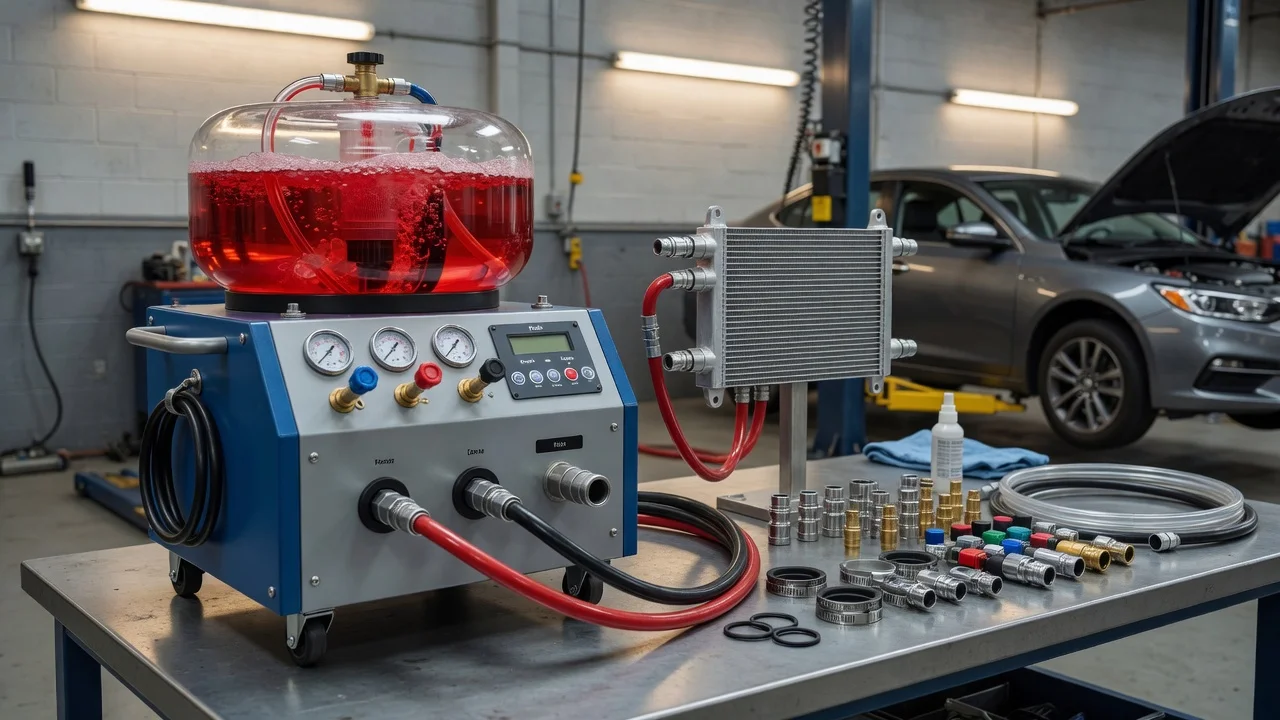
A transmission cooler flusher cleans the cooler and the lines that carry fluid between the transmission and its heat exchanger. It matters most when a transmission is being repaired or replaced, because debris left in the cooler circuit can travel straight into fresh internal parts. The right tool depends on the vehicle, the cooler design and how often you expect to use it, so define the job before comparing products.
Define the job the product must do
Start by separating cooler flushing from a fluid exchange. A fluid exchange machine replaces transmission fluid through the cooler lines during routine service. A cooler flusher pushes cleaning solvent, and often pulsed air, through the cooler and lines while they are disconnected from the transmission. That second job is usually tied to a rebuild, a replacement unit or a contamination event, such as metal or friction material found in the pan, or coolant mixed into the fluid. In those cases, the installation instructions from the transmission supplier often require a cooler flush and a flow check, and skipping them can affect warranty coverage. Read those instructions before buying anything.
Then be realistic about volume. An owner replacing one transmission needs something different from an independent shop that installs several units a month. Consider the work space as well: a flusher that needs a steady supply of compressed air is of little use without a suitable compressor. Note the vehicle details, including transmission type (conventional automatic, CVT, dual-clutch, or a manual with an external cooler), whether the vehicle tows, and its service history. A record of overheating, contaminated fluid or a previous failure suggests how much cleaning the circuit may need, although a flush alone will not tell you what failed inside the transmission.
Check compatibility with your cooler circuit
Fitment is mostly about connections. Cooler lines end in threaded fittings, flare nuts or quick-connect couplers that vary by manufacturer and model year. A flusher is only as useful as its adapter set, so confirm that the kit includes, or offers separately, adapters for the fittings on your vehicle, and that the hose ends will seal without damaging line ends or plastic retaining clips. Identify the coupler style and line size before ordering rather than assuming a universal kit covers it.
Next, look at the cooler itself. Many vehicles route fluid through a cooler built into the radiator tank, some add an auxiliary or stand-alone cooler, and many newer designs use a stacked-plate cooler mounted on or near the transmission, sometimes with a thermostatic bypass valve. Valves and fine internal passages can trap debris and may restrict flow in one direction, which affects whether reverse flushing is effective. Confirm the fluid specification too: the final rinse and refill should use the fluid the vehicle manufacturer specifies, and the cleaning solvent must be one approved for the flusher that will not attack seals, hoses or the cooler material.
Features that affect the choice
Flushers fall roughly into two groups. Simple canister units hold solvent under shop air pressure and push it through the circuit, often with a valve to alternate solvent and air pulses that help agitate debris. Larger bench or cart machines circulate solvent through a filter, sometimes heated and sometimes in both directions. Bidirectional flow is useful because debris tends to lodge where it entered, and pulsing helps break it loose. A visible filter, catch container or sight glass shows whether material is still coming out, which tells you more than a timer alone.
A built-in flow measurement, or a straightforward way to run a timed flow test, is worth prioritizing, because many rebuild suppliers judge the circuit by flow rather than by appearance. Check the pressure regulator and gauge as well, since excessive pressure can damage some coolers, and look at how the unit purges solvent so residue is not left in the lines. Treat labels such as professional grade or universal as marketing until specifications support them. Useful evidence includes published pressure limits, tank capacity, a fitting and adapter list, filter details and the availability of replacement parts.
Limitations and ownership costs
A cooler flusher cleans a circuit; it does not diagnose or repair a transmission. Harsh or delayed shift behavior, slipping and stored diagnostic codes have many possible causes, including low or incorrect fluid, software, solenoids, valve body wear and internal damage, and none of them is confirmed or fixed by flushing the cooler. Diagnosis comes first. Flushing also cannot always rescue a badly contaminated cooler. After a failure that sent metal through the system, some manufacturers and rebuild suppliers call for replacing the cooler or adding an inline filter, because fine particles can remain in plate-type and radiator-integrated coolers even after a thorough flush. Weigh that replacement cost against the price of a flusher when comparing repair options.
Budget for consumables and upkeep: approved solvent, replacement filters, fresh fluid for the final rinse and refill, fitting seals, and proper disposal of used solvent and contaminated fluid under local rules. Hoses, couplers and regulators wear and can leak over time. Setup also takes time, from disconnecting lines and protecting nearby parts from spray to purging solvent completely, reconnecting and following the correct fluid level procedure for your transmission. Wear eye and skin protection, since pressurized solvent and air can spray unexpectedly.
Build a practical shortlist
Narrow the candidates with a short checklist rather than a ranking. Does the tool suit the job, whether occasional home use or regular shop work? Will it run on the air supply or power you have? Are adapters available for the fittings on your vehicles? Does it support reverse flow and air pulsing? Can you measure or test flow afterward? Which solvent does it require, and is that solvent compatible with your cooler and hose materials? Are filters, seals and hoses sold as replacement parts? Is the pressure adjustable and clearly gauged?
Before buying, read the installation instructions for the replacement transmission or rebuild kit and match the flusher to any flushing and flow test steps they require. If the cooler design or the level of contamination makes replacement the recommended route, the money may be better spent on a new cooler and filter. A tool that fits your vehicle and meets the documented procedure is a better choice than one with the longest feature list.