Choosing a High-Performance Transmission Cooler: Fitment, Features and Limits
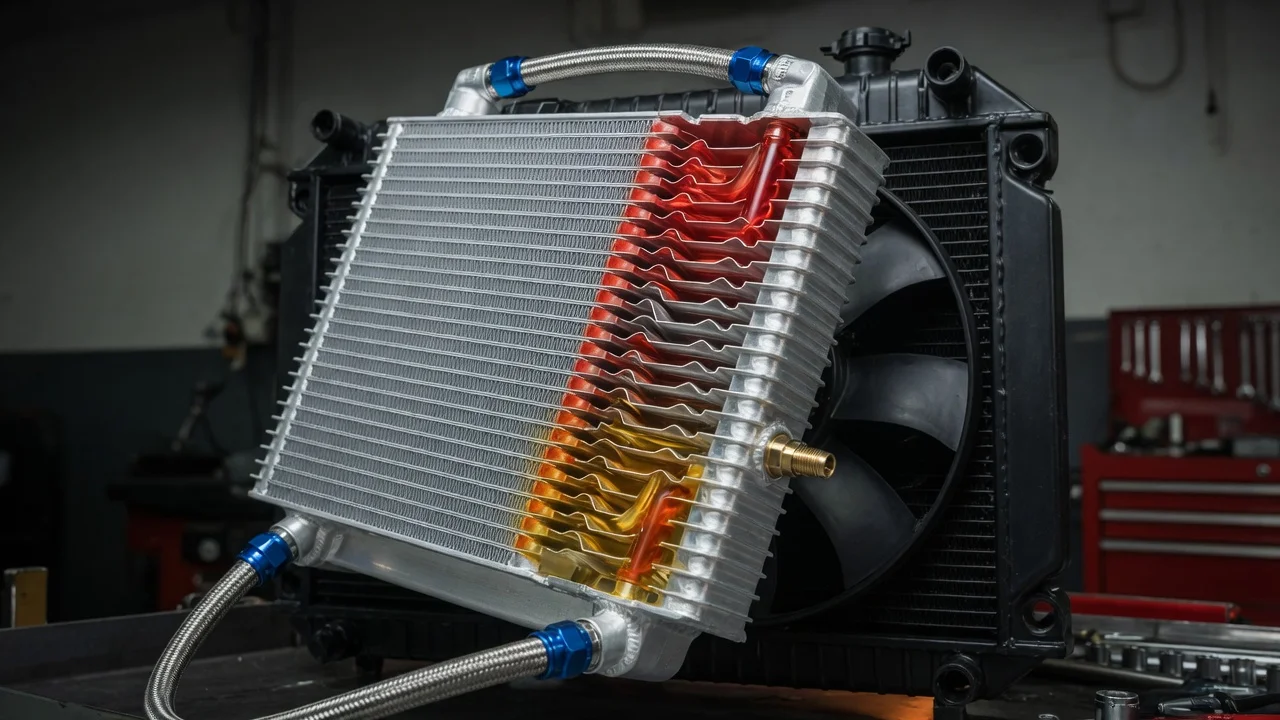
Heat is the main enemy of automatic transmission fluid, and a high-performance transmission cooler is a common upgrade for towing, hauling, track days and hot-climate driving. It is also an upgrade that is easy to choose badly. The right cooler depends on your transmission type, how the factory cooling circuit is designed and what you actually ask of the vehicle. This guide walks through those decisions so you buy a unit that fits and does a real job.
Define the job the cooler must do
Start with how the vehicle is used, not with the size of the cooler. A pickup towing a camper up mountain grades, a delivery van idling in traffic all day, a performance car doing repeated launches or road-course sessions, and a daily driver in a hot region all load the transmission differently. Sustained high load and low airflow at low speed push fluid temperatures up, and those are the situations an auxiliary transmission cooler is meant to address. If the vehicle is driven gently and the transmission already runs within the manufacturer's range, an extra cooler adds cost and connections without a clear gain.
Next, establish whether there is an actual heat problem. A transmission temperature reading, temperature-related diagnostic codes, an overheat warning or a reduced-power mode during heavy work are reasons to look closer. Changes in shift behavior, such as late, harsh or slipping shifts, do not prove overheating on their own; they can come from low fluid, worn clutches, solenoid or valve body faults, torque converter problems or software. Check the service history as well. Fluid that is dark, smells burnt or carries friction material points to wear that a cooler will not reverse, and that needs diagnosis before money goes into cooling hardware.
Check compatibility with your transmission
Identify the exact transmission before shopping. Conventional planetary automatics, dual-clutch units and CVTs manage fluid temperature differently, and the same model can be built with different transmissions depending on year, engine and drivetrain. The owner's manual, a service label, a dealer VIN lookup or a reliable parts catalog can confirm the transmission type and its fluid specification. Many modern transmissions use a thermostatic valve, a fluid warmer or a heat exchanger tied to engine coolant so the fluid reaches operating temperature quickly. An auxiliary cooler should work with that system rather than defeat it. Fluid that runs too cold can affect shift quality and efficiency, and some designs need the cooler placed downstream of a specific valve, or need additional parts before an add-on cooler makes sense.
Physical fitment comes next. Measure the outside diameter of the cooler lines and note how they connect: some vehicles use plain tube ends that accept hose and clamps, others use factory quick-connect fittings that need adapters, and many performance builds use AN fittings. Confirm which line is supply and which is return, because flow direction matters on many installations. Then check the space in front of the radiator and A/C condenser, or wherever a remote mount would go, including clearance to the grille, bumper reinforcement, hood latch and any active grille shutters. A vehicle-specific kit removes much of this guesswork, but a universal cooler can work just as well when hoses, brackets and fittings are planned correctly.
Features that affect the choice
Core construction drives most of the real differences. Tube-and-fin coolers are inexpensive and tolerant of debris but transfer less heat for their size. Plate-and-fin and stacked-plate designs pack more cooling surface into a compact core and are popular for towing and performance use. Bar-and-plate cores are heavier and more robust, often chosen for severe-duty and racing applications where durability and impact resistance matter. Core dimensions, fin density and internal passage size say more about potential performance than the label on the box.
Treat capacity claims carefully. Coolers are often marketed by gross vehicle weight or a heat rating, but manufacturers do not always measure these the same way, so a larger number from one brand is not directly comparable with another. Words such as extreme, max-duty or racing describe positioning, not test results. More useful evidence includes stated core dimensions, published flow or pressure-drop data where available, fitting sizes and installation instructions that address your transmission. Restriction matters too: on many automatics the cooler return also feeds the lubrication circuit, so undersized fittings or a long, kinked hose route can reduce flow to parts that depend on it.
Optional extras can be worthwhile. An electric fan on a remote-mount cooler helps at low speed and when stopped, which is where a cooler behind the grille gets the least airflow. A thermostatic bypass reduces overcooling in cold weather on vehicles that lack one. A temperature gauge, or a scan tool that reads fluid temperature, lets you confirm whether the upgrade is working instead of guessing.
Limitations and ownership costs
A transmission cooler manages heat; it does not repair anything. It will not fix worn clutches, a failing torque converter, a faulty solenoid, incorrect fluid or a calibration problem, and it can mask a developing fault by lowering temperatures while wear continues. It also cannot compensate for an engine cooling system that is already struggling, because the cooler and radiator share the same airflow at the front of the vehicle. After a major internal failure, debris can lodge in the factory cooler and lines; rebuilders commonly require the circuit to be flushed or the cooler replaced, and a new auxiliary cooler should not be added to a contaminated system.
Budget beyond the cooler itself. Expect hose rated for transmission fluid, proper clamps or fittings, mounting brackets, possibly adapters for quick-connect lines, and extra fluid to fill the added volume, which must match the specified fluid exactly. Many modern transmissions have no conventional dipstick and need a level check at a specific fluid temperature through a fill plug or with a scan tool, so a shop visit may be part of the cost. Avoid mounting methods that push plastic ties through radiator or condenser fins, since they can wear through a core over time. After installation, check connections for leaks, inspect hoses periodically for chafing and age, and keep the core face clear of insects and road debris.
Build a practical shortlist
Narrow the options with a checklist rather than a ranking. First, confirm the transmission type, fluid specification and whether the factory system uses a thermostatic valve or warmer. Second, record line size, fitting style and flow direction, and measure the mounting space. Third, match the core to the job: a compact stacked-plate or plate-and-fin core for most towing and performance use, a bar-and-plate core where durability comes first, and a tube-and-fin unit for lighter duty. Fourth, compare actual core dimensions and fitting sizes instead of headline capacity numbers.
Finally, count the full cost: hoses, brackets, fluid, any fan or gauge, and labor if the level check needs special equipment. Read the installation instructions before buying to see whether they cover your transmission, and check whether the manufacturer lists conditions that could affect vehicle or parts warranty. If the transmission already shows codes, slipping or burnt fluid, schedule diagnosis first and decide on cooling once the repair options are clear. Chosen this way, a cooler becomes a targeted fix for a known heat load rather than a guess.