Choosing a T3/T4 Turbo Blanket: Fitment, Features and Limits
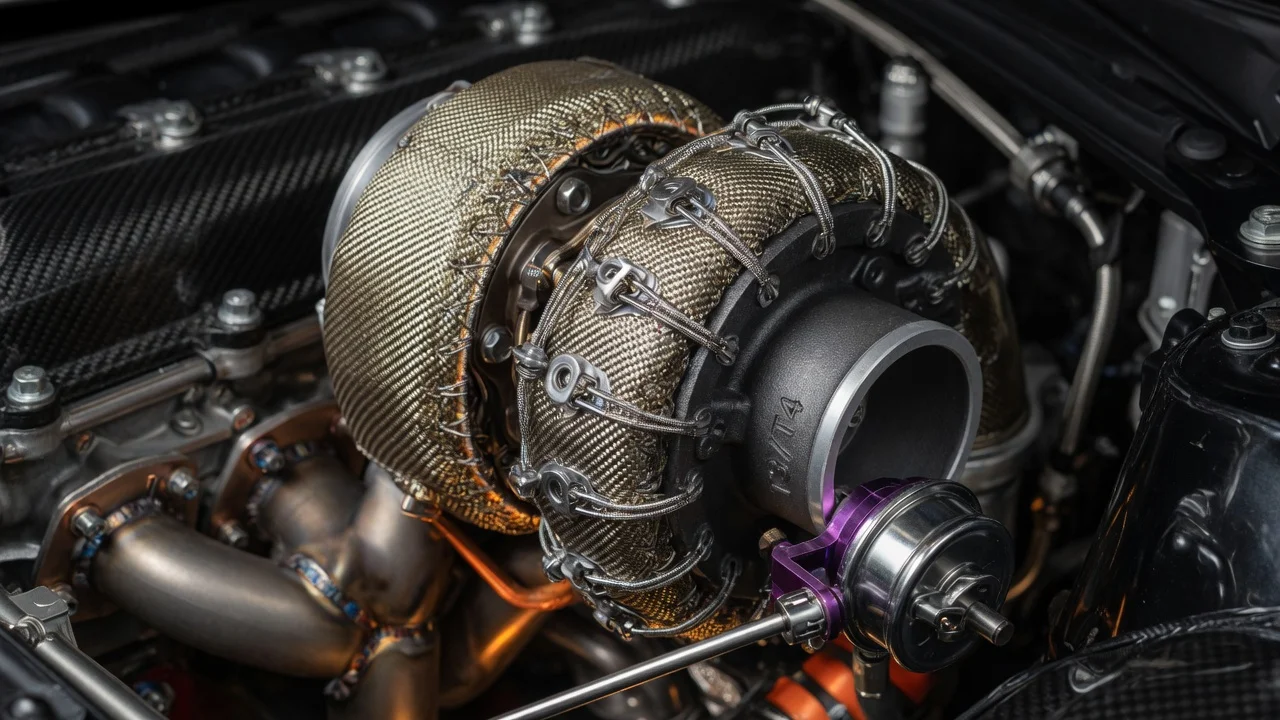
A turbo blanket wraps the turbine housing to keep exhaust heat inside the turbo instead of letting it radiate into the engine bay. For T3 and T4 frame turbochargers, the right blanket depends less on the badge on the car and more on the actual housing, the plumbing around it and how the vehicle is driven. This guide explains how to match a blanket to your setup, how to judge its features honestly and what a blanket cannot fix.
Define the job the product must do
Start with the problem you want to solve. Most owners buy a turbo blanket to protect nearby wiring, vacuum lines, coolant hoses, brake lines and plastic parts from radiant heat, or to reduce heat soak in the engine bay after a hard drive. Some buyers also hope for quicker spool or lower intake temperatures. Those gains are often claimed but rarely backed by data, so treat component protection as the primary job and any performance change as a possible side effect.
Next, consider how the car is used. A daily-driven street car with a top-mount turbo near the hood has different needs than a track car that sees sustained high exhaust temperatures, or a truck that tows under long periods of load. Practical constraints matter too: clearance to the firewall and strut tower, how often you remove the turbo or wastegate for service, and whether you can reach the fasteners without pulling other parts.
If the purchase was triggered by melted looms, cracked boots or scorched paint, separate the symptom from a verified failure before buying anything. An exhaust leak at the manifold flange, a failed gasket or a cracked turbine housing can direct hot gas onto nearby parts. A blanket would cover that evidence rather than cure it, so inspect the hot side first and note the conditions under which the damage appeared.
Check compatibility
T3 and T4 describe turbine inlet flange and frame sizes, and the blanket has to fit the turbine housing, not the compressor. The label T3/T4 can mean a blanket cut to fit either housing family, or it can refer to a hybrid turbo that pairs a T3 turbine with a T4-style compressor. Read the listing carefully to see which meaning applies. T4 housings also come in single-scroll and divided twin-scroll versions, and the housing size and A/R change the overall shape the blanket must cover.
Do not rely on a vehicle lookup by model year and engine variant alone. Turbos on these frames are frequently swapped, rebuilt with different housings or replaced with aftermarket units, so the part on your engine may not match the original configuration listed in service history or catalogs. Identify the housing directly from casting marks and flange shape, and compare the measurements to the blanket maker's published dimensions.
Then check the interfaces. An internally gated housing needs room for the wastegate actuator arm and flapper area, while an externally gated setup may need clearance for a separate wastegate port. Look at the oil feed and drain, coolant lines on water-cooled center sections, the outlet style such as a bolted flange or V-band clamp, and any sensors mounted near the housing. A blanket that blocks the actuator or rubs against a line creates new problems.
Features that affect the choice
Blankets are typically built from layers of fiberglass, basalt or silica-based fabric, sometimes with a mesh or foil layer, and an outer shell often marketed as titanium or lava weave. Those names usually describe the look and weave of the outer fabric rather than a measured performance difference. What matters more is the stated material of each layer, the stitching thread, whether seams are reinforced and whether the surface resists oil absorption.
Temperature ratings appear on almost every listing, but a single number tells you little without context. Ask whether the rating refers to continuous exposure or brief peaks and which layer it applies to. Manufacturer specifications that name materials and test conditions are more useful than broad claims of being the hottest-rated or the best. Owner reports are helpful when they describe the same housing and use case, but a claim of faster spool without logged boost data remains an impression rather than evidence.
Fastening affects daily ownership. Springs with hooks are quick to remove and retension, stainless safety wire is secure but slower to service, and straps vary in heat tolerance. Check whether spare springs are included, whether the blanket wraps fully around the housing or leaves the back exposed, and how well it conforms around the inlet flange where gaps are common.
Limitations and ownership costs
A blanket keeps more heat in the turbine housing, which raises the housing's own temperature. Some turbo manufacturers advise against insulating certain housings or set conditions for doing so, so check the turbo maker's guidance before installation. Stacking a blanket on top of wrapped manifolds and downpipes compounds the effect and can concentrate heat on studs, gaskets and the center section.
The blanket also hides the parts you need to see. Cracks in the housing, leaking flange gaskets and oil seeping from feed or drain fittings can go unnoticed underneath it. Fabric that absorbs oil becomes a fire risk and should be replaced rather than cleaned. Build a removal and inspection into routine service, looking for discoloration, fraying, brittleness, soaked areas and loose springs, and record the install date in your service history.
Know what the product cannot do. It will not fix boost leaks, worn bearings, sticking wastegates, smoke or diagnostic codes for underboost or overboost. Ongoing costs include replacement blankets as the fabric degrades, spare springs or wire, gloves and eye protection for handling glass-based fibers, and extra labor if the housing is hard to reach.
Build a practical shortlist
Before comparing prices, write down your housing details: flange type, single or divided scroll, approximate size and A/R, wastegate type, outlet style and any water or oil lines that pass close to the housing. Note your use, whether street, track or towing, and the clearance you have around the turbo. This short profile filters out most listings faster than browsing by vehicle model.
Then score each candidate against the same points. Does the maker publish dimensions and name the housings it fits? Are the cutouts in the right places for your wastegate and lines? Are layer materials and rating conditions stated rather than implied? Is the fastening method easy to service, with spare hardware available? Is the outer surface oil resistant, and does the seller accept returns if the fit is wrong?
Finally, check the result against your goal. If you need to protect a specific harness or hose, a blanket that leaves a gap on that side is the wrong choice regardless of reviews. Keep two or three options that meet every fitment point, confirm the turbo maker's guidance, and choose the one whose documented specifications best match your installation rather than the one with the most aggressive marketing.