Choosing a T3 Turbo Blanket: Fitment, Features and Real Limits
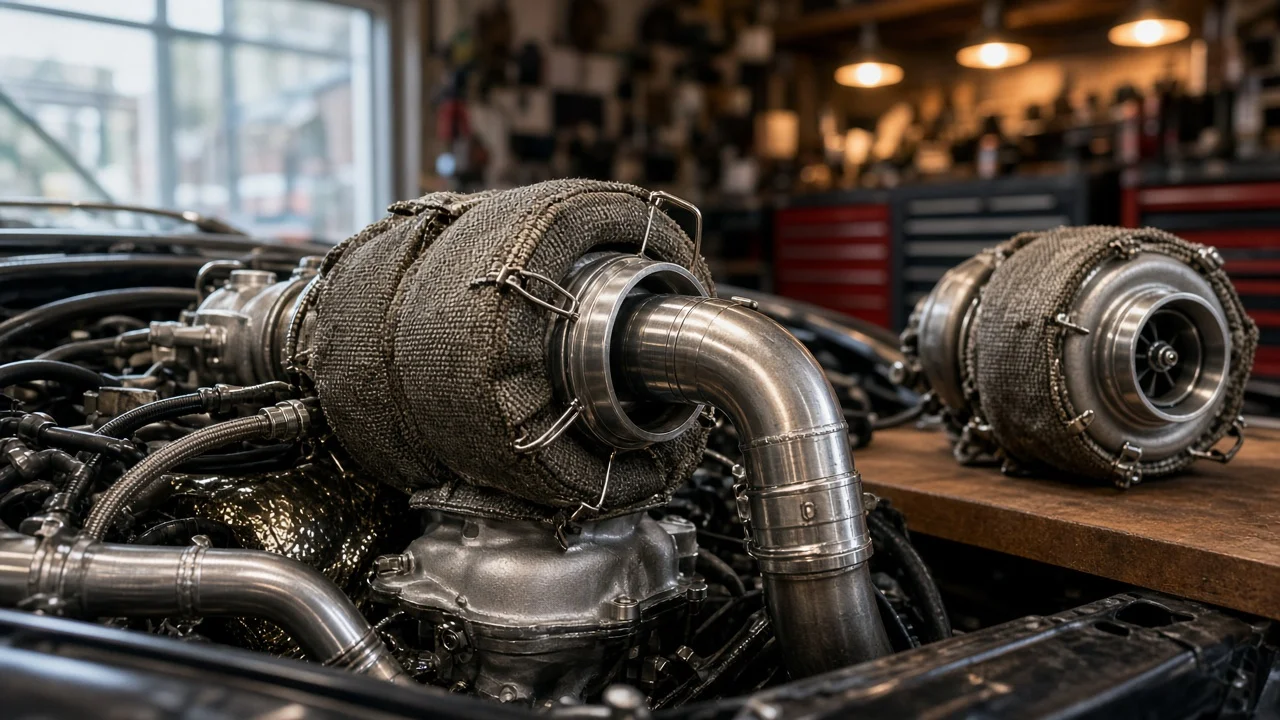
A T3 turbo blanket wraps the hot turbine side of a T3-frame turbocharger to keep radiant heat away from wiring, hoses and intake parts. Choosing one is mostly a fitment exercise. The turbine housing shape, wastegate layout and plumbing on your specific engine decide whether a blanket fits cleanly or creates new problems. This guide covers what to check before you buy, what the product can realistically do, and what it costs to live with.
Define the job the product must do
Start with the problem, not the product. Owners usually want one of four things: lower underhood temperatures near a specific component, protection for a relocated or aftermarket wiring harness, less heat soak into the intake tract, or compliance with a racing class rule. Be honest about whether you are dealing with a symptom report or a verified failure. A hot-feeling intake pipe or a vague smell after a drive is a symptom. A melted connector, a cracked vacuum line or a scorched hose found during inspection is a failure. If something has already failed, confirm that radiant heat from the turbine housing caused it rather than an exhaust leak, a misrouted line or simple age.
Then record your vehicle and constraints. Model year and engine variant matter because T3 turbochargers appeared on a range of factory turbocharged engines and are common in aftermarket and swap builds, so the same T3 label can sit in very different engine bays. Note the clearance to the firewall, strut tower, brake booster and steering shaft, how the car is used, and how often you expect to remove the turbo. If you are chasing diagnostic codes for boost, sensors or misfires, diagnose those first. A blanket manages heat; it does not correct a fault the engine computer has flagged.
Check compatibility
T3 describes a turbocharger frame and its standard turbine inlet flange, but turbine housings within that family vary. A/R size, outer contour, outlet design and wastegate arrangement all differ, and blankets are cut around those details. Confirm whether your housing has an internal wastegate with an actuator arm and port that need a cutout, or whether the wastegate is external. Check whether the inlet flange is undivided or divided, since twin-scroll versions exist. Look at the outlet: some housings use a bolted flange, others a V-band, and the blanket edge must clear the downpipe connection. If the listing says T3/T4, it usually refers to a T3 turbine side paired with a larger compressor; the blanket still covers the turbine side, so match it to that housing.
Identify your housing from the casting marks or tag where possible, or measure it and compare against the seller's fitment drawing or manufacturer specifications. Check housing clocking as well. The turbine housing can be rotated relative to the center section, and a blanket designed for one orientation may put its seam or fasteners in an awkward spot on yours. Look at the center section too. Oil feed and drain lines, and coolant lines on water-cooled units, must stay accessible and should not be trapped under insulation. Replacement or replica housings may not match original contours exactly, so treat generic fitment claims with caution.
Features that affect the choice
Most blankets use a layered build: a heat-resistant inner fabric against the housing, an insulating core, and an outer jacket that resists abrasion and splash. Construction quality shows in the details. Look for heat-resistant stitching, finished edges that will not fray into the exhaust, and cutouts that follow the housing rather than leaving large gaps. Fastening matters on a tight engine bay. Springs with hooks are quick to install but need room to reach. Safety wire holds well but takes longer to remove. Straps can loosen over heat cycles. Some kits include a separate piece for the wastegate area or outlet, which helps on internal-wastegate housings.
Separate useful evidence from marketing labels. A temperature rating means little unless the seller says whether it is continuous or intermittent and what part of the blanket it applies to. Names such as titanium or lava often describe appearance or a trade name and do not, by themselves, tell you the fiber composition. Claims of faster spool or added horsepower need controlled measurements on a comparable engine to mean anything, and any effect depends on the whole setup. More reliable signals are a clear material description, a published fitment drawing, detailed installation instructions and the availability of replacement fasteners.
Limitations and ownership costs
A blanket keeps heat inside the turbine housing, so the housing and its studs and bolts run hotter than they would bare. Owners sometimes link blankets to housing cracks or seized fasteners. Those are reports rather than an established outcome for every installation, but they are worth weighing against your goal. If your turbo or housing manufacturer publishes guidance on insulation, follow it. Covering the turbine also hides the housing from view, so cracks, flange leaks and gasket failures are harder to spot during routine inspection. Plan to remove the blanket periodically to look underneath.
Oil is the main hazard. A leaking valve cover, turbo seal or feed line can soak the insulation, creating smoke, odor and a fire risk. Fix leaks before installing, and replace a blanket that has become saturated rather than trying to burn it off. An exhaust leak at the manifold flange can scorch the blanket edge, so check that gasket as well. Ongoing costs are modest but real: lost springs, safety wire, eventual replacement as the outer layer wears, and extra labor whenever the turbo or downpipe is serviced. Note the installation and any later replacement in your service history so the next person working on the car knows it is there.
Know what the product cannot do. It will not stop oil leaks, cure boost faults, clear diagnostic codes or replace factory heat shields that protect brake, fuel or steering components. It is not a substitute for correct routing of hoses and wiring, and it will not compensate for a turbo that is already damaged.
Build a practical shortlist
Compare candidates against the same short checklist. Does the seller name the housing type and wastegate arrangement it fits, and does that match your casting or measurements? Do the cutouts clear your actuator, inlet flange, outlet connection and center-section lines? Will the fastening method work in your available clearance? Is the material described in plain terms, with any temperature rating explained? Are installation instructions provided, and are replacement springs or wire available? Does the return policy allow an exchange if the fit is wrong? A blanket that answers these questions clearly is a better bet than one with louder performance claims.
Before ordering, inspect the engine bay with the turbo cold. Fix any oil or exhaust leaks, confirm line routing, and take photos and measurements of the turbine housing from several angles to compare with fitment drawings. After installation, follow the maker's instructions for the first heat cycles, then recheck that fasteners are secure and nothing has shifted against lines or wiring. Recheck again at your next oil change, and judge the result against the original problem you set out to solve rather than against advertised gains.