Choosing a T4 Turbo Blanket: Fitment, Materials and Trade-Offs
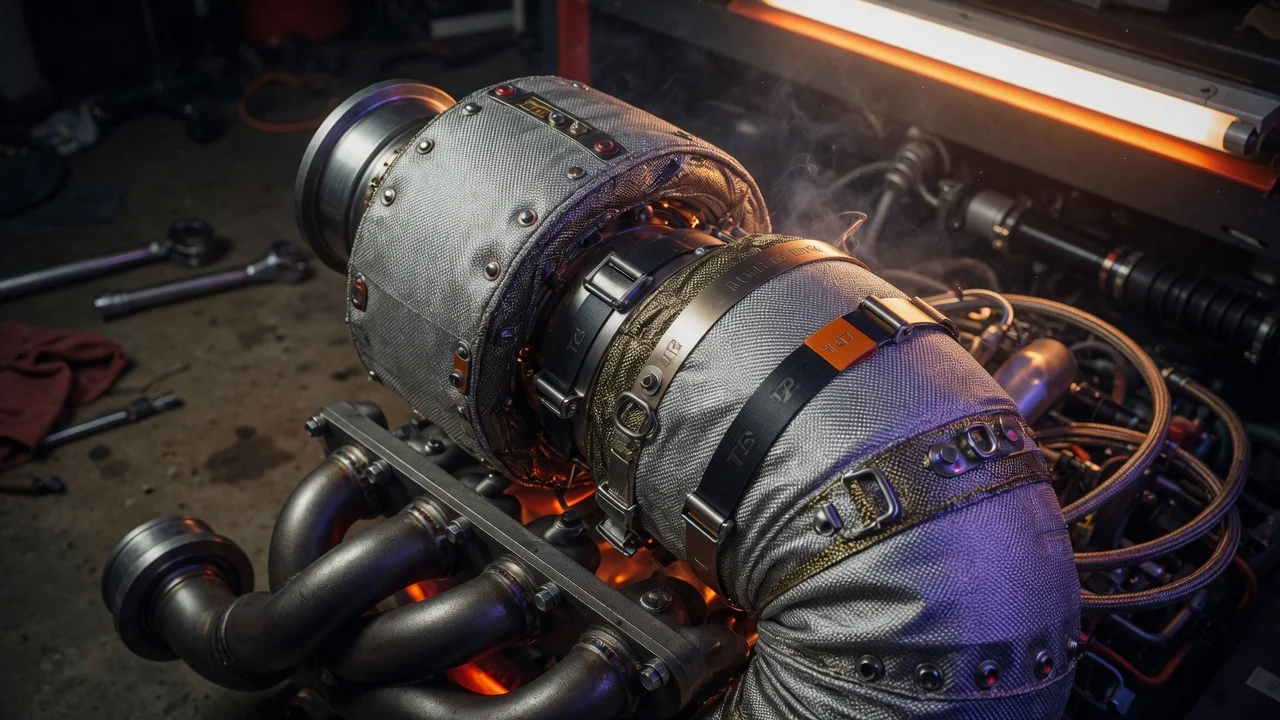
A T4 turbo blanket is a fitted insulating cover for the turbine side of a turbocharger with a T4 inlet flange. It can cut the radiant heat reaching nearby parts, but only if it matches your housing and addresses a real heat problem. This guide covers how to define that problem, confirm fitment, judge materials and attachment, and weigh the ownership costs before you buy.
Define the job the blanket must do
Start with the problem, not the product. Owners usually fit a blanket to protect wiring, hoses, brake components or intake plumbing near the turbine housing, or to reduce heat soak into the compressor side and charge piping. Note how the vehicle is used. A daily driver that idles in traffic, a truck that tows under sustained load and a car that makes short, hard runs at the track all heat the housing differently. Also note your practical constraints: clearance around the turbo, how often you expect to remove it for service, and your budget for a part that will eventually need replacing.
Separate symptom reports from verified failures. A melted connector, a softened coolant hose or high intake air temperature readings have several possible causes. Before blaming radiant turbo heat, pin down the symptom conditions. Does the problem appear after long idling, during heat soak after shutdown, or only under sustained boost? Is an exhaust leak at the manifold or turbine flange blowing hot gas onto the damaged part? Do stored diagnostic codes point to a failing sensor or circuit rather than heat? A blanket reduces radiant heat. It will not fix a leak, a bad sensor or a cooling-system fault. Model year and engine variant matter too. The same chassis may have used different factory turbos, and many T4 setups are aftermarket conversions, so reports from another engine configuration may not apply to yours.
Check compatibility
T4 names a family of turbine inlet flanges, not one housing shape, so the label alone does not guarantee fit. First confirm whether your flange is single-scroll (open) or divided twin-scroll, because blankets are cut differently around the inlet. Next, identify the turbocharger model and turbine housing. Outer contours vary between turbo families and housing sizes even when the flange is the same. Then check the outlet: a V-band outlet and a bolted outlet need different openings and seal against the downpipe differently. Finally, note the wastegate arrangement. An internal wastegate needs a cutout or clearance for the actuator arm and flapper linkage, while a housing used with an external wastegate does not. Match the blanket to the turbo model shown on the unit's tag or in your parts records, not just to the flange name.
Service history helps here. If the turbo has been replaced or upgraded, receipts or a build sheet tell you which unit is actually installed. Then inspect the installation. Note the oil feed and drain lines, coolant lines on water-cooled center sections, any exhaust temperature probe or pressure port, and the studs and nuts that must stay reachable. Measure the gap between the housing and nearby components, because a blanket adds thickness and a tight engine bay may not accept a thick one. Read the turbo manufacturer's specifications and warranty terms as well. Some makers caution against insulating certain housings or address wraps and blankets in their coverage, and that guidance outranks a blanket seller's fitment claim.
Features that affect the choice
Construction is the main variable. Most blankets combine an inner insulating layer, commonly fiberglass, silica or basalt fiber, with a woven outer cover. Some add stainless mesh for abrasion resistance or an outer coating meant to shed oil and moisture. Printed temperature ratings are manufacturer claims. Check whether a figure describes continuous or brief peak exposure, and treat a maximum-temperature number with no stated test method as a marketing label rather than evidence. Thicker insulation holds more heat in the housing but needs more clearance and traps more heat in the turbine housing and its fasteners.
Attachment affects both fit and serviceability. Springs and hooks allow quick removal and tolerate thermal expansion. Stainless wire ties sit lower but take longer to remove and refit. Check that the hardware is stainless, that it will not rest against the compressor housing or oil lines, and that the cutouts line up with your actuator rod and any sensor ports. Be skeptical of claims about faster spool or added power. Keeping heat in the turbine housing is sometimes said to preserve exhaust energy, but any effect depends on the setup and has not been shown for yours. Stronger signals of quality are precise fitment listings by turbo series and scroll type, a clear description of materials, included hardware and written installation instructions.
Limitations and ownership costs
Prepare before installing. Check the turbine housing for cracks and the flanges for exhaust leaks first, because once the blanket is on, the housing is hidden and leaks are harder to spot during later inspections. Some blankets smoke or smell during the first heat cycles. Follow the seller's break-in guidance and ventilate the area. A blanket raises the temperature of the turbine housing and its hardware. If the installation instructions call for it, recheck the blanket's fit and the nearby fasteners after the first few drives.
Treat the blanket as a wear item. Look it over whenever you inspect the engine bay for fraying, broken springs, shifting and contamination. A blanket soaked with oil, fuel or coolant on a hot housing is a fire risk. Replace it and repair the leak that caused it, rather than wiping it down. Any turbo, downpipe or manifold job now includes removing and refitting the blanket, which adds labor, and lifespan varies with heat and exposure. Know what a blanket cannot do. It does not seal exhaust leaks, cool a failing turbo, replace damaged factory heat shields, correct poor intake routing or resolve faults flagged by diagnostic codes.
Build a practical shortlist
For each candidate, record the same details so the comparison stays fair. Note the listed flange and scroll type, the turbo series or housing it is cut for, and the outlet type it accommodates. Note whether it has a wastegate actuator cutout and which sensor ports are provided. Record the insulation and cover materials, whether the temperature rating is continuous or peak, the thickness compared with your measured clearance, and the attachment method and hardware material. Finally, check whether hardware and instructions are included, what the seller says about oil resistance, and the turbo manufacturer's position on blankets. Products that list only T4 with no housing or scroll detail belong at the bottom of the list unless the seller can confirm dimensions for your unit.
Then check the shortlist against the job you defined at the start. If radiant heat is reaching the intake or charge piping, a well-fitted blanket combined with better routing may be enough. If one component is overheating, a targeted heat shield might be simpler and cheaper to maintain. Choose the candidate that fits your exact housing, leaves service points reachable and does not conflict with manufacturer specifications. Then add the purchase and install date to the vehicle's service history so future inspections account for it.