Choosing an Intercooler for a Mk7 GTI
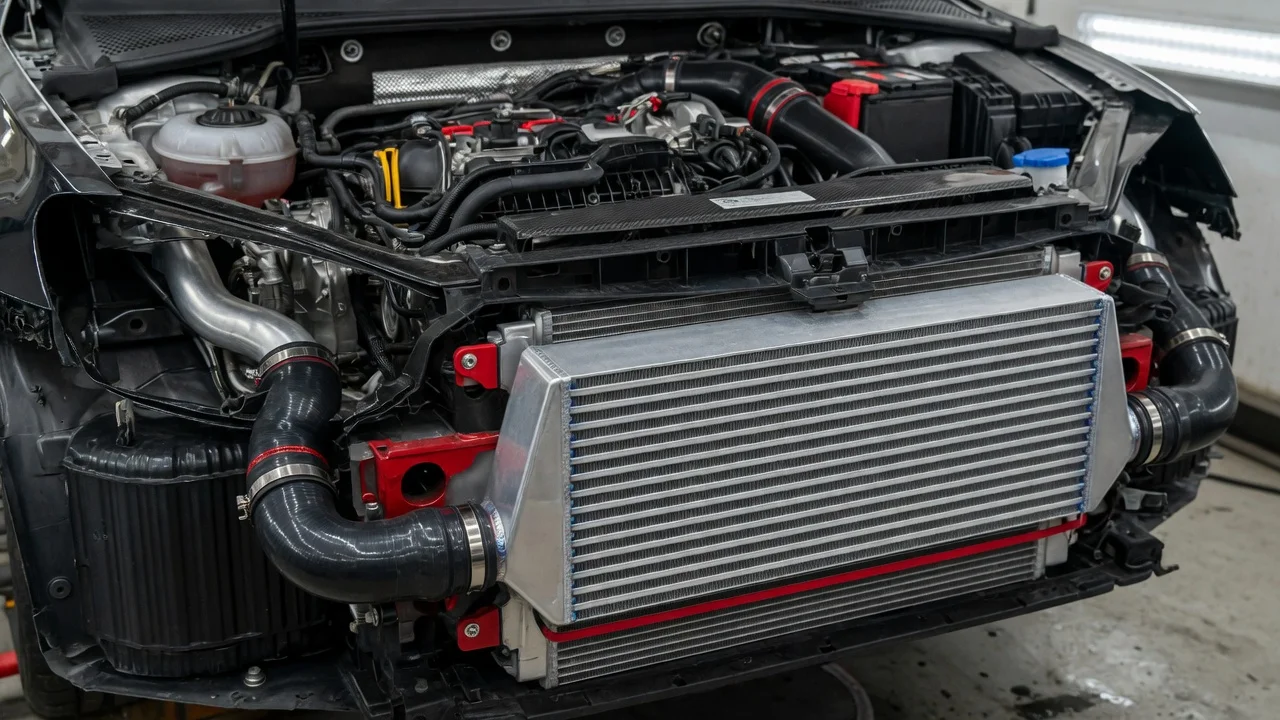
An intercooler upgrade is one of the most common changes Mk7 GTI owners consider, but the right part depends on how the car is driven and tuned, not on core size alone. This guide covers how to match an intercooler to your GTI's model year, tune and daily use, how to check fitment, which features matter, and what installation and upkeep will cost before you buy.
Define the job the product must do
The factory Mk7 GTI intercooler is a front-mounted air-to-air unit sized for the stock power level. On an unmodified car used for commuting, it generally does its job. A larger core earns its place under sustained load: repeated hard pulls, track sessions, long climbs in hot weather, or software and hardware upgrades that raise boost and charge air temperature. The more heat the engine produces and the longer it is held at high load, the more a bigger core can help.
Separate symptom reports from verified problems before spending money. Comments like the car feels slower on hot days or power fades after a few pulls describe symptoms. Heat soak can cause them, but so can boost leaks, timing pulled for low-quality fuel, or a faulty sensor. Log intake air temperature and boost with a scan tool or data logger under the same symptom conditions: similar ambient temperature, gear and number of consecutive pulls. If charge temperatures climb steadily from pull to pull and recover slowly, the intercooler is a plausible limit. Stored diagnostic codes matter too. An underboost code such as P0299 points first toward a leak or boost control fault, not toward core capacity.
Then write down your practical constraints: budget, whether you will install the part yourself, your climate, and how long you plan to keep the car. If your GTI is still under warranty, keep in mind that modifications can complicate claims involving related components.
Check compatibility
In the US, the Mk7 GTI covers the 2015 through 2021 model years, with the facelifted Mk7.5 arriving for 2018. All of them use the EA888 third-generation 2.0-liter turbocharged engine. Bumpers, front-end trim and driver-assistance hardware can still differ by year and trim. Make sure a listing names your model year and the GTI specifically rather than relying on a broad platform label. Many aftermarket units are marketed for several related MQB cars, but only the manufacturer's fitment notes and listed exclusions should settle the question.
Look closely at the interfaces. Check inlet and outlet orientation and diameter, coupler style, and whether the kit connects to the factory charge pipes or includes its own. Then check the mounting points and clearance to the crash bar, A/C condenser, radiator and any front sensors. Some larger cores require trimming bumper supports or relocating small components. Read the installation instructions before ordering so that work does not come as a surprise.
Your engine configuration also matters. If the car runs a tune, a larger turbo or upgraded charge piping, ask your tuner whether the calibration assumes a particular intercooler or sensor location. If a kit moves or changes the housing of any pressure or temperature sensor, confirm the tune will still read it correctly.
Features that affect the choice
Core construction is the main trade-off. Bar-and-plate cores are generally sturdier and hold more thermal mass, but they weigh more. Tube-and-fin cores are usually lighter and can flow with less restriction, though they tend to be less tolerant of road debris. A larger core adds cooling capacity and frontal area but also increases the volume the turbo must fill. On a GTI the change in throttle response is usually modest, but it is still worth weighing against how much cooling you actually need.
Treat labels like race, competition or maximum cooling as marketing until they come with evidence. Useful evidence states its test conditions: ambient temperature, tune, number of pulls, how temperatures were logged, and a same-car, same-day comparison against the stock unit. Pressure drop across the core matters as much as temperature drop, because a core that cools well but restricts flow makes the turbo work harder. A percentage temperature claim or horsepower figure without stated conditions cannot be compared with another brand's numbers.
Smaller details separate a good kit from a frustrating one. Look at end tank design and weld quality, coupler material, clamp quality, included hardware, and whether replacement parts are sold separately. Finish color mostly changes how visible the core is through the grille, not how well it cools. A clear warranty and responsive support are worth more than cosmetic options.
Limitations and ownership costs
Installation usually means removing the front bumper cover and some lower supports, so plan for broken trim clips and careful bumper alignment afterward. Doing it yourself saves labor but needs space, basic tools and patience. Shop labor varies, so get a quote before you buy. On a tuned car, take a fresh data log after installation to confirm boost targets and intake temperatures look normal.
An intercooler cannot fix boost leaks, misfires, a tired turbo or poor fuel, and on a stock tune it adds little measurable power. A thicker core in front of the condenser and radiator can also reduce airflow to them. Watch coolant temperature and A/C performance in slow summer traffic for the first few weeks.
Upkeep is light but real. Inspect couplers and clamps periodically, and re-check them shortly after installation because new couplers can settle. Clean bugs and debris from the fins, and watch for impact damage, since the core sits low and in front. A thin oil film inside the charge system is common from crankcase ventilation, but pooled oil deserves an inspection of the turbo and ventilation system. Record the part, installation date and any related findings in the car's service history.
Build a practical shortlist
Hold each candidate to the same checklist. Confirm explicit fitment for your model year and the GTI, with no listed exclusions that apply to your car. Note whether charge pipes are included or the factory pipes are reused. Check whether the instructions call for trimming or relocating parts. Compare core construction and dimensions against stock using the manufacturer specifications. Look for test data with stated conditions, including pressure drop. Read the warranty terms and check whether replacement couplers and clamps are available. Finally, total the cost, including hardware, labor and any tune revision.
Match the shortlist to the job you defined at the start. A stock car in a mild climate may not need an upgrade at all. A tuned daily driver is usually well served by a moderately larger core that bolts in without cutting. A car that sees track days or hard use in hot weather justifies a larger, sturdier core with documented testing, plus close attention to the cooling system behind it. Whichever you choose, log intake temperatures under the same conditions before and after installation so the result is measured rather than assumed.