Choosing a Universal Intercooler: Fitment, Features and Real Costs
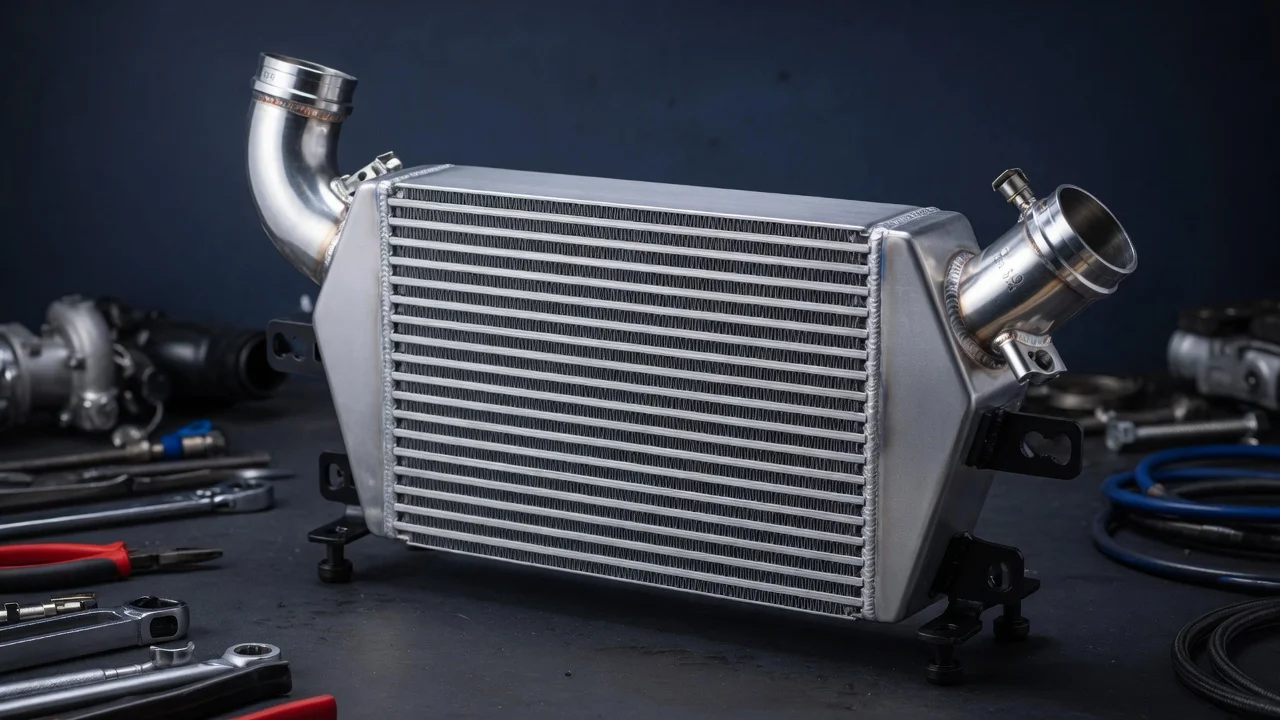
A universal intercooler can cool the charge air on a turbocharged or supercharged engine when a direct-fit part does not exist, costs too much, or does not suit a modified build. Universal describes the mounting approach, not guaranteed fitment. You supply the brackets, piping and couplers, and you take responsibility for making them work together. This guide explains how to match a core to your engine configuration, check the connections, weigh the features that matter and budget for ownership.
Define the job the product must do
Start with the reason for the purchase. Replacing a damaged factory unit, supporting a tuned engine, adding charge cooling to a build that never had it and completing an engine swap are different jobs with different requirements. On a stock vehicle with a cracked end tank, a direct-fit replacement built to manufacturer specifications is usually the simpler path. A universal unit makes the most sense when you are already modifying the intake tract, when the original part is unavailable, or when the factory location cannot work with the rest of the build.
If a problem is driving the purchase, separate symptom reports from a verified failure. Lost power, boost-related diagnostic codes, a hiss under load or oil in the charge pipes can come from a split coupler, a loose clamp, a faulty boost or intake air temperature sensor, a wastegate fault or a worn turbocharger. Note the symptom conditions: whether the issue appears only under heavy load, in hot weather or after a recent repair. Confirm the cause with a pressure test of the charge system, a visual inspection of the tanks and fins, and a look through the service history. A light oil film in the piping is common on many turbo engines because of crankcase ventilation, while heavy pooling points toward the turbo or the ventilation system rather than the intercooler. Also confirm the exact model year and engine variant, because the same nameplate can use different turbochargers, pipe sizes and sensor locations across production years.
Finally, list your practical constraints: daily driving, towing or track use, the climate you drive in, budget, access to welding or fabrication, and whether local inspection rules affect changes to the intake system.
Check compatibility
Measure the mounting area before comparing products. Record usable width, height and depth with the bumper cover off, and note the crash beam, radiator, A/C condenser, horns, washer bottle, sensors and any active grille shutters. Compare those figures with the overall dimensions of each unit, including end tanks and outlets, not just the core size printed in the listing. Decide whether the layout will be front-mount, top-mount or side-mount, since each changes pipe length and how much air reaches the radiator behind it.
Next, check the interfaces. Inlet and outlet diameters should match your turbo outlet and throttle body or be bridged with proper reducers. Outlet orientation, either same-side or opposite-side, and the angle of each neck determine whether piping can be routed without sharp bends or contact with belts and hot exhaust parts. Many engines mount a boost or intake air temperature sensor in the charge piping or on an end tank, so confirm the kit provides a matching bung or plan for an adapter or welding. Account for the blow-off or bypass valve flange, mounting tabs and the coupler and clamp style. An air-to-water unit adds a pump, a front heat exchanger, coolant lines and wiring to the list.
Consider the tune as part of fitment. A significant change in charge volume or pipe routing can alter throttle response and boost behavior, and some engine calibrations may need adjustment. Plan to scan for diagnostic codes and watch boost readings after installation.
Features that affect the choice
Core construction is the main trade-off. Bar-and-plate cores are generally heavier, more tolerant of road debris and better at absorbing heat during short bursts. Tube-and-fin cores are generally lighter and can flow well for their size but are more easily damaged. Bigger is not automatically better: an oversized core adds weight, increases the volume the turbo must fill, and can block airflow to the radiator, while an undersized core may heat soak during sustained load or repeated pulls. Air-to-air units are simpler and need no pump, whereas air-to-water systems can suit tight packaging at the cost of extra components and maintenance.
End tank shape and build quality matter as much as the core. Smoothly shaped tanks help spread air across the full core, and clean, consistent welds reduce the risk of leaks under boost. Treat marketing labels carefully. Horsepower ratings, race-proven badges and percentage gains are rarely tied to stated test conditions. More useful evidence includes stated core and overall dimensions, fin density, pressure rating, any published pressure drop data with its test conditions, the materials used, warranty terms and a clear return policy. If a seller cannot answer basic dimensional questions, that is a reason to look elsewhere.
Limitations and ownership costs
The core price is only part of the bill. A complete installation may need a piping kit, silicone couplers, T-bolt clamps, brackets, bumper or support trimming, relocation of horns or washer components, welding for sensor bungs and possibly a calibration update. Labor can exceed the cost of the cooler itself if fabrication is required. Couplers and clamps are consumables that harden and loosen over time, and air-to-water systems add coolant service and an electric pump that can fail.
Routine care is simple but easy to skip. Recheck clamps after the first few drives, clean bugs and debris from the fins, inspect for oil buildup and repeat a pressure test whenever boost behavior changes. An intercooler cannot fix a failing turbocharger, a leak elsewhere in the intake, a faulty sensor or an engine cooling problem, and on its own it will not add meaningful power to an engine that is not limited by charge temperature. Modifications may also complicate warranty claims on related components, so review your coverage before installing.
Build a practical shortlist
Narrow the options to two or three units and compare them on the same points. Overall dimensions should fit the measured space with clearance for airflow and crash structure. Inlet and outlet size, orientation and angle should suit your routing. Sensor provisions should match your engine variant and model year. The core type should suit your driving, with visible weld and tank quality. Note which hardware is included and what you must buy separately, and favor documented specifications over performance claims. Estimate total installed cost, including piping, labor and any tune, and confirm return and warranty terms before ordering.
After installation, verify the result rather than assuming it. Pressure test the system, scan for diagnostic codes, and drive under the same conditions that previously caused trouble while watching boost and intake air temperature readings. If the original symptoms remain, the cause was likely elsewhere in the system, and that evidence will guide the next step.