Choosing a Top-Mount Intercooler: Fitment, Features and Costs
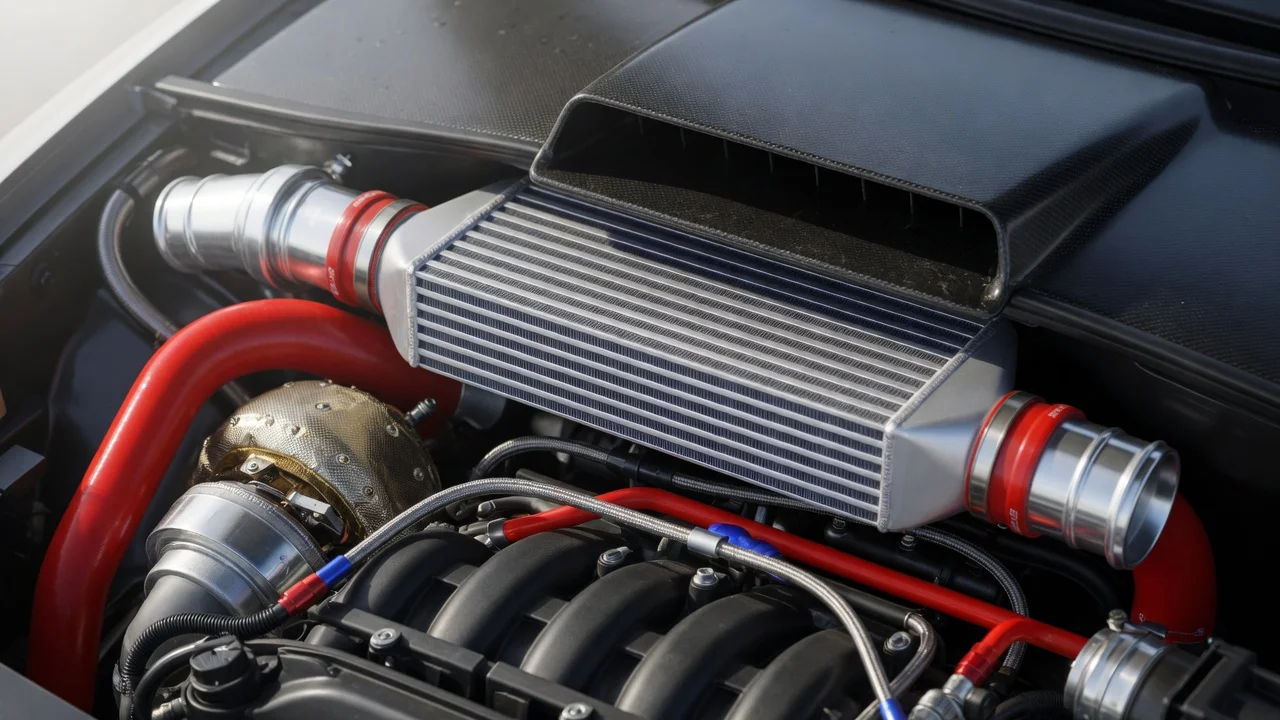
A top-mount intercooler sits above the engine and cools the charge air leaving the turbocharger or supercharger before it reaches the throttle body. Choosing a replacement or upgrade depends less on headline core size than on matching the unit to your engine configuration, model year and the way you actually drive the car. This guide covers how to define the job, confirm fitment, weigh features, plan for ownership costs and build a short list of options you can defend.
Define the job the product must do
Start with why you are shopping. A failed stock unit, a planned power increase and a complaint about sluggish performance on hot days are three different jobs. If the original intercooler is leaking, you need a reliable direct replacement that restores factory behavior. If the car is being tuned for more boost, you need more core capacity and flow, and the rest of the intake path and the engine calibration must be able to support it. Be honest about how you use the car. Daily commuting, spirited back-road driving, autocross and longer track sessions each put different thermal demands on a top-mounted core.
Separate symptom reports from verified failures before spending money. Reduced power, a hissing noise under boost or high intake air temperature readings can point to the intercooler. They can also come from a split coupler, a loose clamp, a leaking bypass valve or a faulty sensor. Note the symptom conditions: does it happen only after idling in traffic, only at full boost, or only in hot weather? Check stored diagnostic codes and freeze-frame data, then confirm a suspected leak with a boost or smoke test. A cracked end tank or damaged core found during inspection justifies replacement. A forum post describing similar symptoms on your model does not.
Check compatibility
Top-mount units are highly vehicle-specific because they share space with the hood, the hood scoop and the engine's charge piping. Confirm the exact model year, trim and engine variant. Manufacturers have changed turbochargers, throttle bodies, pipe routing and hood scoop shapes between generations, and sometimes within one. A part listed for a nameplate in general may not fit every year of that nameplate. Check the inlet and outlet positions and diameters against your turbo outlet and throttle body. Also confirm whether the unit accepts your existing couplers or requires new ones.
Look for the details that cause installation surprises. Does the unit have a provision for the factory bypass or blow-off valve, and does it use the same flange? Do the mounting tabs line up with the factory brackets? Is there enough clearance between the core and the underside of the hood, and does the core sit where the scoop can feed it? If the car runs an aftermarket turbo or relocated components, generic catalog fitment notes may not apply. Compare the listing against the manufacturer specifications for your vehicle, and make sure any modified intake parts comply with the emissions and inspection rules where the car is registered.
Features that affect the choice
Core size is the most advertised figure, but bigger is not automatically better on a top mount. A thicker or larger core adds internal volume, which can slightly slow boost response. It also still has to fit under the hood and receive airflow through the scoop. The real benefit comes from matching core capacity to the airflow your engine and turbo actually produce. Core construction matters as well. Bar-and-plate cores are generally heavier and more resistant to damage, while tube-and-fin designs are usually lighter. End tank shape affects how evenly air spreads across the core, which is why well-shaped tanks are often preferred over simple boxy fabrications.
Treat marketing labels with caution. Phrases such as race-proven, maximum cooling or huge power gains tell you nothing about how the unit behaves on your engine. Useful evidence includes stated core dimensions, internal volume where published, inlet and outlet sizes and construction type. Before-and-after intake temperature or pressure-drop data also counts, provided it states the vehicle, ambient conditions and test method. Owner logs from the same engine variant are more relevant than results from a different platform. Accessories such as a scoop splitter, heat shield or water spray provision can help with heat soak, but only if they fit your hood and engine bay.
Limitations and ownership costs
A top-mount intercooler sits directly above a hot engine and depends on airflow from the scoop, so heat soak at idle and in slow traffic is a built-in limitation. No core eliminates it. A better unit may simply recover faster once the car is moving. An intercooler upgrade also will not fix a tired turbo, a leaking bypass valve, worn couplers or an incorrect calibration. If boost targets or airflow change, the engine may need tuning by a qualified calibrator, which is a separate cost. Budget for new couplers, clamps and possibly gaskets, plus labor if you are not comfortable removing the factory unit and charge pipes yourself.
Ongoing maintenance is modest but real. Inspect couplers and clamps periodically for cracks, oil residue and looseness. Clean debris from the fins and gently straighten any that are bent. A light oil film inside the charge path can be normal from crankcase ventilation. Heavy oil accumulation, however, should be traced to its source, such as the ventilation system or the turbocharger seals. Record the installation date, part number and any tune changes in the service history. This helps with future diagnosis and gives a buyer confidence if you sell the car. Before installing, check whether the part affects any existing warranty coverage.
Build a practical shortlist
Narrow the field with a simple checklist rather than a ranking. For each candidate, confirm the following: listed fitment for your exact model year and engine variant; compatibility with your turbo outlet, throttle body and bypass valve; hood clearance and scoop alignment; core construction and stated dimensions; included couplers, clamps and hardware; published test conditions behind any performance claims; whether a tune is required for your intended setup; warranty terms and return policy; and total installed cost, including parts and labor.
Discard any option that fails a fitment check, then compare the rest on evidence and cost. For a stock car with a confirmed leak, a direct-fit replacement that restores factory performance is often the right answer. A larger core makes more sense when the rest of the intake path and the calibration are being upgraded together. Before buying, verify the part number against your vehicle details. Then review your notes on symptoms, diagnostic codes and inspection results so the purchase solves the problem you actually confirmed.