Choosing an Intercooler Kit: Fitment, Features and Real Ownership Costs
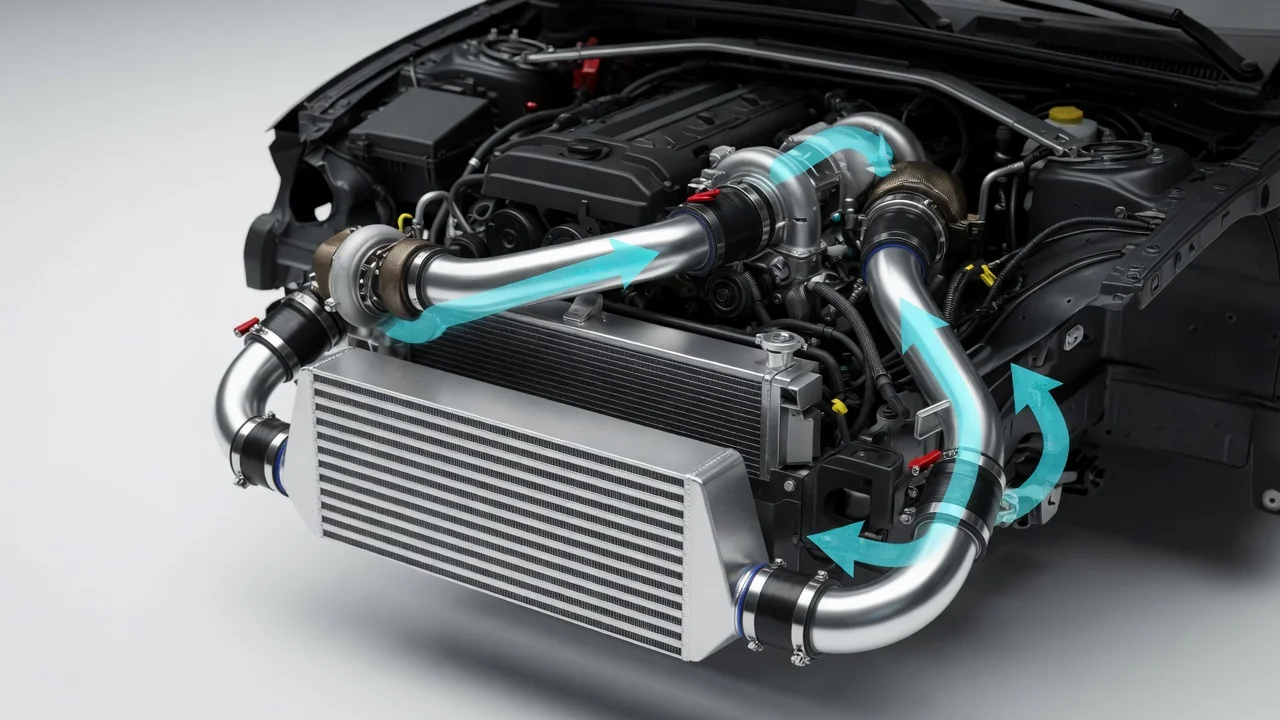
An intercooler kit can lower intake air temperature on a turbocharged or supercharged engine, but only when it matches the vehicle, the engine configuration and the way the car is actually driven. Before comparing intercooler kits, confirm what problem you are trying to solve, whether the kit fits your model year and engine variant, and what installation and upkeep it will demand. This guide walks through those decisions from a mechanic's point of view.
Define the job the intercooler kit must do
Start with the reason you are shopping. Common motivations include power that fades during repeated acceleration on hot days, sustained load from towing or mountain driving, track sessions, supporting a tune that raises boost, or replacing a factory core that has been damaged. Each goal points toward a different kind of intercooler kit. A lightly driven car on a stock calibration with no heat-related complaints may see little practical benefit. A tuned engine that regularly runs hard can make good use of extra cooling capacity.
Next, separate symptom reports from verified failures. A feeling that the engine pulls weaker after several hard runs is a symptom. Heat soak in the intercooler is one possible cause, but a boost leak, a sticking bypass valve, a restricted air filter, a faulty sensor or poor fuel can produce similar complaints. Write down the symptom conditions, such as ambient temperature, load and how long the problem takes to appear. Then read any stored diagnostic codes and review the service history. If you have a scan tool that shows intake air temperature and boost, log a few comparable drives. A cracked end tank, a split coupler or an oil-soaked core found during inspection is a verified fault. A forum thread about a similar car is not proof that yours has the same problem.
Finally, list the practical constraints. These include your total budget with labor, whether the car must pass state emissions or safety inspection, how the dealer treats aftermarket parts during warranty work, and how long you plan to keep the vehicle. These factors often rule kits in or out before performance figures matter.
Check compatibility with your vehicle
Fitment depends on more than the model name. Confirm the exact model year, engine variant and transmission, and where relevant the trim or body style. The same nameplate can use different turbochargers, charge pipe routing or front-end structures after a redesign or mid-cycle update. A kit designed for one generation may not bolt onto the next. Look for a listing that names your specific engine configuration rather than a broad range of years.
Then check the physical interfaces. Note whether the kit is a front-mount, top-mount or air-to-water design, and whether that matches the layout your engine was built around. Compare these details: • Inlet and outlet diameters and orientation; • Coupler and clamp types; • Mounting points on the bumper support; Ask whether installation requires trimming the bumper or its reinforcement. Also ask whether you must relocate horns, washer reservoirs or brackets, or move radar and parking sensors mounted behind the grille. If the factory intake air temperature or boost pressure sensor sits in the intercooler or its piping, the kit must provide a matching port. Find out whether the kit includes new charge pipes and a flange for the factory bypass or blow-off valve, or whether it reuses the original parts.
Engine management matters too. A larger core adds volume to the intake tract, which can change throttle response and how the boost control system behaves. Some factory calibrations tolerate this well; others work best with a matching tune. Compare the kit maker's notes with the manufacturer specifications for your engine. Some states regulate aftermarket intake and emissions-related parts. If yours does, confirm the kit has the documentation needed for street use, such as a California Air Resources Board executive order where that applies.
Features that affect the choice
Core construction is the first real trade-off. Bar-and-plate cores are generally sturdier and hold more heat, but they are heavier. Tube-and-fin cores are typically lighter and less costly to produce, though usually less tolerant of physical damage. Neither type is automatically better. The right choice depends on how hard and how often the engine is loaded.
Size and design should match the goal. A bigger core adds thermal capacity, but it also increases charge volume, and a poorly designed one can raise pressure drop across the system. A front-mounted core sits ahead of the air conditioning condenser and radiator. An oversized unit can therefore reduce airflow to them and affect coolant temperatures in traffic or when towing. End tank shape influences how evenly air spreads across the core, so a large core with poor tank design may not use its full area. Included hardware also deserves attention. Silicone couplers, quality clamps and well-finished welds reduce the chance of leaks later.
Treat performance claims as questions rather than answers. Labels such as direct fit, race proven or OEM plus describe marketing positions, not measured results. A claimed temperature drop or power gain is only useful if the seller explains the test conditions: • The test vehicle and engine; • The tune; • Ambient temperature and boost level; • Whether results came from a dyno or road logs; • How many back-to-back runs were compared; Logged intake air temperatures over repeated pulls on the same car are more meaningful than a single peak number. So is pressure drop data at a stated flow.
Limitations and ownership costs
Installation effort varies widely. Most front-mount kits require removing the bumper cover, and some involve cutting, drilling or relocating components. After installation, the intake system should be pressure tested or smoke tested for leaks. A loose coupler can cause the very symptoms you were trying to fix. If you are not doing the work yourself, budget for labor. Also budget for a tune if the kit or your goals require one, and for replacement clamps or couplers if worn original parts are reused.
Ownership adds ongoing tasks. Check couplers and clamps periodically, especially after the first few drives, since new connections can settle. Crankcase ventilation can leave an oil film inside the core over time. Inspect for oil residue during routine service, and address the cause if the amount looks excessive. A front-mounted core is exposed to stones and road debris and may reduce ground clearance, so bent fins and impact damage are realistic risks. Air-to-water systems add a pump, a reservoir, coolant and extra wiring, and each is another maintenance item.
An intercooler kit also has clear limits. It will not repair boost leaks elsewhere, a worn turbocharger, wastegate faults, misfires or knock caused by poor fuel. It also cannot correct an existing cooling system problem. On many engines with a stock calibration, the main benefit is more consistent performance under sustained load rather than a large power increase. If diagnosis has not confirmed that intake air heat is the limiting factor, the money may be better spent finding the actual fault.
Build a practical shortlist
When comparing intercooler kits, run each candidate through the same checklist: • Does the listing confirm your model year, engine variant and transmission? • Which parts are included, and which factory parts are reused? • Are there ports for every factory sensor? • What cutting, relocation or sensor adjustments does installation require? • Does the core type and size suit your goal without crowding the radiator and condenser? • Does the seller provide performance evidence with stated test conditions? • Is emissions documentation available where your state requires it? • Will the engine need a tune? • What warranty covers the kit, and are clear installation instructions provided? • What is the total cost once labor and extra parts are added?
Narrow the field to two or three kits that pass those checks, then ask each seller about any unanswered points before buying. After installation, confirm there are no new diagnostic codes, and recheck clamps and couplers after the first drives. If you can, log intake air temperature under the same conditions you recorded earlier. That comparison tells you whether the kit is doing the job you bought it for.