Choosing a CVF Intercooler
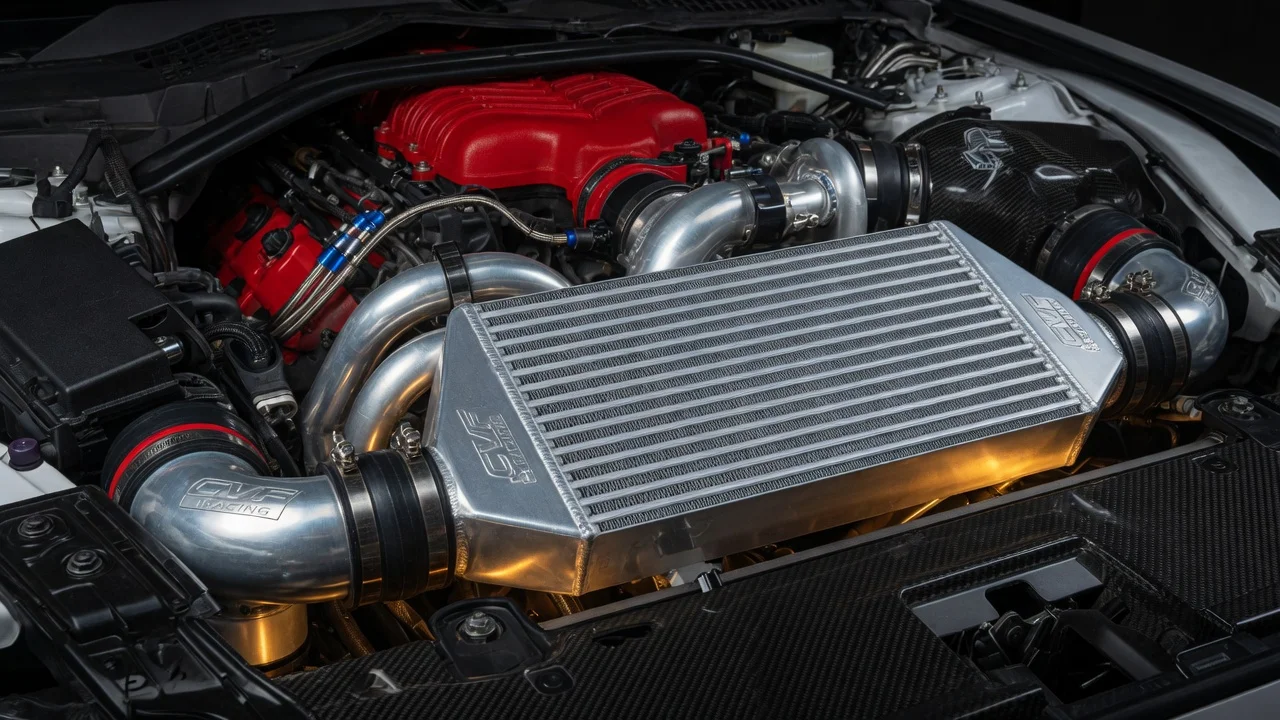
Owners usually consider a CVF intercooler for one of two reasons: they want cooler, denser intake air on a turbocharged or supercharged engine, or they need to replace a damaged factory unit. The right choice depends less on the label and more on your exact vehicle, model year, engine variant and goals. This guide covers how to define the job, confirm fitment, weigh features, plan for ownership costs and narrow your options before you buy.
Define the job the product must do
Start with why you are shopping. Replacing a cracked or leaking stock unit has different priorities than upgrading a tuned engine that runs more boost. For a straight replacement, matching manufacturer specifications for core size, connection points and sensor locations matters most. For an upgrade, the goal is lower intake air temperature under sustained load with little added pressure drop. Those two aims can pull in different directions.
Be honest about how the vehicle is used. Daily commuting in mild weather rarely heat-soaks a factory intercooler. Towing, track sessions, repeated hard pulls and hot climates can. If you have noticed power fading after several pulls, write down the symptom conditions: ambient temperature, load, duration and whether the fade repeats. A symptom report like that is useful, but it is not a verified failure. Only a boost leak test, a data log or a physical inspection can confirm the cause. Power loss can also come from a split coupler, a sticking wastegate, a sensor fault or a fuel delivery problem, and a new intercooler will not solve any of those.
Also list your practical constraints. These include your budget for the core and any piping, whether you will install it yourself, whether the vehicle is still under warranty, and whether road-legal status matters in your state.
Check compatibility
Fitment for any CVF intercooler depends on engine configuration first and model year second. The same nameplate can use different engines. Each engine may route charge air differently, place the intercooler in a front-mount or top-mount position, or use an air-to-water system instead of air-to-air. Mid-cycle refreshes can also change bumper supports, crash beams, sensor locations and pipe diameters. Check your exact year, engine code and trim against the product listing instead of relying on the model name.
Next, compare the interfaces that decide whether a part bolts in. Look at inlet and outlet diameters and their orientation, mounting tabs and bracket positions, and provisions for boost pressure or intake air temperature sensors. Note whether the factory couplers and clamps carry over. Check clearance to the radiator, A/C condenser and bumper cover, plus any active grille shutters or driver-assistance sensors mounted nearby. If the listing says you need extra piping, bumper trimming or relocated components, include that in both labor and cost. If the listing does not confirm compatibility with your exact engine variant, ask the seller before ordering.
Features that affect the choice
Core construction is the main variable. Bar-and-plate cores are typically heavier and more resistant to damage. Tube-and-fin cores are often lighter and can flow well. Real performance still depends on the specific design rather than the category. A larger core can shed more heat, but it also adds internal volume and may increase pressure drop if the internal fins are dense or the end tanks are poorly shaped. Paired with a small turbo, a very large front-mount can make throttle response feel slightly softer.
End tank design affects how evenly air spreads across the core. Cast and fabricated tanks can both work well. What matters is a smooth internal transition and solid welds. Also check whether the product includes sensor bungs in the correct location, quality couplers and proper clamps.
Treat marketing labels with caution. Phrases such as maximum cooling or race-proven describe intent, not results. Useful evidence includes stated core dimensions, intake air temperature data logged under comparable conditions, pressure drop figures with a described test method, and fitment notes for specific engines. A claim that names no vehicle, boost level or test condition cannot be fairly compared with another product.
Limitations and ownership costs
Installation often takes longer than expected, because the front bumper, splash shields, horns or auxiliary coolers may have to come off. Budget for new couplers and clamps. On an air-to-water system, or if the radiator support is disturbed, also budget for coolant. Some vehicles run fine on the existing calibration after an intercooler swap. Others benefit from a tune review, especially if boost control behavior or intake air temperature readings change noticeably. Check whether the change affects your powertrain warranty and whether the part is permitted for road use where you live.
Maintenance is modest but real. Recheck couplers and clamps after the first few drives and at regular service intervals. Keep the fins clear of bugs and debris, and check for oil inside the core. A light film of oil from crankcase ventilation is common on many turbo engines. Pooled oil or a sudden increase calls for a closer inspection of the turbo seals and the ventilation system. Record the installation and any boost leak test results in the service history, so future diagnostics have a baseline.
An intercooler cannot fix a failing turbocharger, a leaking diverter valve, a faulty sensor or poor fuel delivery. If diagnostic codes such as an underboost or charge-pressure fault are stored, confirm the cause before buying parts.
Build a practical shortlist
Narrow the field by asking the same questions about each candidate. Does the listing name your exact model year, engine variant and, where relevant, drivetrain? Does it match your mounting position and intercooler type? Are the inlet and outlet sizes, sensor provisions and mounting points clearly stated? Does it require new piping, bumper modifications or relocated parts, and are those included?
Then compare the evidence. For each option, note the core dimensions, construction type and end tank design. Record whether the seller provides documented test data with stated conditions or only marketing language. Add hardware, couplers, clamps, possible tuning and labor to the price, so you are comparing the full cost rather than just the part cost.
Finally, check the support terms: the return policy for fitment problems, warranty coverage for leaks or weld failures, and whether installation instructions are available. Two or three parts that clearly fit your engine configuration and suit how you actually drive make a more useful shortlist than a chase for the largest core available. If you are replacing a part because of a suspected fault, finish the inspection and pressure testing first, so your purchase addresses a confirmed problem.