Choosing a Motorcycle Rider Backrest: Fit, Compatibility and Buying Checks
A rider backrest can make long stretches in the saddle noticeably more relaxed, but only if it fits your specific motorcycle, your seat and your riding position. The short answer: choose a backrest designed for your exact make, model and model year, matched to the seat you actually use, with enough adjustment to support your lower back without pushing you too far toward the tank or controls. If you regularly carry a passenger, add one more requirement: the backrest must fold, detach or otherwise get out of the way quickly.
The Short Answer and What Changes It
For most riders, the best rider backrest is the one built for their bike and seat combination, adjustable for both distance and angle, and easy to remove or fold. Three conditions can change that recommendation:
You use an aftermarket seat. Many aftermarket seats only accept a backrest from the same seat maker, or need a seat with a pre-installed receiver for the backrest post. You ride two-up often. A fixed or slow-to-remove backrest becomes a daily inconvenience, so a fold-down or quick-release design moves to the top of the list. Your bike has a compact or sport-oriented seat. Some motorcycles simply leave little room between the rider and the passenger seat, and a bolt-on backrest may crowd the rider forward. In that case a seat with an integrated backrest, or a different approach entirely, may suit better.
Main Types of Rider Backrests
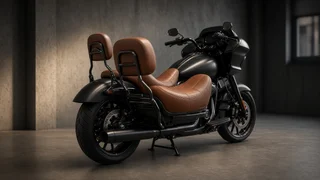
Rider backrests generally fall into a few design families. Knowing which one you are looking at helps you judge compatibility and installation effort before reading the fine print.
Type | How it mounts | Typical strengths | Typical drawbacks; Seat-integrated backrest | Built into or plugs into a receiver on a specific aftermarket or factory seat | Clean look, designed together with the seat shape, often folds or removes | Usually requires buying that seat; limited to models the seat maker supports; Bolt-on removable backrest | Bracket fastens under the seat or to the frame, with a post that holds the pad | Works with some stock seats, can often be removed when not needed | May require drilling or seat modification on some bikes; mounting kit may be sold separately; Fold-down backrest | Hinged post lets the pad fold forward or back | Quick to clear for a passenger or for mounting and dismounting | More moving parts; hinge and lock quality matter; Improvised soft support | A tail bag or duffel strapped to the passenger seat that the rider leans against | No installation, doubles as luggage | Support varies with how the bag is packed and secured; not adjustable in the same way
A rider backrest is different from a sissy bar or passenger backrest. Sissy bars mount behind the passenger seat to support the passenger, not the rider. Some listings use these terms loosely, so confirm that the product is described as a driver or rider backrest before buying.
Compatibility: The Check That Matters Most
Backrest fitment is highly model-specific. Manufacturers change frames, seat pans, fender shapes and wiring layouts between model years, and the same model name can cover very different motorcycles across generations. Treat every compatibility claim as tied to an exact make, model, model year and, where relevant, trim.
Confirm the exact model year range listed by the backrest maker, not just the model family name. Identify your seat. A backrest listed for the stock seat will not necessarily fit an aftermarket seat, and the reverse is also true. If you have replaced your seat, find the seat brand and model before shopping. Check whether your motorcycle has factory provisions for a rider backrest. Some touring and cruiser models are designed with mounting points or optional factory seats that accept one; others need a bracket solution. Look for model-year splits within a generation. If the listing names specific years, do not assume adjacent years are covered. Check trim and market differences. A model sold in another market or a special edition may use a different seat or tail section even when the base name is the same. If anything is unclear, ask the seller or maker for confirmation that the part fits your exact bike and seat before ordering.
Fit and Riding Position
A backrest changes where you sit. Adding a pad behind you takes up some of the seat length and can move you forward, which affects your reach to the handlebars, your knee bend and your access to the foot controls. The goal is support that lets your lower back relax, not a pad that pushes you into a cramped posture.
Forward and back adjustment lets you set the pad where it meets your back while you are in your normal riding position. Angle adjustment changes how upright or reclined you sit. Riders with a more upright cruiser posture often want different support than riders who lean slightly forward. Height adjustment, where offered, lets the pad meet the lumbar area rather than the top of the hips or the mid-back. Pad width and shape matter. A wider pad spreads support but may feel bulky; a narrower pad may leave you feeling less supported in corners. Check controls after setup. With the backrest adjusted, you should still reach the bars, levers, pegs or floorboards and foot controls comfortably, and be able to put your feet down at a stop as you did before.
If possible, sit on a bike fitted with the same backrest, or one with similar geometry, before buying. Comfort is personal, and a design that suits one rider's height and posture can feel wrong to another. A backrest may help some riders with fatigue on long rides, but it is not a substitute for medical advice if you have existing back problems.
Passenger Use and Getting On and Off
Riders who carry a passenger need to think about the backrest when the second seat is occupied. Many rider backrests sit in the space where a passenger's front would be, so they must be folded or removed for two-up riding.
Check how the backrest clears the passenger area: does it fold forward against the rider, fold back, or lift out entirely? Consider how long that takes. A quick-release or one-handed fold is far more practical than a backrest held by bolts or tools. Think about where a removed backrest goes. If it cannot be stored on the bike, you may need to leave it at home on two-up days. Check mounting and dismounting. Riders who swing a leg over the seat may find a tall backrest gets in the way; a folding design can help.
Build Quality and Materials
A backrest lives outdoors and carries load from your body on every bump. Quality differences show up over time as rattles, cracked covers or loose hardware.
Mounting post and bracket: look for sturdy construction, a secure locking method and a finish (chrome, black powder coat or similar) that matches the bike and resists corrosion. Adjusters: knobs or locks should hold their setting under load and should not loosen with vibration. Pad cover: vinyl and leather both appear on backrests; consider how the cover handles sun, rain and cleaning. Stitching and seams should match the quality of your seat if you want a consistent look. Foam: the pad should feel supportive rather than collapsing completely when you lean back. Rattles and wear points: check whether the design includes bushings or padding where metal parts meet, and whether the post can scuff paint or seat covers.
Installation and Total Cost
The advertised price of a backrest is not always the full cost. Before comparing options, work out what is actually needed to get the backrest working on your bike.
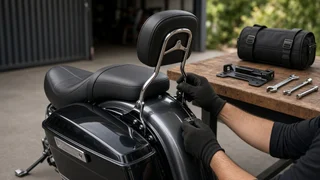
Mounting kit: some backrests are sold with a model-specific bracket; others require a separate mounting kit for your motorcycle. Seat requirements: a seat-integrated design may mean buying a new seat or having the stock seat modified to accept a receiver. Labor: bolt-on kits are often owner-installable, but some require removing body panels, routing around wiring or drilling. If you pay a shop, include that labor. Related changes: if the backrest pushes you forward, you might later consider handlebar or control adjustments, which add cost. Shipping and returns: check return windows and restocking fees, which matter if fitment turns out to be wrong.
When you compare prices, note the date, the retailer and whether the figure includes the mounting hardware, shipping and tax. An advertised list price, a sale price and what someone actually paid for a used unit can differ widely, so compare like with like.
Buying a Used Backrest
Used backrests appear frequently because riders sell them along with seats or when they change bikes. They can be good value, but missing parts are common.
Confirm the part is complete: pad, post, bracket and all model-specific hardware. Get the original model and year fitment from the seller, and a part number if available, then check it against your bike. Inspect the post for bends and the threads for damage. Check the cover for cracks, sun fading and torn seams. Make sure adjusters and folding mechanisms still lock firmly. If the backrest was tied to a specific seat, confirm you have, or can get, a compatible seat.
Which Type Suits Your Riding
Long-distance solo touring: an adjustable backrest, either seat-integrated or a well-built bolt-on, is usually the most comfortable choice. Prioritize angle and distance adjustment. Frequent two-up riding: choose a fold-down or quick-release design, and check how it stows when the passenger is aboard. Occasional long rides on a stock seat: a removable bolt-on backrest made for your model can add support without committing to a new seat. Confirm it will not require major modification. Already planning a new seat: buying a seat and matching backrest from the same maker generally gives the best fit and the cleanest look. Compact or sport-oriented bikes: check rider space carefully; if a rigid backrest crowds you, a strapped tail bag used as a soft rest may be a more practical solution.
Pre-Purchase Checklist
Exact make, model, model year and trim confirmed against the listing. Seat type identified (stock or aftermarket, with brand and model). Mounting method understood, including whether a separate kit is needed. Adjustment range suits your height and riding posture. Controls, bars and ground reach remain comfortable with the backrest in place. Passenger plan: fold, remove or store, and how quickly. Build quality: post, adjusters, cover and foam. Full cost: hardware, seat changes, labor, shipping and return terms. For used parts: completeness, condition and documented fitment.