Motorcycle Backrests and Lumbar Support: What to Check Before You Buy
A motorcycle backrest can make long rides noticeably more comfortable, but only if it suits your bike, your riding position and the way you ride. The short answer: choose a backrest that is listed as compatible with your exact model, model year and seat, mounts to a solid point on the frame or seat structure, and adjusts to sit at your lower back rather than pushing you forward. If your bike has no compatible mounting option, or you ride in a way that needs free movement on the seat, a wearable lumbar support or a different seat may serve you better than a bolt-on backrest.
Rider backrest, passenger backrest or lumbar belt: which do you need?
Most motorcycle back rests fall into a few groups, and the right one depends on who needs support and where the fatigue comes from.
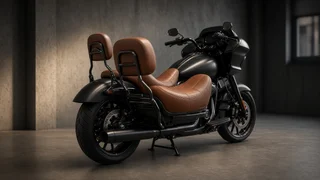
Driver (rider) backrest: a pad that sits behind the rider, usually mounted under or through the seat or to the passenger seat area. It supports the lower back on long, upright rides and is common on cruisers and touring bikes. Passenger backrest: typically a pad on a sissy bar or an upright attached to a luggage rack or trunk. It mainly helps the passenger feel secure under acceleration and gives them something to lean against. Seat-integrated backrest: some aftermarket and factory touring seats include a built-in or detachable rider backrest. This usually means replacing the seat rather than adding a part to it. Wearable motorcycle lumbar support: a belt or brace worn around the midsection. It needs no mounting, moves with you and works on any bike, but it supports posture rather than giving you something to lean against.
If your discomfort comes from slouching or a tired lower back on an upright bike, a driver backrest is the most direct fix. If you ride a sport or adventure bike where you shift your weight often, standing on the pegs or moving forward and back on the seat, a fixed backrest can get in the way, and a lumbar belt or a seat with better shaping is often the more practical form of motorcycle back support.
Comparing the main types
Type | Best suited to | Main advantages | Main trade-offs; Rider backrest (seat or frame mount) | Cruisers, touring bikes, upright long-distance riding | Direct lower-back support; often adjustable; many are quick-detach | Must match your exact bike and seat; can limit movement; may affect getting on and off; Passenger backrest (sissy bar or rack) | Two-up riding | Passenger security and comfort; can double as a luggage anchor on some setups | Adds height and weight at the rear; may clash with existing racks or bags; Seat with integrated backrest | Riders replacing the stock seat anyway | Support designed into the seat shape; tidy appearance | Higher commitment; changes seat height and feel; fit tied to specific models; Wearable lumbar belt | Any bike, especially sport and adventure riding | No installation; moves with you; transfers between bikes | No surface to lean on; fit and comfort depend on sizing and riding gear
Compatibility is the first check
Backrests are rarely universal in practice. Even products described as universal usually depend on a particular seat shape or mounting arrangement. Before buying, confirm compatibility against your full vehicle configuration rather than just the model name.
Model and model year: frame, seat and fender designs can change between years of the same model, so a backrest listed for one year range may not fit another. Market and trim: bikes sold in different regions, or in different trims of the same model, can use different seats, racks or rear subframes. Your current seat: if you have already fitted an aftermarket seat, a backrest designed around the stock seat may not fit, and vice versa. Check whether the backrest is matched to a specific seat. Existing accessories: luggage racks, saddlebag mounts, sissy bars, tour packs and docking hardware can occupy the same mounting points a backrest needs. Passenger use: some rider backrests take up space on the passenger seat or must be removed or folded for two-up riding. Check whether the design allows that if you carry passengers.
Where a listing is vague about which years or trims it covers, treat the fit as unresolved until you can match it to your bike, for example by comparing part numbers for your seat or mounting hardware.
Seat mounting and frame mounting
How a backrest attaches affects its stability, how easy it is to remove and whether installation is reversible. Common approaches include brackets that clamp under the seat and are held by the seat's own fasteners, mounts that bolt to the frame or subframe, and quick-detach systems that use a permanent bracket with a removable upright.
Solidity: a backrest you lean on takes real load. It should attach to a structural point, not just to plastic bodywork or a thin seat base. Reversibility: check whether installation requires drilling, cutting the seat or modifying bodywork. Bolt-on designs that use existing mounting points are easier to undo when you sell the bike. Quick-detach: useful if you want the backrest on for touring and off for short rides or a cleaner look. Check how secure the latch feels and whether the remaining bracket is visible. Hardware and instructions: confirm that brackets and fasteners are included and that installation instructions match your model. Warranty: if the bike is still under warranty, it is reasonable to check how the warranty terms treat aftermarket accessories before modifying anything.
Seat adjustment and backrest positioning
Lumbar support works when the pad meets the curve of your lower back without forcing you away from the handlebars. Poorly positioned backrests are a common reason riders find them uncomfortable.
Fore-aft adjustment: lets you set the pad so it touches your back without pushing you forward into the tank or bars. This matters more if you are taller or shorter than average for the bike. Height adjustment: the pad should sit around the lower back, not the shoulder blades. Too high and it gives little lumbar support; too low and it can press uncomfortably on the tailbone. Angle adjustment: a slight recline can relieve pressure, while too much can change how you reach the controls. Pad shape and size: wider, contoured pads spread pressure; narrow pads stay out of the way but offer less support. Riding gear: thick jackets and back protectors change where the pad meets you. Set the backrest up while wearing the gear you normally ride in.
Riding and handling trade-offs
A backrest changes how you sit on the bike, and that brings some trade-offs worth considering before you buy.
Getting on and off: a tall rider backrest can make swinging a leg over the seat more awkward, especially with luggage fitted. Fold-down or removable designs help. Freedom of movement: on twisty roads or rough terrain, many riders move their weight around. A fixed backrest can restrict that, which is why backrests are less common on sport and off-road bikes. Comfort versus posture: leaning back for hours can feel relaxing but may shift weight onto the tailbone. Some riders find a backrest works best as an occasional rest rather than something they lean on constantly. Weight and appearance: backrests and sissy bars add some weight at the rear and change the bike's look, which matters to some owners.
A backrest is not a restraint system
In a car, the seat back, head restraint and seat belts work together as a restraint system designed for crash protection. Motorcycle backrests do not serve that role. They are comfort and support accessories, and passenger backrests mainly help a passenger stay settled under normal riding. Motorcycles generally do not have head restraints in the automotive sense, and a backrest should not be relied on to hold a rider or passenger in place in a crash. Protective gear remains the main form of protection.
When a lumbar belt or new seat makes more sense
A bolt-on backrest is not always the best answer to back discomfort. A wearable motorcycle lumbar support can be the better choice if no backrest is listed for your bike, if you ride several bikes, or if you need to move freely on the seat. Some riders also find that their discomfort comes from the seat itself, its shape, foam or height, or from handlebar and footpeg positions that force an uncomfortable posture. In those cases, a better-shaped seat or ergonomic adjustments may do more than a backrest. Ongoing or severe back pain is worth discussing with a medical professional rather than treating with accessories alone.
Pre-purchase checklist
Decide who needs support: rider, passenger or both. Match the backrest to your exact model, model year, market and trim. Confirm it works with your current seat and any racks, bags or sissy bar already fitted. Check the mounting method: structural attachment, no unwanted drilling or cutting, hardware included. Look for adjustment in height, fore-aft position and angle if your build differs from average. Consider whether you need quick-detach or fold-down capability for two-up riding or easier mounting. Think about how you ride: upright touring suits a fixed backrest; active riding may suit a lumbar belt better. Check return terms in case the fit or riding position does not work out once installed.
If a backrest matches your bike and adjusts to your lower back, it can make long days in the saddle much easier. If either of those conditions is uncertain, resolve fit first, then compare options on adjustment and mounting quality rather than looks alone.