Choosing a Motorcycle Seat With a Backrest
The short answer
The right motorcycle seat with a backrest is one confirmed to fit your exact bike, supporting the person who needs it (rider, passenger or both), without spoiling your reach to the bars, pegs and ground. Fitment comes first. Seats and backrest mounts are usually made for a specific model family and range of model years, so a seat that suits one version of a bike may not bolt onto another. After fitment, judge ergonomics, adjustability, construction quality and the full installed cost.
Two conditions change the answer most. The first is whether the backrest is for the rider or the passenger, because these use different hardware and solve different problems. The second is whether you ride solo, two-up or switch between them, which decides whether removable or adjustable hardware is worth having.
Rider backrest or passenger backrest?
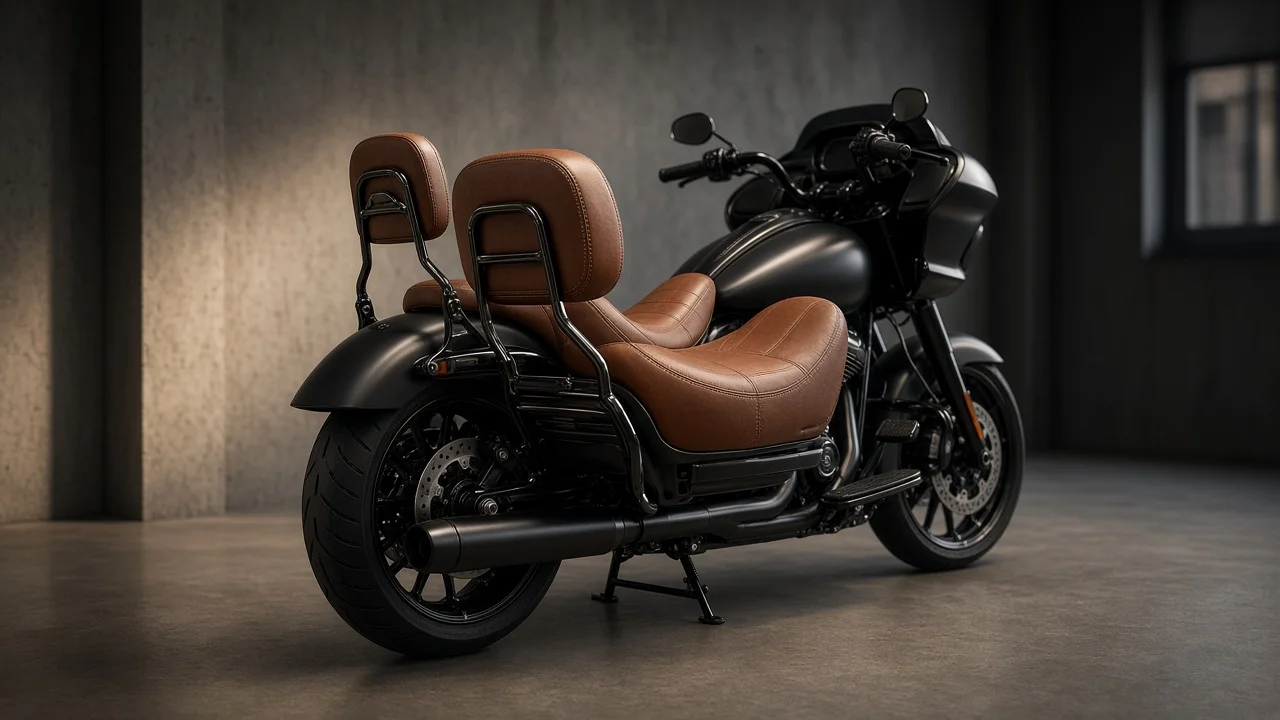
A rider backrest, also called a driver backrest, supports the operator's lower back. It may be built into the seat, attached to the seat through a mounting post, or fixed to the frame under the seat. Many fold or come off so a passenger can sit behind the rider.
A passenger backrest supports the person on the rear seat. It is often a pad mounted on a sissy bar, the upright bar fixed to the rear frame or fender. It may also be a pad mounted to a luggage rack or top case. Some seats come as a full set with both backrests designed to work together.
If you need support for both people, check that the two systems can be fitted together. A rider backrest that sits too far back can crowd the passenger, and some passenger mounts need hardware that clashes with certain rider backrest brackets.
What to check before you buy
1) Exact fitment
Confirm compatibility against your motorcycle's make, model, model year and, where relevant, trim and market. Frame changes, revised fenders, different side covers, tank shapes and seat mounting methods can vary between years or versions of what looks like the same bike. If the listing only names a model family, ask the seller which years and versions are covered and whether any exceptions apply. Also check whether the seat is designed for a stock bike or assumes accessories such as a specific fender, rack or docking hardware.
2) Rider ergonomics
A new seat can change where you sit. A backrest that moves you forward shortens your reach to the handlebars and may cramp your knees. A seat with a higher or wider front can make it harder to put your feet flat on the ground at a stop. Look for any stated change in seat height or rider position compared with the stock seat. If none is published, treat that as a gap and ask before buying.
Adjustability helps when riders differ in size or when you want different positions on long rides. Common adjustments include fore-aft position, backrest angle and pad height. Check how the adjustment is made, whether it needs tools, and whether it holds firmly once set.
3) Passenger accommodation
For a passenger, look at rear seat width and shape, where the backrest pad sits relative to their lower back, and how the seat relates to the passenger footpegs. A taller or thicker rear section raises the passenger and changes their knee angle. Consider how the passenger will get on and off, since a tall sissy bar or fixed backrest can get in the way of swinging a leg over. Check for handholds or grab points as well. If you ride solo most of the time, removable passenger hardware lets you return the bike to a solo setup.
4) Construction and materials
The seat pan is the rigid base. It determines how solidly the seat mounts and whether it stays square on the bike. The foam, and any gel insert, decides comfort over distance. Very soft foam can feel good at first but compress over time. The cover material affects durability, grip, water resistance and how hot the seat gets in sun. Check stitching quality, how the cover handles weather, and whether the backrest mount is metal and properly reinforced where it carries load.
5) Load and legal requirements
Adding a passenger, backrests and luggage all count against your motorcycle's maximum load. Check the load capacity in your owner's manual and allow for rider, passenger, gear and accessories. If you plan to carry passengers, also confirm your state's passenger equipment requirements, which may cover items such as a passenger seat and footpegs. Rules differ by state, so check the current rules where the bike is registered and ridden.
6) Installation and total cost
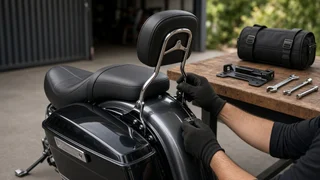
Find out exactly what is included. Some seats come with mounting hardware and the backrest. Others sell the backrest, mounting bracket, docking hardware or sissy bar separately. Ask whether installation is a simple bolt-on or needs parts removed, drilling or professional fitting, and add any labor cost to your budget.
No verified prices were available for this guide, so no price ranges are given here. When comparing quotes, note the market, the date of the price, the currency, and whether shipping, tax, hardware and installation are included. Remember that an advertised price is not the same as what buyers actually paid, especially on used listings.
7) Returns, warranty and used condition
Comfort is hard to judge before you ride, so check the return policy, including whether a seat that has been fitted or ridden can still be returned. Check what the warranty covers, such as the cover, foam, seat pan or mounting hardware, and for how long. If you are buying a used seat, inspect it for flattened foam, torn or cracked covers, a cracked or bent pan, missing mounting tabs, and whether all backrest hardware is present.
Quick pre-purchase checklist
Fitment confirmed for your make, model, model year and version; Backrest type matches who needs support: rider, passenger or both; Rider and passenger backrests confirmed compatible if fitting both; Stated effect on seat height and riding position, or the gap noted; Adjustment range and method for the backrest; Passenger seat shape, footpeg relationship and ease of getting on; Seat pan, foam and cover construction suited to your riding conditions; Total load within the manual's capacity; State passenger equipment rules checked if carrying passengers; Included hardware, installation needs and full installed cost; Return policy, warranty coverage and used condition
Gaps to resolve before deciding
This guide covers general selection principles only. No confirmed specifications, prices, product names or test results were available. Before buying, get model-specific fitment confirmation, published seat dimensions or height changes, a full list of included parts, and current pricing from the seller or manufacturer.