Choosing a motorcycle passenger backrest or sissy bar
The short answer
For most riders, the right passenger backrest is one listed as a direct fit for the exact make, model and model year of the motorcycle, positioned so the pad supports the passenger's lower back without crowding the rider, and mounted in a way that matches how often you ride two-up. If you carry a passenger on most rides, a fixed sissy bar or a backrest built into a touring trunk is simple and solid. If you ride solo most of the time, a detachable sissy bar or removable backrest lets you take it off between passenger rides. Fitment is the condition that changes the answer most: a bar that suits one model year can fail to fit the next because fenders, frame struts, seats and turn signals change between years and trims.
Sissy bar or passenger backrest: what the terms mean
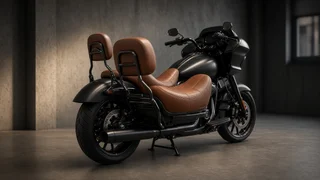
A sissy bar is an upright bar, usually a loop or pair of uprights, that bolts to the rear fender struts or frame behind the passenger seat. Many are sold with a padded backrest attached to the upright. A passenger backrest is the broader term for any pad that supports the passenger's back; it may sit on a sissy bar, attach to a luggage rack, plug into a compatible seat, or form part of a rear trunk or top box. In practice, many shoppers use the two terms interchangeably, so check product descriptions to see whether the pad, the upright and the mounting hardware are included or sold separately.
Comparing the main options
The table below compares common configurations on shared criteria. It describes general trade-offs rather than ranking specific products, because no product specifications, prices or test results were available for this article.
Option | Removability | Luggage use | Typical strengths | Typical drawbacks; Fixed sissy bar with pad | Not quick-removable; tools needed | Can anchor soft bags or serve as a base for a rack, if rated for it | Rigid, simple, often lower parts count | Stays on the bike during solo rides; changes the look permanently; Detachable sissy bar | Lifts off using docking hardware once installed | Similar to fixed when attached | Clean solo look; one bike suits solo and two-up riding | Usually needs a separate docking kit; mounting points need occasional inspection for wear or play; Rack-mounted backrest | Depends on rack design | Rack carries luggage behind or beneath the pad | Combines passenger support and cargo space | Pad position is set by the rack; can add weight high and far back; Seat-integrated or plug-in backrest | Often removable with the seat or by hand | Limited | Matches the seat; minimal extra hardware | Only works with the compatible seat; support depends on seat design; Trunk or top box with backrest pad | Depends on mount; some detach | Enclosed, lockable storage | Good support plus storage for touring | Bulk and weight; may limit passenger mounting and dismounting
Which fits your priorities
Regular two-up riding: a fixed sissy bar with a pad, or a trunk with an integrated backrest if you also need lockable storage. Mostly solo riding with occasional passengers: a detachable sissy bar, accepting the extra cost and complexity of docking hardware. Touring with luggage: a rack-mounted backrest or trunk-mounted pad, provided the combined load stays within the motorcycle's rated capacity. Keeping a specific aftermarket or factory seat: check whether that seat has a matching plug-in backrest before buying a separate bar. Prioritizing appearance: compare bar height, shape and finish against your fender and existing chrome or black hardware, but treat fitment and pad position as the deciding factors.
What to check before you buy
Exact fitment for your motorcycle
Confirm the part is listed for your make, model, model year and, where relevant, trim. Rear fenders, fender struts, seat shapes and turn signal locations can differ between model years and between trims of the same model, so a listing that names only the model family is not enough. If your motorcycle has an aftermarket seat, relocated turn signals, saddlebags, an aftermarket exhaust or an existing luggage rack, check that the bar or backrest is compatible with those parts as well. When a listing is unclear, ask the seller to confirm fitment for your exact bike before ordering.
Pad height and position
Passenger comfort depends mainly on where the pad sits relative to the passenger seat. Look for the distance from the seat to the pad and whether the pad angle or position can be adjusted. A pad set too far forward can push the passenger into the rider; too far back and it offers little support. Taller bars change the appearance and may be preferred for larger passengers, but height alone does not guarantee better support. If possible, measure your passenger seat and compare it with the dimensions the seller publishes, or ask for them if they are not listed.
Mounting type and hardware
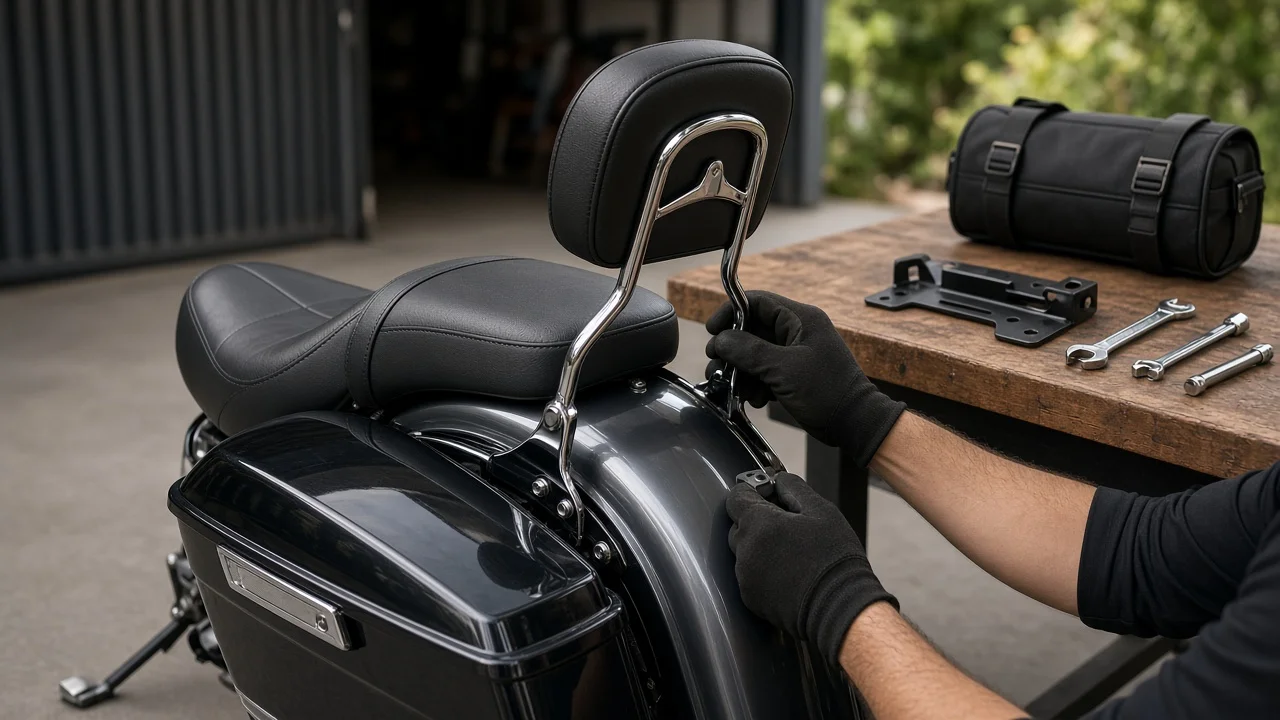
Check whether the bar is fixed or detachable and what is included. Detachable systems typically need a docking hardware kit that bolts to the motorcycle and stays on it; this kit is frequently sold separately and is often model-specific. Also check whether side plates, pads, bolts and spacers are included or must be bought on their own. A listing that shows a complete bar in its photos may sell only the upright.
Luggage and load limits
Many riders strap bags to a sissy bar, but not every bar or pad is intended to carry cargo. Look for a stated load rating from the manufacturer and stay within it. Separately, the combined weight of rider, passenger, accessories and luggage must stay within the load capacity in your owner's manual. Carrying a passenger and luggage usually calls for adjusting tire pressure and suspension preload as the manual specifies. A backrest improves comfort; it is not a restraint and does not replace a proper seat, footpegs and grab points for the passenger.
Construction and finish
Look at the material and finish of the upright, the quality of the pad cover and the backing that holds the pad in place. Ask whether the finish is chrome, powder coat or paint, since these differ in how they wear and how well they match existing parts. For the pad, check whether the cover is weather-resistant and whether replacement pads are available separately.
Condition if buying used
Used sissy bars and backrests can be good value, but inspect them carefully: look for bends, cracks near welds and mounting holes, rust or flaking finish, elongated bolt holes, and worn or split pad covers. For detachable systems, confirm whether the docking hardware is included and whether it matches your model year. Ask for photos of the mounting plates, not just the visible upright.
Total cost and installation
The advertised price of a bar is rarely the full cost. Add up the upright, side plates, pad, docking kit if needed, any required mounting hardware, shipping, and installation labor if you are not fitting it yourself. Some installations also involve moving turn signals or removing fender trim, which can add parts and time. When comparing quotes, note the date, currency and what each price includes, and treat listed prices as asking prices rather than what buyers actually paid. No current US pricing was available for this article, so check prices with sellers or dealers directly.
If you install the part yourself, follow the manufacturer's instructions and the torque values in your service manual, use thread locker where specified, and recheck fasteners after the first ride and periodically afterward. Detachable systems should lock firmly with no rattle or play; any movement is a sign to inspect the docking points. If the job involves wiring for relocated turn signals or you are unsure of the correct torque values, a dealer or qualified shop is a reasonable choice.
Return policy and warranty
Because fitment errors are common, check the seller's return policy before buying, especially whether parts can be returned after a test fit and whether returns of special-order items are restricted. Also check what the manufacturer's warranty covers on the finish and pad, and whether installing an aftermarket part affects coverage on the motorcycle itself.
What this article could not confirm
No specific products, prices, dimensions, load ratings or model-year fitment data were available for this guide. Use the checks above to compare listings, and rely on the manufacturer's fitment information and your owner's manual for the figures that apply to your motorcycle.