Choosing a Motorcycle Sissy Bar for a Passenger
A passenger changes the way a motorcycle behaves, especially under acceleration and over rough pavement. Without a backrest, every launch or sudden stop can push the rider toward the luggage area or force them to brace with their arms. A sissy bar motorcycle accessory addresses that problem by creating a stable vertical support behind the seat. The right unit fits the chassis cleanly, works with the existing seat and rear lighting, and positions the passenger comfortably. Choosing well comes down to understanding mounting geometry, pad placement, construction quality, and how the accessory interacts with the rest of the motorcycle.
The direct answer
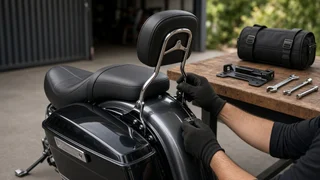
The best choice for most motorcycle passengers is a model that mounts to the frame or rear fender using the motorcycle's existing side plate or fender strut locations. That approach spreads the load more evenly than a bar bolted directly through sheet metal without a backing plate. The upright should sit close enough to the passenger to provide support during acceleration, but far enough back that the rider still has room to grip the machine and shift body weight.
Comfort depends heavily on pad position. A pad that contacts the lower back can reduce fatigue during long rides, while one that digs into the shoulder blades feels restrictive. Taller riders may need an upright that extends higher behind the passenger, but that height also increases wind resistance and can make mounting the motorcycle less convenient. A sissy bar is a structural support, not just a style piece, so fitment must be verified before purchase.
Choosing and buying
Start by identifying the motorcycle's rear mounting configuration. Some designs use fender strut bolts that also carry the turn signals or license plate bracket, while others attach to factory threaded bosses near the shock mounts. If the motorcycle has a luggage rack or saddlebag supports, check whether the sissy bar shares those fasteners or requires separate side plates. Mixing accessories on the same mounting point can lead to interference or fatigued hardware.
Inspect how the pad is attached and shaped. A curved, dense pad spreads pressure across the passenger's back instead of concentrating it along one narrow edge. Check whether the upright is welded solidly to the side plates or uses removable hardware. Removable designs add convenience when riding solo, but the connection points should feel secure. Non-standard seats or aftermarket rear fenders may alter clearance, so a part listed for the model year still needs a visual check against the actual setup.
Comparing alternatives
Fixed and quick-detach designs serve different riding habits. A welded or permanently bolted bar offers simplicity and fewer potential movement points, while a detachable upright lets the rider remove the backrest when carrying only cargo or riding alone. Taller bars provide more support area and a higher anchor for luggage straps. Shorter bars feel less intrusive and preserve the motorcycle's rear profile, but they may only act as a lower back stop rather than full torso support.
Material and construction also influence how the motorcycle feels over bumps. A tubular steel upright with solid side plates tends to transmit less flex than thin stamped brackets, though the pad's foam density and angle matter as much for passenger comfort. Consider the motorcycle's engine configuration and riding controls: a torquey V-twin or sport-tuned machine may launch hard enough that the passenger relies on the sissy bar constantly, making a larger pad and sturdy mount more valuable than on a mild cruiser with a gentle throttle response.