Choosing a motorcycle passenger strap
The short answer
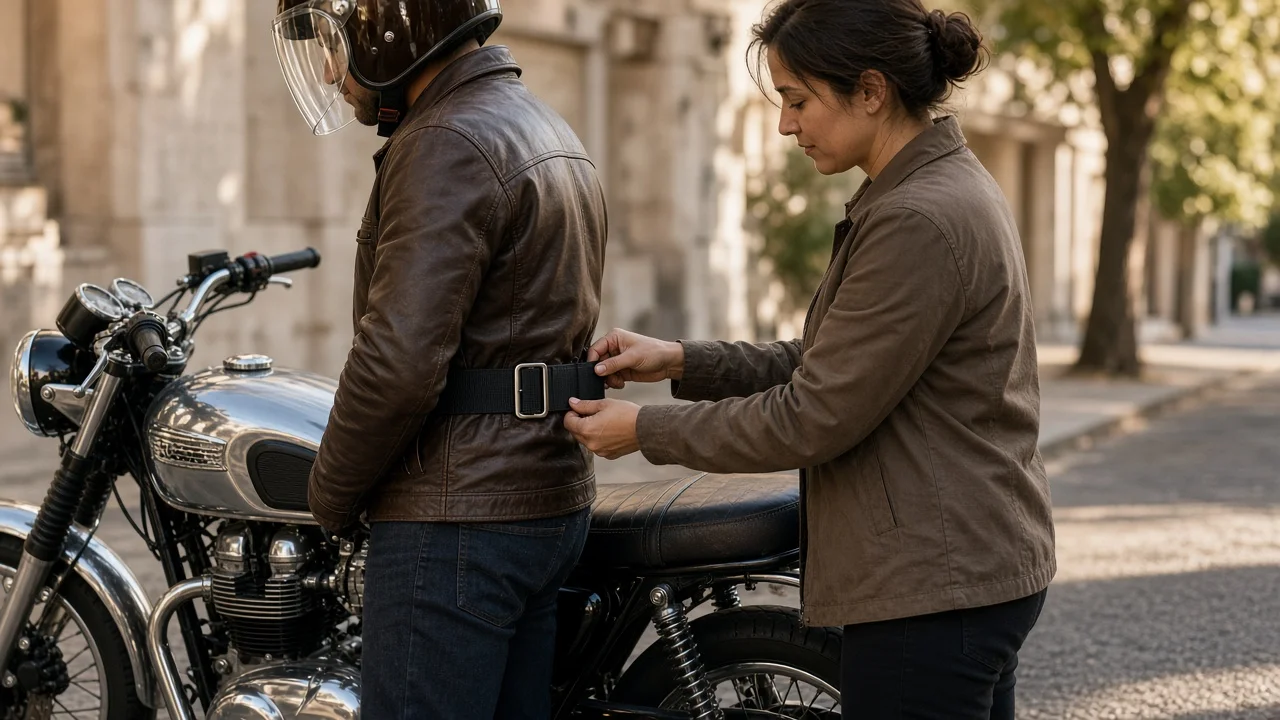
Start by deciding which kind of strap you need, because the phrase covers different products. A seat strap is fixed across the passenger seat for the passenger to hold. A rider-worn grab belt goes around the rider's waist and has handles for the passenger. A child harness or tether is designed to keep a smaller passenger secured to the rider. Once the type is settled, the right choice comes down to three checks: it fits your motorcycle or the rider's body, it is built well enough to take a firm grip without slipping or tearing, and its total cost, including any fitting work, makes sense next to the alternatives.
Two conditions can change that answer. If your passenger is a child, the decision becomes mainly about whether the harness suits that child's size and whether your state permits the child to ride as a passenger at all. If your bike lacks other passenger equipment, such as passenger footrests or a seat meant for two, a strap alone may not make it suitable or legal to carry someone. Passenger equipment rules differ from state to state, so check the rules where you ride before relying on any strap.
Match the strap type to how you ride
Seat strap: stays on the motorcycle and works for any adult passenger. It suits riders who carry different passengers occasionally and want nothing extra to wear. Its usefulness depends on whether the passenger can reach it comfortably while sitting upright. Rider-worn grab belt: gives the passenger handles at a more natural height and lets them brace against acceleration and braking. It suits regular two-up riding with the same passenger. The rider has to put it on each time, and it must be adjusted to the rider's waist. Child harness or tether: designed for a smaller passenger who may not hold on reliably, for example if they get tired. It suits riders who carry a child and have already confirmed that local rules allow it. Fit to the child matters as much as fit to the rider.
Any of these straps is a stability and grip aid. None is a crash restraint like a car seat belt, and product listings that imply otherwise should be treated with caution.
What to check before you buy
Compatibility with your motorcycle
For a seat strap, find out how your seat attaches it. Some seats have bolts, clips or slots on the underside of the seat pan, which is the rigid base under the padding. Others have no provision at all. A replacement factory strap is usually tied to a specific model, model year and seat design, so confirm the part number against your exact bike rather than the model name alone. A universal strap that wraps around the seat may fit more bikes, but check that it won't interfere with the seat lock, the latch, or how the seat sits once fitted. If you have an aftermarket or reshaped seat, fit is less predictable and worth asking the seller about directly.
Fit to the rider and passenger
For a rider-worn belt, compare the adjustment range with the rider's waist measured over the riding jacket, not over everyday clothes. Then check where the handles will sit relative to the passenger's hands, and make sure the belt won't ride up, press on the rider's controls, or block access to jacket pockets you use on the road. For a child harness, check the size range the maker states and how the straps sit across the child's shoulders and chest. Hold off buying if the sizing information is missing or unclear.
Construction and hardware
Webbing and material: look for a dense, firm strap rather than a thin or loosely woven one, and check how it is described for weather and sun exposure. Stitching: load-bearing seams should be reinforced, often with a box or cross pattern, rather than a single straight line. Buckles and fasteners: check whether the buckle is plastic or metal, how it releases, and whether it can open by accident. A buckle that releases quickly is easier to take off but should not release when bumped. Handles: count them, check their shape, and make sure a gloved hand can grip them securely. Visibility: reflective trim is a minor extra for night riding on a rider-worn belt.
Condition, if buying used
Fabric straps wear in ways that aren't always obvious. Before buying second-hand, check for fraying, fading that suggests sun damage, stiff or cracked sections, loose stitching and buckles that don't latch firmly. For a seat strap removed from another bike, confirm that its mounting hardware is included and suits your seat.
Total cost, not just the listed price
No verified prices were available for this guide, so it does not quote figures. When comparing listings, note the market, the date, the currency, and whether shipping, tax and mounting hardware are included. An advertised price is not necessarily what buyers actually paid. For a seat strap, add any cost of removing the seat, drilling or re-covering it, or paying a shop to fit it. Check the return policy too, since fit problems often show up only once the strap is on the bike or worn on a ride.
Final checks before committing
Confirm the strap type matches your passenger and how often you ride two-up. Confirm fit against your exact model, model year and seat, or against the rider's measured waist. Confirm the motorcycle has the other passenger equipment your state requires. If carrying a child, confirm local passenger age or size rules and the harness size range. Inspect stitching, buckles and webbing, especially on used items. Work out the full cost, including fitting and shipping, and check that returns are possible.
Gaps in this guide
No confirmed product specifications, load ratings, prices, test results or model-specific fitment data were available for this article. Any figures you find on strength, sizing or fit should come from the manufacturer or seller for the specific product and your specific motorcycle, and should be checked before purchase.