Chevy S-10 Transfer Case Shift Motor Identification
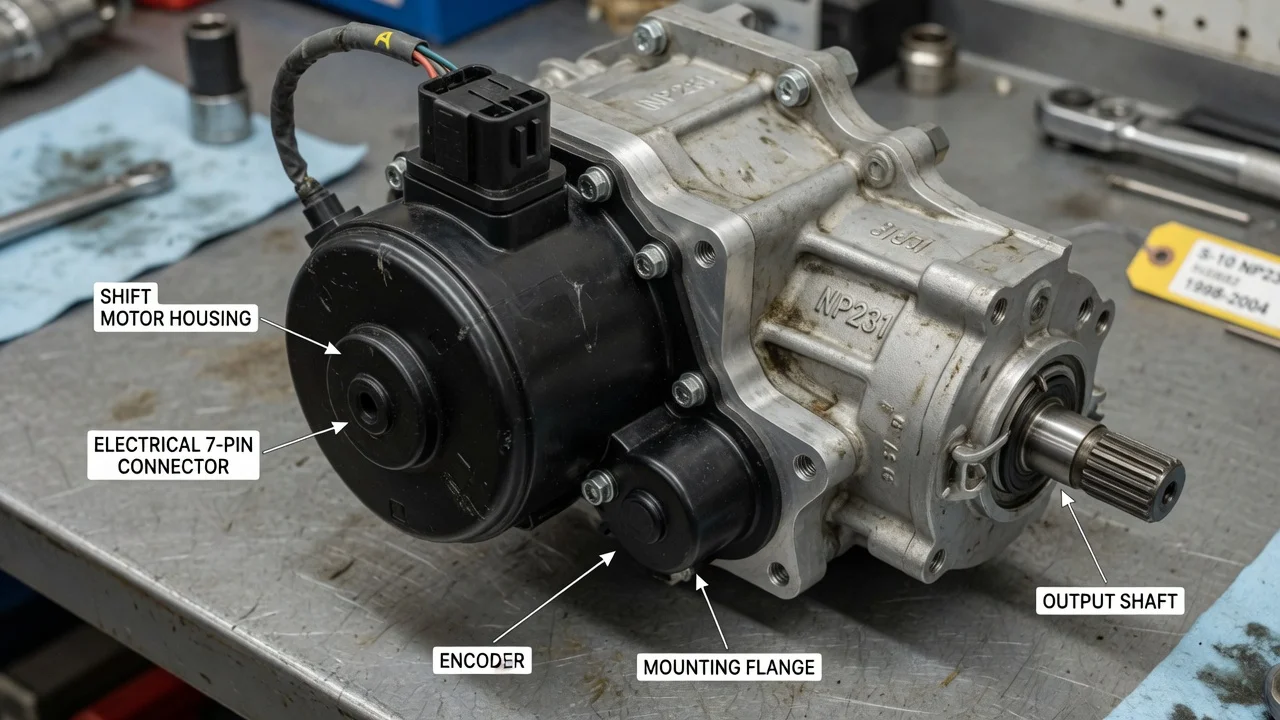
When the 4WD buttons on a Chevy S-10 stop responding or the dash indicators start blinking, the transfer case shift motor is often the first suspect. Identifying the correct S-10 transfer case shift motor matters because these pickups and Blazers were built with several different transfer case setups, and the motor, its encoder and its connector are matched to the specific unit. This guide explains how to confirm which motor your truck needs and what to check before buying one.
The short answer: match the transfer case, then the motor
The correct shift motor for a Chevy S-10 is determined by the transfer case it bolts to, not by model year alone. Only trucks with electronic push-button 4WD use a shift motor at all; an S-10 with a floor-mounted transfer case lever shifts mechanically and has no motor to replace. On electronic-shift trucks, the most dependable identification comes from three places: the identification tag on the transfer case housing, the part number printed on the existing motor, and the Service Parts Identification label, usually found in the glove box, which lists the factory option codes for that vehicle configuration.
In practice, the safest path is to record the tag and motor numbers, then have a dealer parts department or a parts catalog that searches by VIN confirm the match. Year, model and engine are a useful starting point, but they can point to more than one motor when a transfer case changed during a production run or when the truck was ordered with a different 4WD package.
How the shift motor and encoder work
The shift motor is a small electric motor with a reduction gear that mounts on the outside of the transfer case and turns the internal shift shaft. When you press a 4WD button, the transfer case control module powers the motor until the shaft reaches the selected range, such as 2HI, 4HI or 4LO. An encoder built into the motor assembly reports shaft position back to the module, which is how the module knows when to stop the motor and which indicator lights to illuminate.
Because the motor and encoder work as a pair, many replacement units are sold as a combined motor and encoder assembly. A worn encoder can confuse the module even when the motor itself still turns, which often shows up as blinking 4WD indicators, a 4WD warning where equipped, or a refusal to change ranges. Keep in mind that front axle engagement on many 4WD S-10 trucks is handled by a separate actuator at the front differential, so a front-drive complaint is not automatically a shift motor fault.
What changes the answer for your truck
Several configuration details change which motor fits. Over the years, S-10 pickups and Blazers were offered with manual-lever transfer cases, electronic two-speed transfer cases with 2HI, 4HI and 4LO buttons, and, on some later trucks, an automatic system with an AUTO 4WD position. The electronic two-speed units are commonly from the NV233 family, while the automatic setup is commonly associated with the NV236 family, but the tag on your transfer case is what settles it. Motors for these systems are not automatically interchangeable, and connector shape or pin layout can differ between versions.
Badge and body style matter too. GMC Sonoma and Jimmy models share much of their platform with the S-10 and S-10 Blazer, yet they should be identified the same way, by tag and part number rather than by assuming a cross-reference. Some Oldsmobile Bravada models used a full-time all-wheel-drive transfer case with no driver-selectable ranges, so shift motor listings for S-10 trucks do not apply to them. Previous repairs are another variable: if the service history shows a used or aftermarket transfer case or motor, the original factory codes may no longer describe what is actually installed.
What the owner can do before buying a motor
Start with a visual inspection under the truck. Clean the transfer case tag and photograph it, then photograph any label or stamped number on the shift motor before disconnecting anything. Note the dash switch layout, especially whether it includes an AUTO 4WD position, since that indicates whether you have a two-speed or automatic system. Check the glove box label for option codes and keep those photos together with the VIN when you contact a parts counter.
It also pays to rule out simple causes first. Check the 4WD-related fuses listed in the owner's manual, confirm battery and charging voltage are healthy, and inspect the motor connector and nearby harness for corrosion, broken locking tabs or damage from road debris and exhaust heat. Follow the shifting procedure in the owner's manual as well; low range on many 4WD trucks requires the vehicle to be stopped or rolling very slowly with the transmission in neutral, and an incorrect procedure can look like a failed motor. Harsh operating conditions such as water crossings, road salt or deep mud make connector and encoder problems more likely.
If replacement is confirmed, follow the service manual for removal and installation. The new motor must be installed with its output aligned to the current position of the transfer case shift shaft, and the manual describes how to set that position along with the fastener torque from the manufacturer specifications. Installing a motor out of alignment can prevent proper range changes or set fault codes right away.
Limitations and when to get professional help
This guide cannot confirm the exact motor for an individual truck, because factory options, mid-run changes and past repairs vary from one S-10 to the next. There is also no universal replacement interval for a shift motor; it is not a routine item on the maintenance schedule and is typically replaced when diagnosis shows it has failed. If the transfer case tag is missing or unreadable, or the motor carries no legible number, a dealer can usually decode the original configuration from the VIN.
Professional help makes sense when the basic checks pass but the system still will not shift. A shop with a scan tool that reads transfer case module codes can separate a failed motor or encoder from a faulty dash switch, wiring fault, module problem, front axle actuator issue or internal transfer case damage. That diagnosis usually costs less than buying a motor the truck did not need, and it confirms the next step with evidence from your specific vehicle.