Checking a New Car for Flood Damage
The short answer
Yes, a new car can have flood damage, and you should not assume a vehicle is safe just because it has never been titled or driven. Unsold vehicles sit outdoors on dealer lots, at ports and in storage yards, and a storm or flash flood can reach them before anyone buys them. Checking a new car for water exposure means combining a physical inspection, direct written questions to the seller and any history records that exist for that vehicle identification number (VIN).
The key qualification is that the paperwork protections buyers rely on for used cars work less reliably for new ones. A new vehicle is normally sold on a manufacturer's certificate of origin rather than a state title, so there may be no title on which a flood or salvage brand could appear. That makes the physical inspection and the seller's written disclosure more important for a new car than for a used one.
Why a new car's records may not reveal water damage
Flood history usually becomes visible in records when an insurer declares a vehicle a total loss or when a state brands its title. A new car damaged in inventory may be handled through the dealer's or shipper's insurance and the manufacturer's own processes instead. Manufacturers commonly restrict or prohibit selling water-damaged new vehicles as new, but practices differ by brand, and this guide has no confirmed evidence on any specific manufacturer's policy. Disclosure laws for damage to new vehicles also vary by state, so the seller's obligations depend on where you buy.
A clean VIN report is therefore useful but not conclusive. National databases such as the federal National Motor Vehicle Title Information System and the National Insurance Crime Bureau's free VIN lookup can show reported total-loss or theft events, yet a car that was never insured as a loss or never titled may show nothing.
Physical signs to check
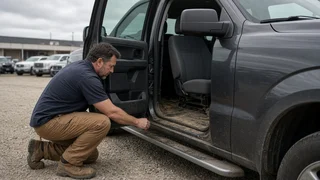
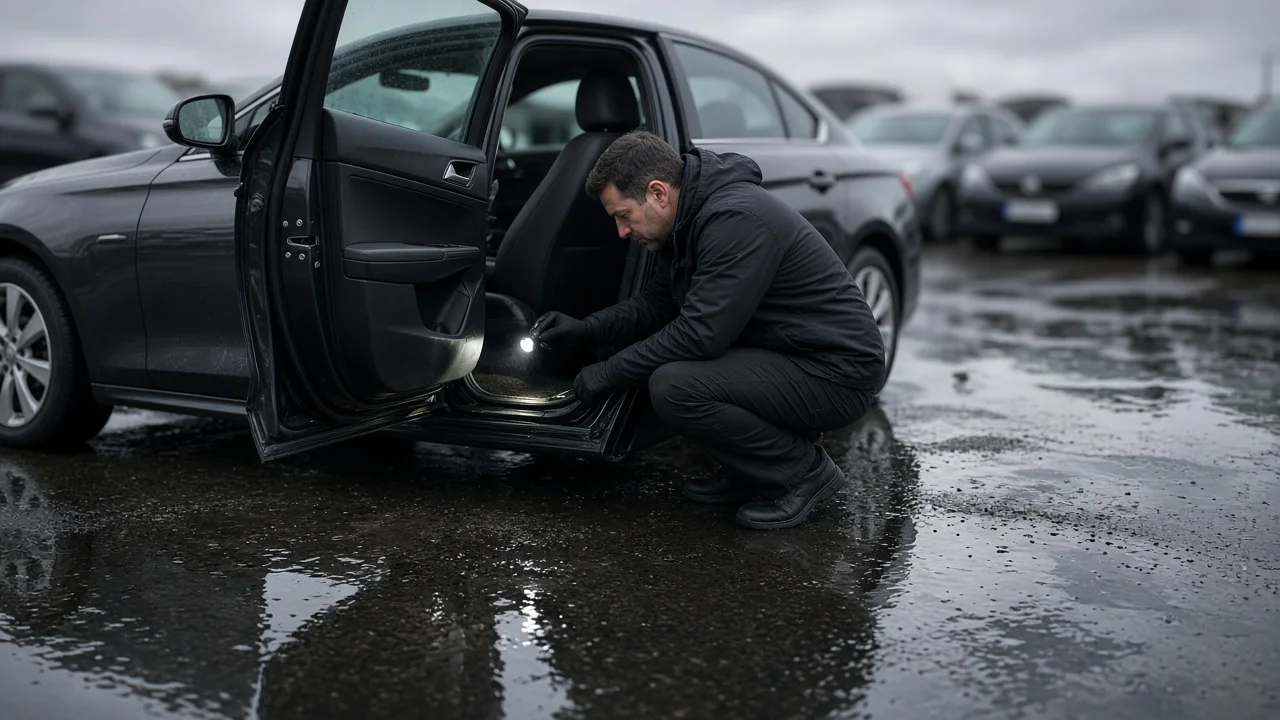
Floodwater, especially when it carries mud or salt, tends to leave traces in places a quick cleanup misses. Inspect in daylight, with the car unlocked, and before any paperwork is signed.
Smell: a musty, mildew-like odor, or a strong air freshener or fresh shampoo smell that could be covering one. Carpet and padding: lift floor mats and, where possible, pull back the carpet edge to feel for dampness or look for water stains, silt or sand underneath. Trunk and spare-tire well: look for standing moisture, mud, rust or a water line around the well. Under the seats: check seat rails, bolts and brackets for rust on bare metal, which is unusual on a new car. Under the dashboard and in the footwells: look for dried mud, debris or corrosion on wiring connectors and exposed metal. Lights: check headlights and taillights for fogging or condensation inside the lens. Seat belts: pull each belt all the way out and look for staining, grit or a musty smell. Electrical behavior: test windows, locks, seat adjusters, infotainment, warning lights and every interior and exterior light for glitches or intermittent faults. Engine bay and underbody: look for a dirt line, silt in crevices, or rust on fasteners and components that should be clean.
Some light surface rust on brake rotors after a car sits outdoors is normal and is not by itself a sign of flooding. The concern is moisture, silt or corrosion inside the cabin, in the trunk or on electrical parts.
Steps beyond the inspection
Ask the dealer in writing whether the vehicle has ever been exposed to water, flood or storm damage, and whether any damage repair was done before sale. Ask where the car has been stored and how it was transported, particularly if your area or the port of entry recently had severe flooding. Run the VIN through the available history and theft-and-loss databases, knowing that a new car may show no records either way. Review the purchase documents for any damage disclosure, and do not sign if a disclosure is missing that you requested. If anything looks wrong, have an independent mechanic inspect the car before delivery, or choose a different vehicle from inventory.
How this differs from checking a used car
Check | New car | Used car; Title brand for flood or salvage | Often not applicable, because the car is sold on a certificate of origin | Possible, depending on state rules and insurance history; VIN history report | May be empty even if damage occurred | More likely to reflect insured losses, though still not guaranteed; Physical inspection | The main line of defense | Equally important, alongside records; Seller disclosure | Depends on state law and manufacturer policy | Depends on state law and seller type
What this guide could not confirm
No specific evidence was available for this article on individual manufacturers' flood policies, particular state disclosure thresholds, inspection costs or recent flood events affecting new-car inventory. If you are buying in or near an area hit by a recent storm, ask the dealer and the manufacturer's customer service directly, and check your state's consumer protection or motor vehicle agency for the disclosure rules that apply to new vehicles.