Problems with Flood-Damaged Cars Before Purchase
The Short Answer
A car that has been submerged or sat in floodwater can develop problems in almost every system the water reached: electrical wiring and connectors, electronic control modules, safety systems such as airbags, the engine and transmission, brakes, and the cabin itself. The core difficulty is timing. Many of these faults do not show up on a test drive. Corrosion, contaminated fluids and mold can take weeks or months to cause visible failures, so a flood car that seems fine at the point of sale may still be a poor purchase.
Two qualifications change how serious the risk is. First, the depth and duration of exposure matter: water that stayed below the floor is very different from water that reached the dashboard or the engine's air intake. Second, salt water is generally more damaging than fresh water because it accelerates corrosion of metal parts and electrical contacts. Without reliable information about both, the extent of damage is hard to judge from the outside.
Why Flood Damage Is Hard to Assess
Floodwater is rarely clean. It can carry silt, sand, sewage and chemicals into spaces that are difficult to reach without removing trim, seats and carpet. A vehicle can be dried, cleaned and detailed so that it looks normal, while moisture and debris remain trapped inside wiring looms, door cavities, under carpet padding and inside sealed components. Cosmetic cleanup does not reverse corrosion that has already started.
Common Problems by System
Electrical Wiring and Electronics
Modern vehicles depend on networks of wiring harnesses, connectors and electronic control modules (small computers that manage the engine, transmission, body functions and safety systems). Water entering connectors can cause corrosion on the metal pins, which leads to poor contact, intermittent faults and eventually component failure. Typical results include warning lights that come and go, windows, locks or mirrors that work inconsistently, gauges that behave erratically, and infotainment or lighting failures. Because the faults are often intermittent, they can be difficult and time-consuming to trace.
Airbags and Other Safety Systems
Airbag systems rely on sensors, wiring and a control module, some of which are commonly located low in the vehicle or under the seats, where water collects first. Water damage to these parts can affect whether the system works as designed. An illuminated airbag warning light is one sign of a problem, but the absence of a light does not prove the system is sound. Any doubt about safety-system integrity should be resolved by a qualified technician before the vehicle is used.
Engine
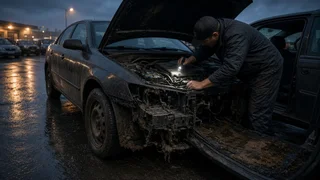
If water entered the engine through the air intake, it can cause hydrolock, a condition where water in a cylinder prevents the piston from completing its stroke. Attempting to start an engine in that state can bend connecting rods or cause other internal damage. Water can also contaminate engine oil, reducing its ability to lubricate and accelerating wear on bearings and other internal parts. Milky or cloudy oil is a common indicator of water contamination.
Transmission, Differentials and Other Fluids
Transmissions, differentials, transfer cases and other components are vented to the atmosphere, which means water can enter them when submerged. Contaminated fluid lubricates poorly and can lead to rough shifting, noise and premature failure. Brake fluid absorbs moisture, which can reduce braking performance and promote internal corrosion in the brake system. Fuel systems can also take on water.
Brakes, Suspension and Underbody
Brake components, wheel bearings, suspension joints and exposed underbody metal are vulnerable to rust and to grit trapped by floodwater. Wheel bearings and joints that have been contaminated may become noisy or wear out early. Rust on fasteners, brackets and brake lines can progress after the vehicle has been cleaned up.
Interior, Mold and Odor
Carpet, padding, seat foam and headliners absorb water and can harbor mold and bacteria. This can produce persistent musty odors and may be a health concern for some occupants. Heavy use of air fresheners or newly replaced carpet in an otherwise worn interior can be an attempt to mask the problem.
Title and Paperwork Risks in the US
When an insurer declares a flood-damaged car a total loss, the vehicle's title is often branded, for example as salvage or flood. However, branding rules and terminology differ from state to state. A vehicle that was never insured, or was repaired and resold without an insurance claim, may carry no brand at all. There is also the practice known as title washing, in which a vehicle is re-registered in a state with different branding rules so that a prior brand no longer appears on the new title.
For these reasons, a clean title alone does not prove a car was never flooded. Vehicle history reports and the federal National Motor Vehicle Title Information System (NMVTIS), which collects title, brand and total-loss data from participating sources, can help reveal prior brands or insurance losses. Neither source is guaranteed to be complete, so paperwork checks should be combined with a physical inspection.
Warning Signs to Look For Before Buying
None of the following signs proves flood damage on its own, and some have ordinary explanations. Several appearing together, especially on a car from an area recently affected by flooding, justify a closer professional inspection or walking away.
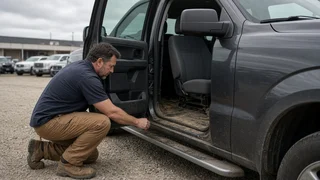
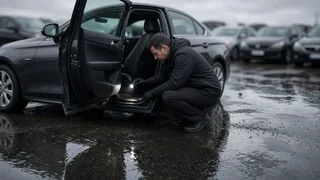
A musty, damp or mildew smell, or a strong air-freshener smell that seems to be covering something; Damp carpet or padding, water stains, or a visible high-water line on door panels, seat fabric or inside the trunk; Silt, sand, mud or debris under seats, beneath carpet, in the spare-tire well, in seat rails or around the engine bay; Carpet or upholstery that looks newer than the rest of the interior; Rust on seat-mounting bolts, under-dash brackets, pedal assemblies or other interior metal that normally stays dry; Condensation or fogging inside headlights, taillights or the instrument cluster; Corroded electrical connectors or wiring under the dashboard or seats; Milky or discolored engine oil or transmission fluid; Warning lights that are on, or that fail to illuminate briefly when the ignition is first switched on; Electrical accessories that work intermittently or not at all
What to Do Next
Run the vehicle identification number (VIN) through a vehicle history report and an NMVTIS-based title check, and look for flood, salvage or total-loss records; Ask the seller directly whether the car has ever been in a flood or had an insurance claim, and note the answer; Check where the vehicle has been registered, particularly if it recently came from a region that experienced flooding; Arrange a pre-purchase inspection by an independent mechanic who does not work for the seller, and tell them you want flood damage specifically ruled out; Ask the inspector to scan all control modules for stored fault codes, treating any codes as leads to investigate rather than proof of a specific failed part; If the seller refuses an independent inspection, treat that as a significant reason to look elsewhere
Is a Flood-Damaged Car Ever Worth Buying?
This is an editorial judgment rather than a documented rule. For most buyers, especially those who need dependable daily transport, a car with known or suspected flood damage carries a risk that is difficult to quantify: future repairs can be extensive, safety systems may be compromised, and resale value is typically reduced, particularly with a branded title. A buyer with mechanical expertise, full knowledge of the exposure, and a price that reflects those risks may reach a different conclusion, but that decision should rest on a thorough professional inspection rather than on how the car looks or drives during a short test.
Information Gaps
No confirmed data was available for this article on typical repair costs, the number of flood-damaged vehicles resold each year, how specific makes or model years tolerate water exposure, or the exact branding rules in individual states. Susceptibility varies by vehicle design, including where modules and wiring are located and whether the vehicle is a conventional, hybrid or electric model. Buyers considering a hybrid or electric vehicle with possible flood exposure should seek guidance specific to that powertrain, because high-voltage components introduce additional safety considerations.