Cat C15 Oil Mixing With Coolant: Likely Causes and What to Check First
The short answer
When oil and coolant mix on a Caterpillar C15, the most commonly cited cause is a failed engine oil cooler. Other internal leak paths can produce the same symptoms: cylinder liner seals, injector sleeves, the head gasket, a cracked cylinder head, and on some configurations an engine-mounted air compressor or other coolant-cooled component. The direction of contamination is a useful clue. Oil showing up in the coolant points toward a different set of causes than coolant showing up in the oil, though some failures can do both.
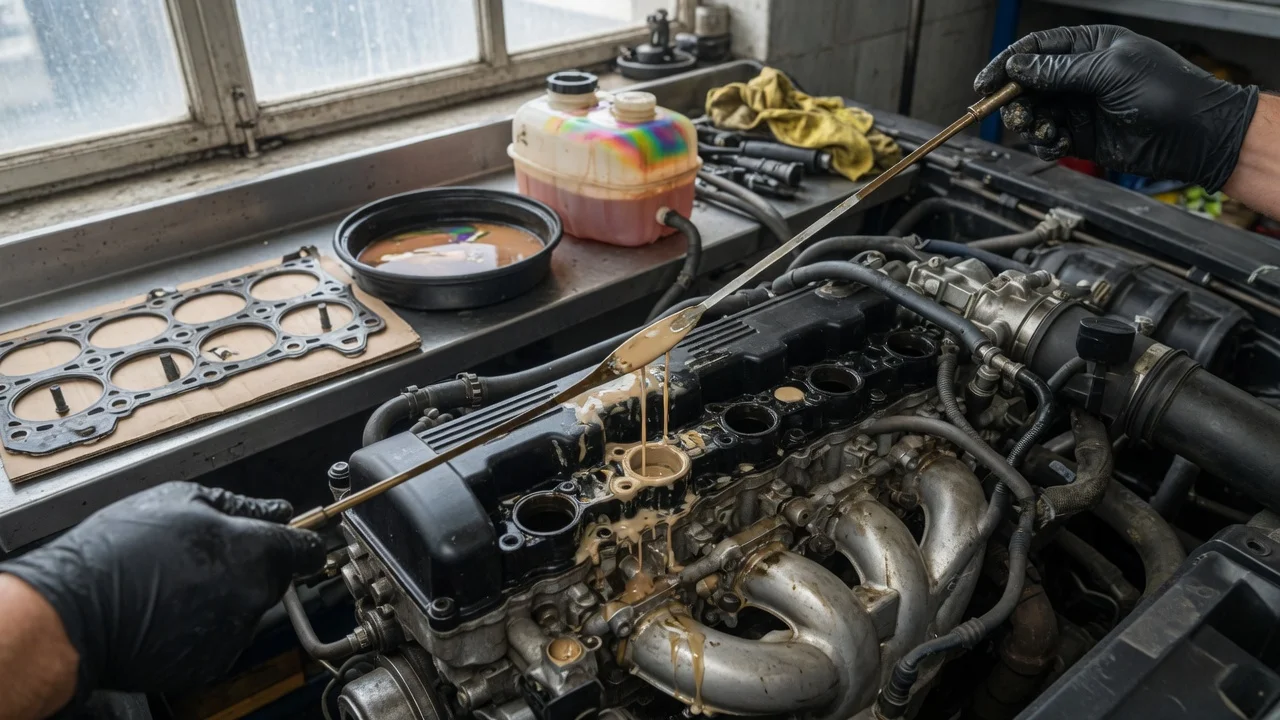
Coolant in the oil is the more urgent of the two. Glycol-based coolant breaks down the oil's ability to lubricate and can form sludge, which puts the main and rod bearings at risk. If you confirm coolant in the crankcase, stop running the engine until you find the leak and change the oil.
Scope and variant caveats
The C15 name covers several generations, including earlier C15 engines, the C15 ACERT, and on-highway versions built to the 2007 emissions standards. These differ in cooling layout, emissions hardware and accessory equipment. No model-year specifications, part numbers, test pressures or failure-rate data were available for this article. Confirm any diagnostic procedure, specification or part against Caterpillar service information for your engine's serial number prefix.
Why the direction of contamination matters
While the engine runs, oil pressure is generally higher than cooling-system pressure. A breach between the two circuits, such as a cracked oil cooler core, therefore tends to push oil into the coolant. When the engine is shut down and oil pressure falls, a pressurized or warm cooling system can push coolant back through the same breach into the oil. A failed oil cooler can therefore produce both symptoms, often oil in the coolant first.
Leaks that sit only on the coolant side, such as liner seals below the coolant jacket, tend to let coolant drain into the crankcase without much oil going the other way.
Common causes compared
Possible cause | Typical direction | Why it happens; Engine oil cooler core or seal failure | Mainly oil into coolant; coolant into oil possible after shutdown | The cooler passes oil and coolant through one assembly, and an internal breach connects the two circuits; Cylinder liner seals (lower O-rings) | Coolant into oil | The C15 uses wet liners sealed against the block; leaking lower seals let coolant drain into the crankcase; Injector sleeves (cups) | Coolant into the cylinder, then possibly into the oil; may also cause fuel or combustion gas in the coolant | The sleeves separate the injector bore from coolant passages in the head; Head gasket failure | Either direction, often with combustion gas in the coolant | The gasket seals oil, coolant and combustion passages between head and block; Cracked cylinder head or block | Either direction | A crack can open a path between a coolant passage and an oil passage or cylinder; Engine-mounted air compressor or other coolant-cooled accessories (where fitted) | Oil into coolant | Some accessories are coolant-cooled, so an internal failure can pass oil into the cooling system
Signs to look for
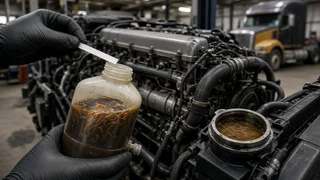
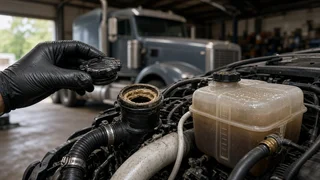
Milky, tan or chocolate-colored oil on the dipstick or under the fill cap, which suggests coolant in the oil; Rising oil level with no other explanation; An oily film, sludge or brown residue in the coolant reservoir, which suggests oil in the coolant; Coolant loss with no external leak; White exhaust smoke with a sweet smell, or a misfire on startup, which can indicate coolant entering a cylinder; Bubbles or pressure in the cooling system, which can indicate combustion gas from a head gasket, cracked head or sleeve leak
How to narrow it down
Diagnosis usually moves from the least invasive tests to the most invasive. Exact procedures and acceptance limits for each test come from Caterpillar service information. They are not reproduced here.
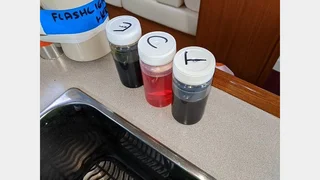
Oil analysis: a lab test can detect glycol and coolant-additive elements such as sodium and potassium. This confirms coolant in the oil even when the oil does not look milky. Coolant check: look for oil or fuel in the coolant. Run a combustion-gas (block) test to check for exhaust gases in the cooling system. Cooling system pressure test: pressurize the system with the engine off and watch for pressure loss or coolant reaching the oil or cylinders. Oil cooler isolation test: remove the cooler and pressure-test it separately. This is a common step because the cooler is a frequent suspect. Cylinder inspection: if coolant may be entering a cylinder, inspect the injector bores or bar the engine over with the injectors out to see whether coolant is expelled. Liner seal or head inspection: if the tests above do not find the leak, a teardown may be needed to inspect the liner seals, head gasket and head.
What to do next
If you see coolant in the oil, stop running the engine and confirm the finding with an oil analysis or a visual check. Then find the leak path before refilling. Changing the oil without fixing the cause only delays bearing damage.
If you see oil in the coolant and the oil itself looks normal, the oil cooler is a reasonable first suspect. Even so, confirm it with a pressure test before replacing parts. After the repair, flush the cooling system thoroughly, because leftover oil degrades hoses and seals and reduces heat transfer.
Information gaps
No source documents with Caterpillar specifications, service bulletins, repair costs or field failure statistics were available for this article. The relative likelihood of each cause above reflects general diagnostic reasoning, not measured data. Model-specific details are not covered, including which C15 generations have particular cooler designs, coolant-cooled accessories or emissions coolers. Check them with a Caterpillar dealer or the service manual for your serial number.