Choosing the Right Engine Coolant for Your Car
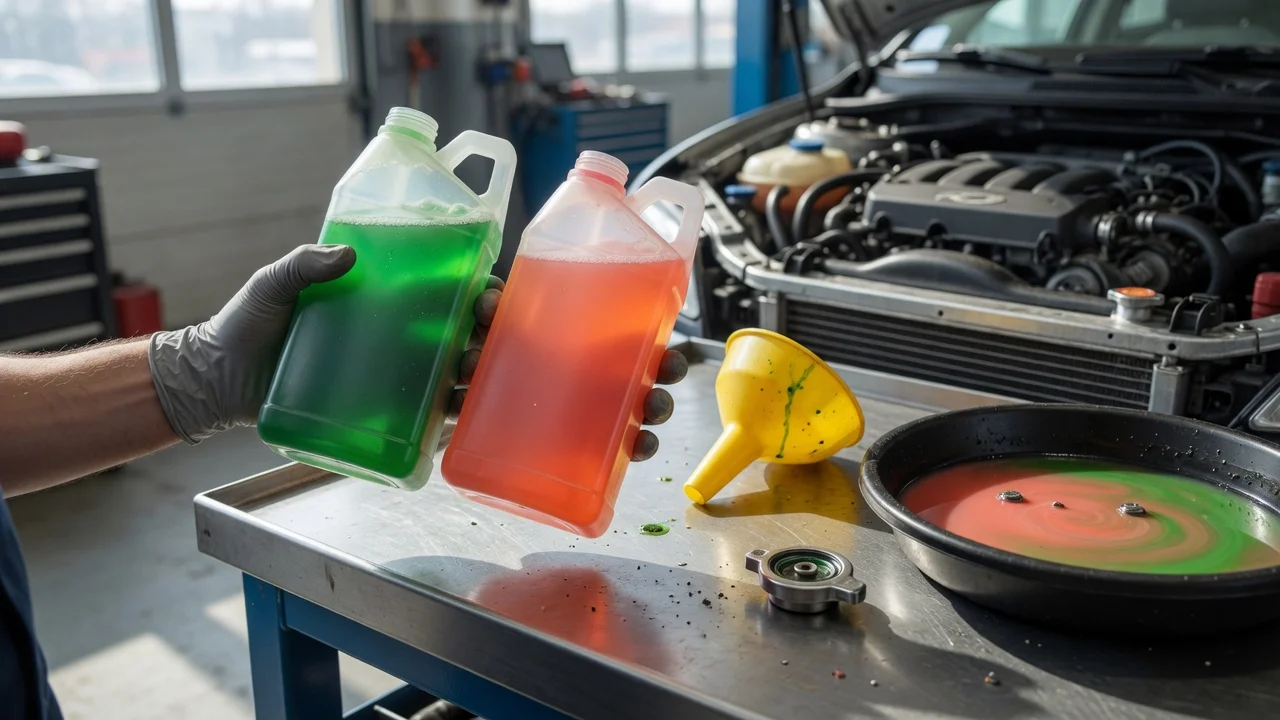
What car radiator coolant actually does
Coolant, sometimes called antifreeze, is the heat-transfer fluid that circulates between the engine block and the radiator. It has two main jobs: carry excess combustion heat away from the engine and protect the cooling system from freezing in cold weather. Most modern coolants also contain additives that reduce corrosion, lubricate the water pump and help prevent scale or deposits from forming inside narrow radiator passages.
The direct answer: match the coolant to the vehicle specification
The most reliable choice is the coolant chemistry and specification listed in the owner's manual for your exact model year, engine and market. Coolant is not a universal product. Different engine materials, seal types and cooling-system designs require different inhibitor packages, and using the wrong chemistry can accelerate corrosion, damage seals or reduce heat-transfer performance even when the coolant looks the same color.
Main coolant chemistries and where they fit
Type | Common color examples | Typical use | Practical notes; IAT | Green, sometimes blue or yellow | Older vehicles, especially many before the mid-1990s | Shorter service life, commonly around 2 to 3 years or specified mileage; OAT | Often orange, red, pink or dark green | Many vehicles from the late 1990s and later | Longer drain intervals, often around 5 years or specified mileage; HOAT | Frequently yellow, turquoise, blue, pink or purple | Many European, Asian and newer domestic applications | Hybrid inhibitor package; long life, but specifications vary by manufacturer; P-HOAT | Varies by formulation | Some European and other manufacturer-specific systems | Contains silicates and other additives; follow the exact manufacturer approval; Coolant color alone is not a reliable identifier. The same color can represent different chemistries, and manufacturers have changed dyes over time.
Which option better fits your priorities
Choose by specification first, not by color or marketing. If your vehicle requires a specific manufacturer approval, such as a VW, Mercedes-Benz, BMW, Ford, GM or Asian OEM specification, select a product that states that approval on the label. A generic long-life coolant may be acceptable only if the vehicle manufacturer explicitly permits it.
If priority is low maintenance, a long-life OAT or HOAT product specified for the car is usually preferable because it extends the drain interval. If priority is preserving an older cooling system with traditional solder, brass or copper components, follow the older specification rather than switching to a modern organic-acid coolant solely for convenience. Mixing IAT and OAT chemistries can weaken the inhibitor package and shorten protection.
Coolant for an overheating car
Coolant is one part of overheating diagnosis, not a guaranteed fix. Low coolant, a stuck thermostat, a failing radiator cap, a blocked radiator, a defective cooling fan, a slipping water-pump belt or a leaking head gasket can all cause overheating. Adding the correct premixed coolant or the correct coolant-and-water mixture may address a low-fluid condition, but it will not repair a mechanical or airflow fault.
Safe steps for a hot engine
Turn off the engine if it is overheating and let it cool before opening any cap. Do not open a hot radiator or expansion-tank cap; pressurized hot coolant can spray and cause serious burns. Check the coolant level at the expansion or overflow tank once the engine has cooled. If the level is low, add only the coolant type specified for the vehicle, using premixed coolant or the correct concentrate-to-water ratio. If coolant is repeatedly low or overheating continues, have the cooling system pressure-tested.
Mixing concentrated coolant with water
Concentrated antifreeze must be diluted before use. A common ratio is 50 percent coolant to 50 percent distilled or deionized water, which provides broad freeze and boil protection in many climates. In colder regions, some specifications permit up to about 60 percent coolant for lower freeze protection, but more antifreeze is not always better because coolant transfers heat less effectively than water. The owner's manual and the product label give the correct range for the vehicle. Prediluted ready-to-use coolant should not be diluted further unless the label says otherwise.
Signs that the coolant may need attention
The temperature gauge runs higher than normal or enters the hot zone. Coolant level drops repeatedly without a visible external leak. The coolant appears rusty, cloudy, oily or contains floating particles. There is a sweet odor near the engine bay or visible residue around hoses, the radiator or the water pump. The heater output becomes weak or inconsistent, which can indicate low coolant or trapped air.
What to check before buying
Confirm the coolant specification required for your model year, engine and market. Check whether the vehicle needs concentrate or ready-to-use premixed fluid. Verify the product label states the correct manufacturer approval or equivalent specification. Do not choose only by matching the existing color. If the coolant is heavily contaminated, draining and flushing may be required rather than topping up.
Bottom line
Use the coolant chemistry and specification approved for your specific vehicle, and treat coolant as part of the cooling-system health picture rather than a standalone overheating cure. The right product protects the radiator, heater core, water pump and engine passages; the wrong product can cause slow, expensive internal damage even when temperatures look normal.