Low Engine Coolant: How to Check the Level and Refill Safely
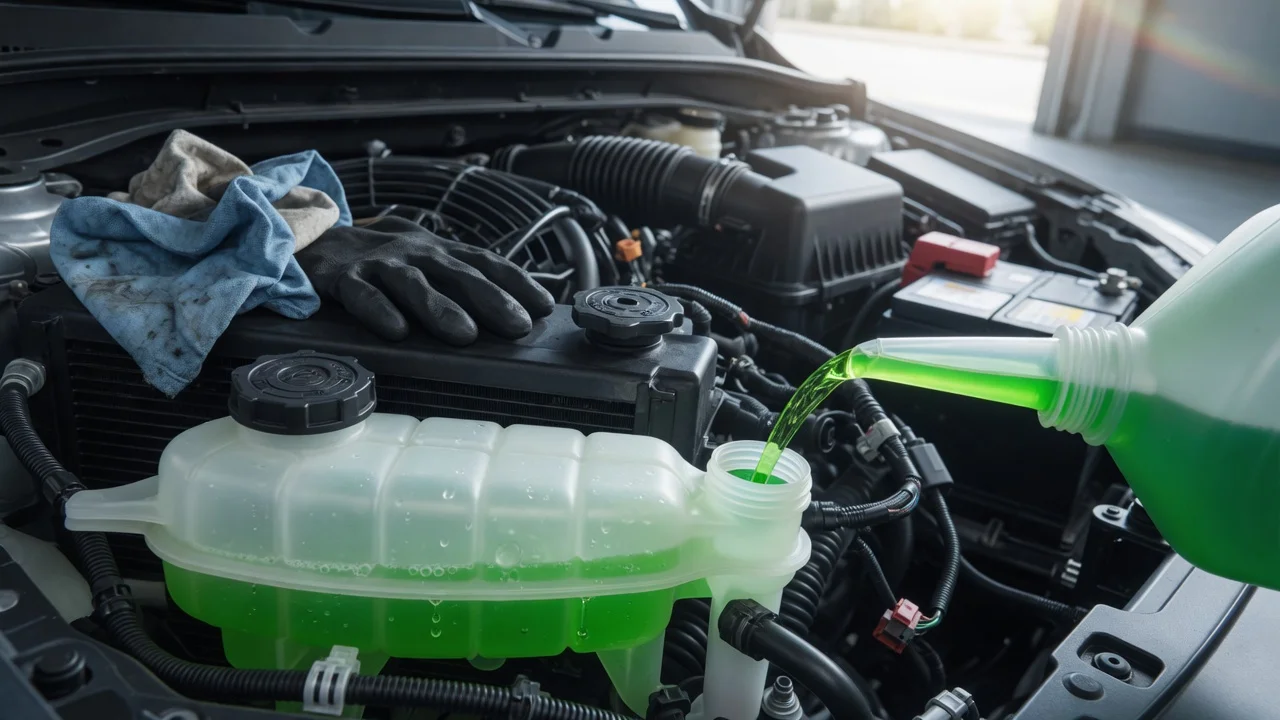
Before you start
This check is done on the vehicle with the engine off. You are using the coolant reservoir markings and fill opening rather than an external service. If the engine has been running, wait for it to cool before opening the cooling system.
Park the car on level ground and set the parking brake. A sloped surface can make the reservoir level read higher or lower than it actually is.
Have the correct coolant type ready before opening anything. The safest choice is the coolant specified in the owner's manual for that vehicle. Mixing incompatible coolants can reduce protection.
Step-by-step instructions
1) Let the engine cool completely if it was recently running. The radiator cap and reservoir can be under pressure when hot.
2) Open the hood and locate the coolant reservoir. It is usually a translucent plastic tank with minimum and maximum marks on the side.
3) Check the level against the marks. A cool engine should normally be near or slightly above the minimum mark, while a warm reading can sit higher.
4) If the level is below minimum, remove the reservoir cap slowly. Add the premixed coolant or the correct coolant-water mixture up to the maximum mark.
5) Replace the cap securely and lower the hood. Check the level again after a short drive with the engine cool.
Check the output
A successful result is a coolant level that remains between the minimum and maximum marks on level ground with the engine cool. The reservoir should not need frequent topping up.
A visibly dropping level after refilling is not a normal result. That pattern may indicate a leak or another cooling system issue rather than ordinary consumption.
Common problems and next steps
If the car is overheating with low coolant, stop driving and let the engine cool before checking anything. Continuing to drive can cause engine damage, and opening a hot system can release scalding coolant.
Repeated low-coolant readings should be checked for leaks around hoses, the radiator, the water pump and the reservoir. Also look for coolant on the ground where the vehicle is parked.
Do not keep adding coolant indefinitely. If the level drops quickly or the temperature gauge stays high, have the cooling system inspected by a technician.