Cat C15 oil in the coolant
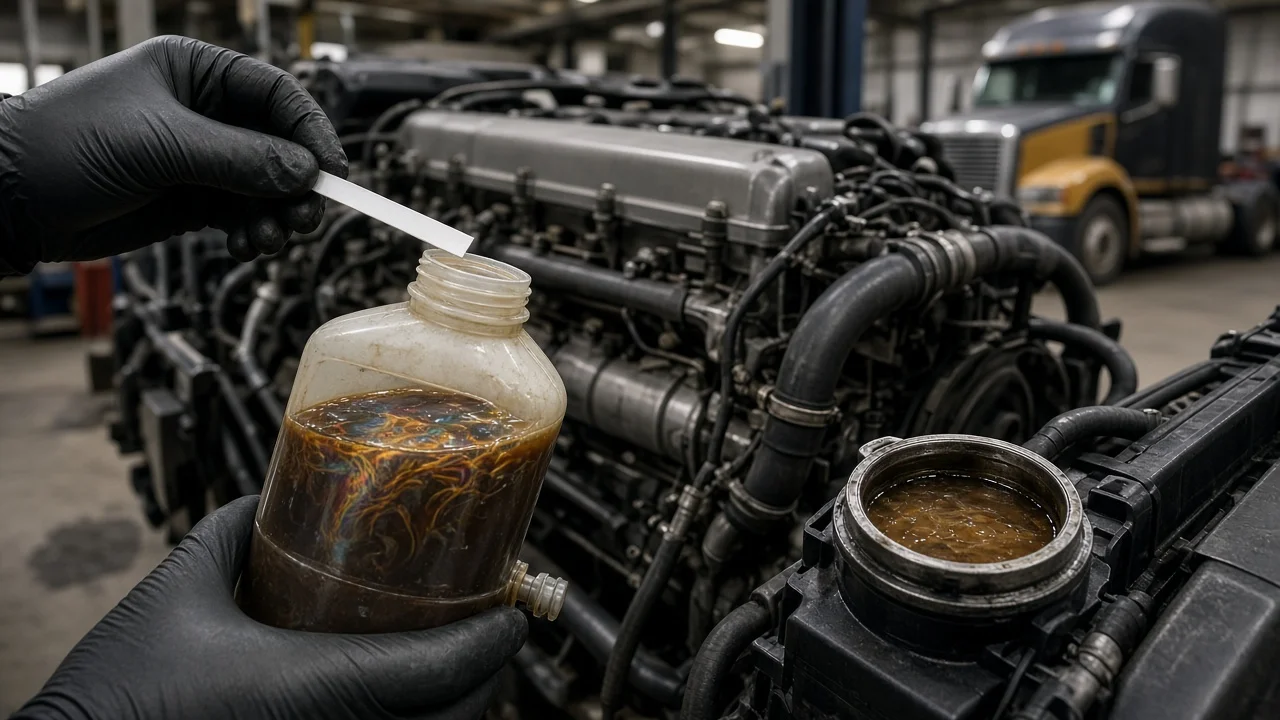
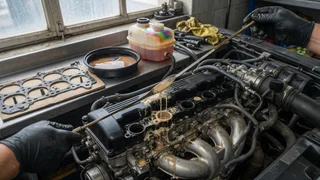
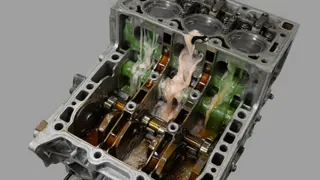
Oil appearing in the coolant of a Cat C15 engine signals a cross-contamination between the lubrication and cooling systems. This condition can lower cooling efficiency, reduce lubricant quality, and lead to overheating or bearing damage if left unaddressed. On a C15, several internal seals, gaskets, or cooler failures can create the path for this mixing. The appearance may range from a thin milky film to thick sludge, and the underlying cause affects how urgently the engine should be shut down and inspected. Understanding where these fluids can meet helps narrow the diagnosis and avoids unnecessary parts replacement.
Essential answer
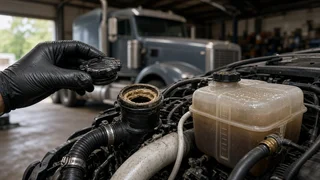
Oil in the coolant of a Cat C15 is a fault condition in which engine lubricant has entered the pressurized cooling circuit. The most common mechanical paths are the engine oil cooler, the cylinder head gasket, or a crack in a casting or liner area. The oil cooler is a frequent suspect because it holds engine oil and coolant in close proximity, and a failed internal seal or core can allow the higher oil pressure to force lubricant into the cooling loop. The result is usually a brown, tan, or milky residue visible at the radiator cap, expansion tank, or deaeration bottle.
The scope of diagnosis depends on whether the contamination appears as droplets, a film, or a thickened emulsion. A small amount of floating oil may indicate an oil cooler beginning to fail, while heavy sludge often points to a larger breach or longer service with contaminated fluid. Manufacturer-dependent codes and engine serial number breaks can affect cooler design and gasket details, so a C15 should be confirmed against its specific arrangement. The finding is evidence of a path between systems, not proof that one particular part has failed, and additional inspection is needed to locate the source before cleaning and repair.