Cars Equipped With CVT Transmissions: What to Know
The Short Answer
A continuously variable transmission (CVT) is an automatic transmission with no fixed gears. It varies its ratio smoothly within a set range. In the US market, CVTs are most often found in compact and midsize cars, small crossovers and many hybrids. Several mainstream brands have used them across large parts of their lineups. However, CVT use depends heavily on model year, generation, engine and sometimes trim. The same nameplate can offer a CVT in one configuration and a conventional automatic or manual in another. The only reliable way to know whether a particular car has a CVT is to check that exact vehicle's specifications.
No confirmed, model-specific evidence was supplied for this article. It does not list exact model years, specifications or test results. The brand examples below reflect widely known general patterns and should be verified against the specific vehicle before you rely on them.
What a CVT Is and How It Differs
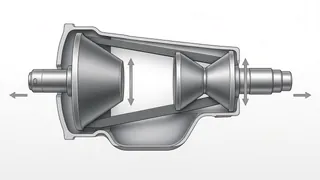
A conventional automatic uses a set number of fixed gear ratios and shifts between them in steps. A typical CVT instead uses two variable-diameter pulleys connected by a steel belt or chain. As the pulleys change their effective diameters, the ratio between engine speed and wheel speed changes continuously. There are no distinct shift points.
No stepped shifts: acceleration is generally smooth, without the pauses of gear changes. Engine speed behavior: the transmission can hold the engine near a chosen speed while the car accelerates. Some drivers describe this as a droning or rubber-band feel. Simulated steps: many manufacturers program artificial shift points, especially under hard acceleration, to make the CVT feel more like a conventional automatic. Efficiency focus: keeping the engine in an efficient operating range is a main reason automakers choose CVTs, particularly in economy-oriented vehicles.
Hybrid eCVTs Are a Different Design
Many hybrids are described as having an eCVT or electronically controlled CVT. Toyota's power-split hybrid system is a common example. Despite the name, these usually do not use belts and pulleys. They typically combine the engine and electric motors through a planetary gearset, and software controls how power is blended. The driving feel can be similar to a belt-type CVT, but the hardware, service needs and long-term ownership considerations differ. When researching a hybrid, confirm which type of transmission it uses rather than treating every "CVT" label as the same.
Brands Commonly Associated With CVTs
The following brands are widely known to have used CVTs in many US-market models. Each depends on the model year, generation and powertrain, and this is not a complete or current list.
Nissan: has used CVTs, marketed as Xtronic, across many of its cars and crossovers. Subaru: has paired its all-wheel-drive models with a CVT marketed as Lineartronic in many applications. Honda: has used CVTs in various compact cars and crossovers, while some other models and engines use conventional automatics. Toyota: has used belt-type CVTs in some non-hybrid models and eCVT power-split systems in its hybrids. Hyundai and Kia: have used a CVT design they call an IVT (intelligent variable transmission) in some models. Mitsubishi: has used CVTs in several of its smaller cars and crossovers.
Automakers revise transmission choices between generations, so an older model of a nameplate may differ from a newer one. Some brands also move between CVTs, conventional automatics and dual-clutch transmissions over time.
How to Confirm Whether a Specific Car Has a CVT
Window sticker or original build sheet: the transmission type is usually listed for new and many used vehicles. Owner's manual: the transmission section and maintenance schedule typically identify a CVT and its fluid requirements. Manufacturer specifications: official spec sheets for the exact model year, engine and trim state the transmission. VIN-based lookup: a dealer or VIN decoder can often identify the factory powertrain. Results vary in detail, so cross-check them. Transmission or option codes: some vehicles carry a build label with transmission codes. Their location and meaning vary by manufacturer. Dealer service department: they can confirm the installed transmission from the VIN and service records.
Ownership Points to Consider
CVTs usually require a specific fluid type, and maintenance intervals vary by manufacturer and model. Follow the owner's manual rather than general rules of thumb. Reliability reputations differ by brand, transmission design and model year. No verified reliability data or test findings were supplied here, so check recall history, technical service bulletins and warranty coverage for the exact vehicle. For a used CVT-equipped car, service records showing transmission fluid maintenance and a test drive focused on smooth, consistent acceleration are sensible steps before buying.
Bottom Line
CVTs are common in fuel-efficiency-focused cars, crossovers and hybrids from several major brands. Belt-type CVTs and hybrid eCVTs are distinct designs. Because transmission choices change by model year, generation and powertrain, treat brand-level patterns only as a starting point. Confirm the transmission on the specific vehicle using its documentation or VIN.