CVT Transmission Maintenance: What It Involves and How It Differs
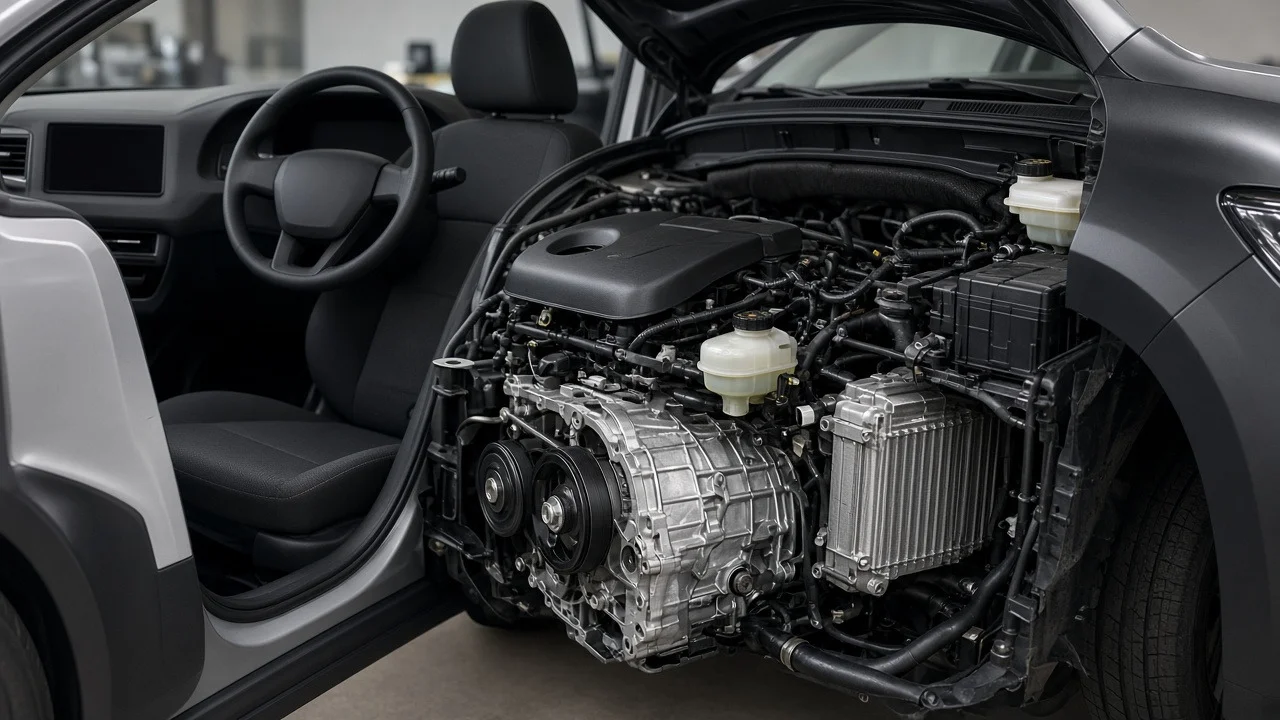
CVT maintenance mostly comes down to one thing: keeping the right transmission fluid in good condition and at the correct level, on the schedule your vehicle's manufacturer sets. A continuously variable transmission (CVT) has no fixed gears. Its long-term health depends heavily on fluid quality, so the fluid service is the core of CVT transmission maintenance. Inspections, software updates and sensible driving habits support it. One qualification changes the details: CVT designs differ between manufacturers, model years and powertrains. The fluid type, the service interval, the check procedure and whether a filter is serviced are all model-specific. The principles below apply broadly. The exact steps for your car come from its manufacturer schedule and service information.
What a CVT Is and Why Its Maintenance Is Different
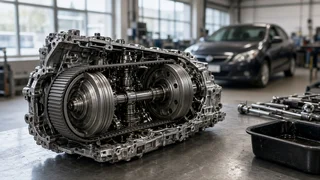
A conventional automatic transmission shifts between a set number of gear ratios using planetary gearsets, clutches and bands. A typical belt- or chain-type CVT instead uses two variable-diameter pulleys connected by a steel belt or chain. As the pulleys change their effective diameters, the ratio changes smoothly and continuously, with no distinct shift points. This lets the engine stay near an efficient speed for the conditions.
In this design, the transmission fluid does more than lubricate and cool. The fluid has specific friction properties that let the belt or chain grip the pulley surfaces under very high clamping pressure without slipping. Hydraulic pressure from the fluid also controls the pulley movement. Fluid that is degraded, contaminated, low or simply the wrong type can affect grip, ratio control and component wear more directly than in many conventional automatics.
Not every transmission marketed as a CVT works this way. Many hybrids use an electronically controlled CVT (often called an e-CVT). This is typically a power-split gearset combined with electric motors, with no belt or pulleys. Its fluid and service needs follow the hybrid system's own schedule. If you drive a hybrid, check which type you have before applying belt-CVT advice.
Core Scheduled Service Items for a CVT
Fluid replacement: The most important item. Done at the interval the manufacturer specifies, using the exact fluid specification it calls for. Fluid level and condition check: On many CVTs this requires a specific procedure, often at a set fluid temperature. Some models have a check plug rather than a dipstick. Filter or strainer service: Some CVTs have a serviceable filter or strainer, and some have an external filter. Others have none that is replaced in routine service. Leak inspection: Checking seals, pan gaskets, cooler lines and connections during routine visits. Cooler and cooling-system checks: The CVT may rely on a dedicated cooler or a heat exchanger tied to the engine cooling system. Its condition affects fluid temperature. Software updates and service bulletins: Manufacturers sometimes issue control-software updates or technical service bulletins addressing CVT behavior. A dealer can check whether any apply to your vehicle. Fluid-life counter reset: Some models track fluid degradation electronically. These may need a reset with a scan tool after a fluid change so the counter reflects fresh fluid.
Use the Exact Fluid Specification
CVT fluid is not interchangeable with conventional automatic transmission fluid (ATF). It is often not interchangeable between CVT brands either. Each manufacturer formulates or specifies a fluid to match its belt or chain, pulley materials and control strategy. Using the wrong fluid can change the friction behavior the transmission is calibrated for.
The fluid specification is usually listed in the owner's manual and the service information. On some models it also appears on a label or the dipstick. Aftermarket "multi-vehicle" CVT fluids exist. If you consider one, confirm that it explicitly claims to meet your manufacturer's specification. When in doubt, the manufacturer's own fluid removes the question.
How the CVT Service Interval Is Set: Time and Mileage
CVT service intervals vary widely by manufacturer, model and model year, so no single number applies to all vehicles. Schedules typically express the interval in time and mileage, with service due at whichever comes first. Fluid ages with heat cycles and time as well as with distance.
Some owner's manuals list a fixed replacement interval. Others list only periodic inspection under normal conditions, or describe the fluid as long-life. These schedules often still call for replacement under severe operating conditions. Read the wording carefully. "Inspect" and "replace" are different instructions, and the severe-service column may apply to more drivers than the name suggests.
Operating Conditions That Can Shorten the Interval
Manufacturers usually define a severe-service schedule for vehicles that run hotter or harder than average. Heat is the main enemy of transmission fluid, so the conditions that raise fluid temperature are the ones that matter most. Typical examples include:
Frequent short trips or heavy stop-and-go traffic; Towing a trailer, or regularly carrying heavy loads; Sustained driving in very hot climates; Mountainous or hilly terrain with long climbs; Dusty, sandy or unpaved roads; Commercial use such as delivery, rideshare or police work; Extended idling
If your driving matches the manufacturer's severe-service definition, follow that schedule. Many owners who think of their use as normal actually fit it, especially those who drive mostly in city traffic or hot weather.
How the Fluid Service Is Usually Done
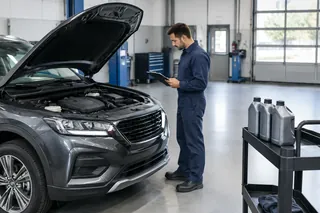
A common CVT fluid service is a drain-and-fill. The old fluid drains from the pan or drain plug, and new fluid refills the unit to the specified level. A single drain-and-fill typically replaces only part of the total fluid, because some remains in the torque converter, cooler and passages. For this reason, some service procedures or technicians call for more than one drain-and-fill to refresh a larger share of the fluid.
Setting the correct level is often more involved than on older automatics. Many CVTs require the fluid to be at a specified temperature during the level check, sometimes read with a scan tool. This can make the job less suitable for casual DIY work than an engine oil change. Pressure-flush machines are another point of caution. Many technicians and some manufacturers advise following the factory procedure rather than using a generic flush, so ask how the shop plans to perform the service.
How CVT Maintenance Compares With a Conventional Automatic
Aspect | Belt- or chain-type CVT | Conventional automatic; Role of fluid | Lubrication, cooling, hydraulic control and belt-to-pulley friction | Lubrication, cooling, hydraulic control and clutch friction; Fluid type | Dedicated CVT fluid, often manufacturer-specific | ATF to the manufacturer's specification; Interchangeability | CVT fluid and ATF are not interchangeable | ATF types also vary; use the specified one; Level check | Often temperature-specific; may use a check plug instead of a dipstick | Varies; many newer units also lack a dipstick; Service interval | Set by the manufacturer schedule; varies widely | Set by the manufacturer schedule; varies widely; Software | Control software strongly affects behavior; updates may be issued | Shift software can also be updated
Driving Habits That Support CVT Longevity
Maintenance and driving habits work together. These general practices reduce heat and stress on the belt or chain and the pulleys:
Accelerate smoothly rather than with repeated hard launches from a stop. Stay within the vehicle's rated towing and payload limits, and follow any towing-specific service advice. Avoid holding the vehicle on a hill with the accelerator; use the brake instead. Come to a full stop before shifting between drive and reverse. Don't ignore warning lights or transmission-temperature messages if your vehicle displays them.
Signs a CVT Needs Attention
Some CVT characteristics are normal. A steady engine speed during acceleration and a drone-like engine note under load are part of how the transmission works. Changes from how your vehicle usually behaves are more meaningful. These may warrant an inspection:
Whining, humming or grinding noises that are new or getting louder; Shuddering or judder, especially when pulling away from a stop; A sensation of slipping, where engine speed rises without matching acceleration; Hesitation or delayed engagement when selecting drive or reverse; The vehicle entering a reduced-power or limp mode; A transmission or check-engine warning light; Fluid leaks under the vehicle, or a burnt smell
Addressing symptoms early gives a technician the chance to check fluid condition and stored fault codes, and to see whether a software update or service bulletin applies. A neglected problem is more likely to lead to a costly repair or replacement.
Keep a Maintenance Record
A complete maintenance record is especially valuable for a CVT. Note the date, mileage, fluid type used and work performed for each transmission service, and keep the invoices. This record helps you track when the next service is due. It can support a warranty claim if the manufacturer asks for proof of maintenance, and it gives buyers confidence when you sell.
If you are shopping for a used vehicle with a CVT, ask for its service history. Evidence that the fluid was changed according to the manufacturer schedule is a meaningful point in the vehicle's favor. A missing history is a reason for a pre-purchase inspection.
Next Step
Open your owner's manual or maintenance guide and find the transmission entry. Note the specified fluid, whether the schedule says inspect or replace, the time and mileage interval, and whether your driving fits the severe-service definition. Then compare that with your maintenance record. If the fluid has never been serviced or the history is unclear, a dealer or transmission specialist can check its condition and confirm the correct procedure for your model.