Car underbody coatings
Car underbody coatings are protective layers applied to the floor pan, frame rails, wheel arches, and suspension mounting areas to shield a vehicle from moisture, road salt, stone impact, and abrasive debris. Choosing a coating requires understanding how substrate preparation, application thickness, drying conditions, and coating compatibility affect corrosion protection. The right product slows rust formation, while an incorrectly applied or incompatible coating can trap water against the metal and accelerate hidden damage. This overview explains what underbody coatings do, how they differ, and what practical conditions influence their long-term performance.
Essential answer
Car underbody coatings are barrier products designed to isolate exposed steel and aluminum surfaces from water, oxygen, chlorides, and physical abrasion. Common forms include rubberized asphalt-based compounds, wax or lanolin treatments, solvent-borne rust inhibitors, and polymer or ceramic-style coatings. They differ in flexibility, thickness, self-healing behavior, and whether they form a hard shell or a soft creeping film. A hard coating resists stone strikes but can chip and allow water underneath, while a waxy film stays pliable and displaces moisture but may need reapplication more often. The essential value is corrosion protection, not cosmetic finish.
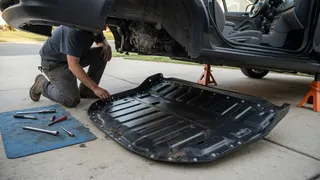
The effectiveness of any underbody coating depends heavily on substrate preparation. A clean, dry, rust-free surface gives the product the best chance to bond; applying a coating over loose scale, mud, or existing corrosion merely seals the problem beneath the new layer. Drainage openings, body seams, brake lines, fuel lines, and moving suspension parts must remain unobstructed so the coating does not interfere with normal operation or block water escape paths. Since coating compatibility and drying conditions vary by chemistry, a product that works well on one vehicle surface may not suit another without proper cleaning and masking.