What Is an Underbody Flat Floor?
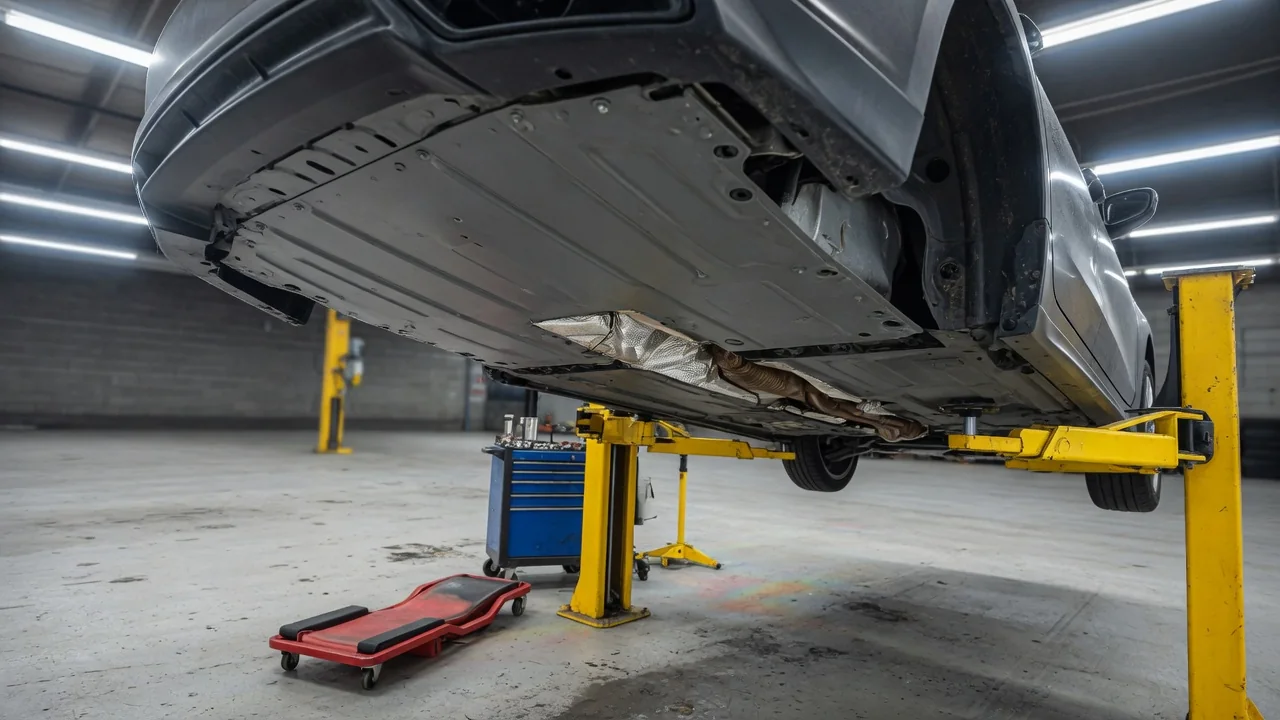
Anyone asking what is an underbody flat floor is really asking how a car manages the air it drives over. The term describes smooth panels fitted beneath the chassis so airflow passes cleanly instead of tumbling around suspension arms, exhaust pipes, and crossmembers. This guide explains how those panels are arranged, why they have openings, how they wear, and what owners can realistically expect.
Panel coverage
The underside of a typical car is a landscape of obstacles: subframes, the exhaust tunnel, fuel tank, spare wheel well, and suspension links all protrude into the airstream. Flat floor panels, usually molded plastic or fiber composite trays, bridge those gaps to present one continuous surface. Air that stays attached to a smooth surface loses less energy than air churning through cavities, so drag falls and the flow reaching the rear of the vehicle is more orderly.
Coverage varies widely between vehicles. Some cars carry only an engine undertray and a pair of side panels beneath the sills, leaving the exhaust tunnel and rear axle exposed. Others, particularly electric vehicles whose battery case already forms a broad smooth slab, come close to full coverage from front bumper to rear diffuser. Looking beneath a raised car shows the difference quickly: count how much bare metal and hardware remains visible between the panels, and note whether the rear section sweeps upward.
Cooling openings
A completely sealed floor would trap heat, so engineers leave deliberate gaps. Air that passes through the radiator needs an exit path, and some of it leaves downward behind the engine. Exhaust systems, catalytic converters, transmissions, and differentials all shed heat into the underbody airstream as well. Panels near these components often stop short, carry louvers, or include small ducts shaped like shallow scoops that draw passing air toward a hot part without disturbing the surrounding flow much.
These openings explain why a factory floor rarely looks perfectly flat. Around the exhaust, panels may be replaced by reflective heat shields or left open entirely, because plastic trays cannot tolerate that temperature. Electric vehicles tend to need fewer openings, though brake cooling and battery thermal systems still influence the layout. Small access hatches for oil drain plugs or filters also appear on many trays. The pattern is specific to each model, so blocking an opening that seems unnecessary can upset cooling the manufacturer balanced carefully.
Road damage
Sitting closest to the road, floor panels take the punishment from speed bumps, steep driveways, curbs, road debris, snow ridges, and gravel. The front undertray suffers most because it sits low behind the bumper and meets obstacles first. Typical damage includes cracked mounting tabs, torn corners, scraped surfaces, and missing clips or screws. Panels are also removed during servicing, and fasteners that are overtightened, mismatched, or left out during reassembly are a common reason a tray later works loose.
A damaged panel usually announces itself. Drivers may hear scraping over dips, a flapping or drumming sound that rises with speed, or a rattle on rough surfaces. A corner hanging into the airstream acts like a scoop, and the force of the air can tear the panel further or drag it against the road. A glance under the front bumper and along the sills often reveals a sagging edge. Makeshift ties may hold briefly, but a panel resting near the exhaust or a rotating shaft deserves proper attention.
Everyday Use and Observations
In daily driving the benefits are subtle rather than dramatic. Lower drag matters most at highway speeds, where air resistance dominates the energy a vehicle spends, so smoother underbody flow contributes modestly to fuel economy or electric range on long trips. It can also reduce wind roar from beneath the cabin and, when paired with a rear diffuser, cut lift so the car feels more settled at speed. Around town, the aerodynamic effect is negligible.
Owners notice other practical effects too. Panels keep spray, salt, and grit away from wiring, hoses, and the lower engine bay, so components behind them often stay cleaner. The same trays can hold debris or hide a fluid leak, since dripping oil or coolant may pool on the panel instead of marking the driveway; a stain at a panel edge is worth investigating. Service work can take slightly longer because trays must come off first, and how many fasteners are involved depends on the design.
Limits and Next Steps
A flat floor is one part of an aerodynamic package, not a cure on its own. Its effect depends on ride height, the shape of the nose and tail, wheel and tire airflow, and whether the rear of the floor is shaped to release air cleanly. Race cars generate substantial downforce from their floors because they run very low with carefully sealed edges; a road car with generous ground clearance gains mainly reduced drag. Published gains for one model should not be assumed for another.
Aftermarket or home-built panels deserve caution. Covering areas the manufacturer left open can raise temperatures around the exhaust, transmission, or brakes, and a poorly secured sheet can detach at speed. For a missing or broken factory tray, the sensible next step is to identify the correct part for the specific vehicle and have it fitted with the proper fasteners. Anyone considering added coverage should check the service information or ask a qualified technician which openings are functional, then watch operating temperatures and listen for new noises afterward.