Why Do Some Cars Have a Rear Diffuser?
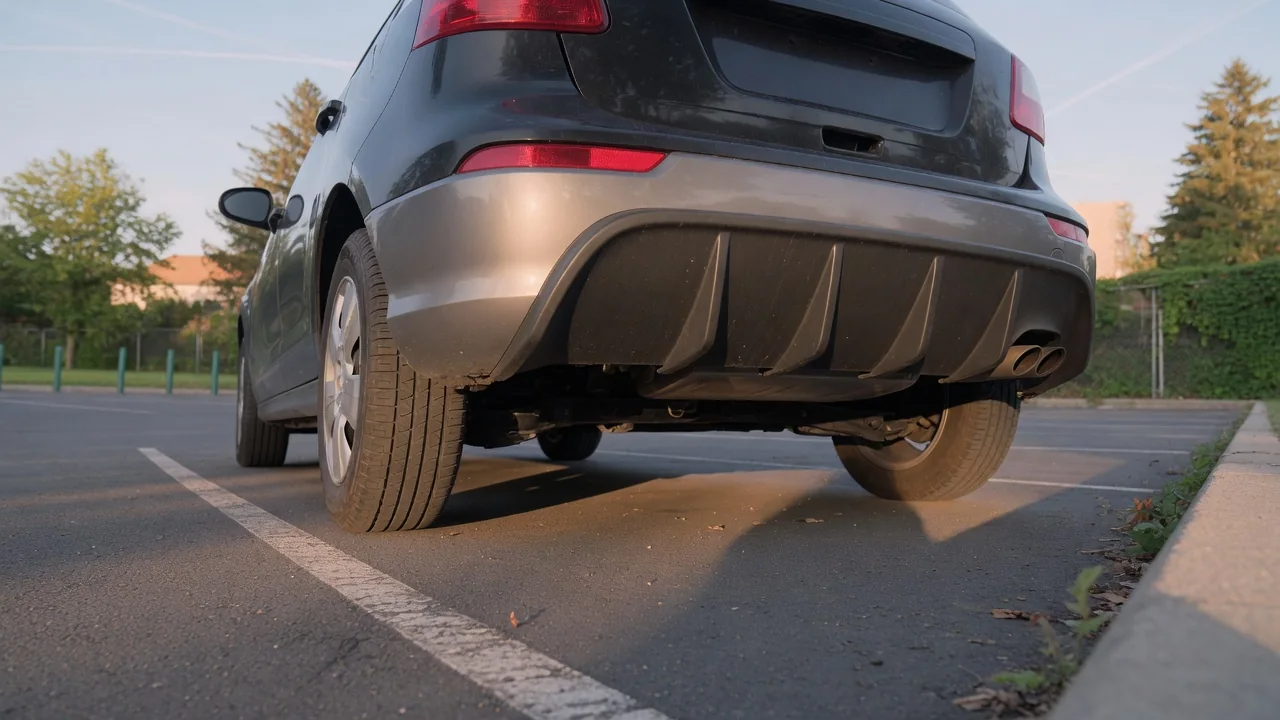
Anyone who has looked at the back of a sports car and noticed a finned panel under the bumper has probably wondered why do some cars have a rear diffuser. The short answer is that it manages air leaving the underbody, which can reduce lift and drag. The longer answer involves ride height, floor design, and the fact that many diffusers on the road are mostly styling.
Flow path
Air that passes under a moving car is squeezed between the floor and the road, so it travels faster than the air around the body and its pressure drops. A rear diffuser is the upward-sloping section at the back of the floor that gives this fast air a gradually expanding space. As the passage widens, the air slows and its pressure rises back toward that of the surrounding air, so it rejoins the wake smoothly instead of tumbling out from under the bumper in a turbulent mass.
That controlled expansion is what makes the low pressure farther forward under the floor possible, and low pressure beneath the car pulls the body toward the road. The vertical fins, often called strakes, keep the flow moving straight back and limit air spilling in from the sides near the rear tires. On a car with flat underbody panels the diffuser is the final stage of a continuous path. On a car with exposed exhaust piping, a spare wheel well, and suspension arms, the air arriving at the rear is already disturbed.
Ground clearance
The gap between the floor and the road largely determines how hard a diffuser works. A low car with a smooth floor forces underbody air to accelerate more, which deepens the pressure drop and gives the diffuser stronger flow to recover. This is why race cars and track-focused road cars run close to the pavement and often use stiff suspension to hold that height steady. As the gap grows, more air leaks in from the sides, the speed difference shrinks, and the effect weakens.
Road cars need clearance for speed bumps, driveways, snow, and a loaded trunk, so their diffusers are usually shallower and sit higher than competition designs. Crossovers and pickups ride higher still, and a diffuser-style panel on those vehicles has limited influence on underbody pressure, though it may tidy the wake a little. Looking at the car from the side shows the difference: a working diffuser begins well ahead of the bumper and rises gently, while a decorative one is often a short insert confined to the bumper itself.
Functional limits
A diffuser cannot generate much on its own. It depends on clean, fast air being delivered to it, so it performs best as part of a package that includes a front splitter or air dam, flat floor panels, and sometimes side skirts. If the slope is too steep, the air cannot follow the surface and separates, which destroys the pressure recovery and can add drag. Designers therefore keep the angle modest, and the shape is tuned to each body rather than copied between models.
Speed is the other limit. Aerodynamic forces rise sharply as speed increases, so the stabilizing effect that matters on a fast highway or a circuit is negligible in city traffic. On many mainstream cars the main goal of rear underbody shaping is reducing drag for fuel economy or electric range, not cornering grip. Aftermarket diffusers that bolt onto a stock bumper without any change to the floor ahead of them generally alter appearance far more than airflow, whatever the fin count suggests.
Everyday Use and Observations
Most drivers will never feel a diffuser working, but they can see evidence of how serious a given design is. Crouching behind the car reveals whether the panel continues forward under the floor or simply ends a few inches inside the bumper. Functional versions tend to have smooth surfaces, strakes aligned with the direction of travel, and exhaust outlets or a muffler integrated around the channel. Styling versions often feature textured black plastic, fake vents, and fins that do not connect to any underbody surface.
Daily use also takes a toll on this area. Because the diffuser sits low and at the very rear, it can scrape on steep driveway exits, catch parking curbs when reversing, and collect road grime, salt, and gravel. Cracked fins or a loose panel may produce a rattle or a flapping noise at speed. Electric cars deserve a mention here, since the absence of an exhaust system lets designers run a flatter floor, and the rear panel on those models is frequently shaped with range efficiency in mind.
Limits and Next Steps
It helps to keep expectations realistic. A diffuser does not replace good tires, sound suspension, or sensible speed, and its contribution on an ordinary road car at legal speeds is modest. Whether a specific panel is functional, partly functional, or cosmetic depends on the manufacturer, the trim level, and sometimes an optional aerodynamic package, so two versions of the same model can differ. The owner's documentation or the maker's published description of the car is the reliable way to confirm what a given vehicle actually has.
For anyone considering adding or replacing one, the sensible first step is checking that the part is designed for that exact body and bumper, since poor fit can interfere with exhaust heat clearance, parking sensors, tow hook access, or a trailer hitch. Damaged or loose underbody panels are worth having inspected, because a piece that detaches at speed is a hazard to following traffic. Owners who want measurable aerodynamic gains for track driving are best served by a shop that understands the whole underbody, not just the rear panel.