Why Are Some Car Door Handles Flush With the Body?
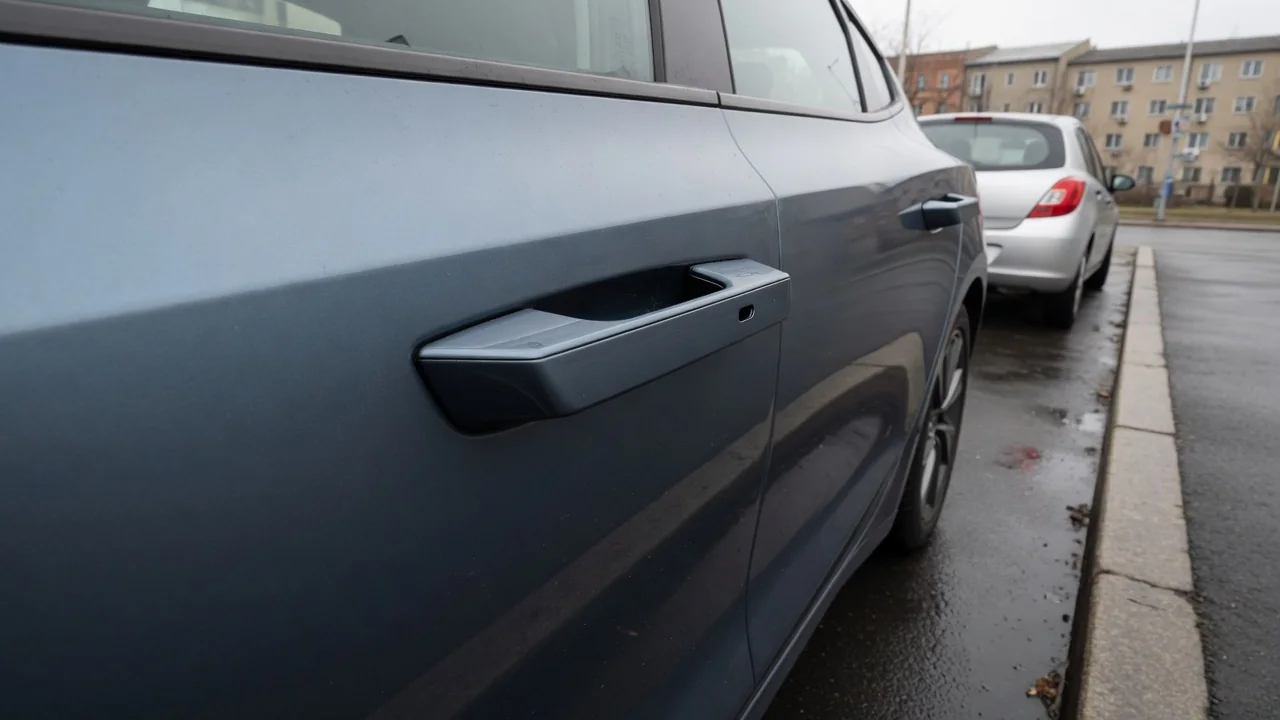
Anyone wondering why are some car door handles flush with the body is really asking about two things: how air moves along a vehicle's sides and how designers want that surface to look. Handles that sit level with the door skin remove a small source of drag and visual clutter, but they also change how the door is opened, especially in bad weather.
Handle shape
A conventional pull handle stands proud of the door and usually sits over a scooped recess for the fingers. Both features interrupt the air sliding along the body side, creating small pockets of turbulence that add drag and can contribute to wind noise near the side glass. A flush handle fills that opening with a panel that follows the door's curvature, so the airflow stays attached to a smoother surface. The gain from each handle is small, yet designers pursue many small gains together.
Styling matters just as much. A door without protruding hardware lets character lines and reflections run uninterrupted from the front fender to the rear quarter panel, which gives the car a cleaner, more sculpted look. Shapes vary considerably: some handles are slim horizontal bars, some are pivoting paddles, and others are hidden near the window pillar on rear doors. Looking along the side of a parked car at a low angle shows how closely the handle matches the surrounding panel and its gaps.
Operation
Flush handles fall into two broad families. Mechanical versions rely on the user: pressing one end pivots the other end outward, creating a lever to pull. Powered versions use a small electric actuator to present the handle when the car detects a key, a phone, or a touch, then retract it once the vehicle is locked or moving. Some designs skip the moving handle entirely and use a fixed pocket with an electronic release button hidden inside.
Retraction at speed is where the aerodynamic argument applies, because the handle only needs to be closed while air is flowing quickly past the door. On electric vehicles, where reduced drag helps stretch driving range at highway speeds, that reasoning is especially attractive to engineers. The exact behavior depends on the manufacturer, including whether handles present automatically on approach, how long they remain extended, and what backup release exists if the twelve-volt supply is weak. The owner's manual describes the specific arrangement.
Weather effects
Cold is the best-known weakness. Water from rain, a car wash, or melting snow can settle in the narrow gap around the handle and freeze, bonding the handle to the door skin. A protruding handle can simply be gripped and pulled, but a flush one must first pivot or motor outward, and a film of ice may prevent that. Powered mechanisms may sense the resistance and stop, leaving the handle partly presented or fully closed until the ice is cleared.
Makers address this in different ways, such as stronger actuators, ice-breaking routines, revised seals, or remote preconditioning that warms the cabin and doors before departure; which of these a given car has needs to be confirmed for that vehicle. Dirt matters too. Road salt, grit, and fine dust can collect in the handle pocket and make movement feel gritty or slow. On the positive side, a closed handle offers less area for slush to pack around and keeps the finger pocket cleaner while driving.
Everyday Use and Observations
Daily use takes some adjustment. First-time passengers often pause at the door, unsure where to press or pull, and the motion can be awkward with gloves, full hands, or long fingernails. Pivoting handles ask for a push and a pull in sequence, which is less intuitive than grabbing a loop. Powered handles feel effortless when they present on approach, though a brief delay between unlocking and the handle moving is noticeable to some drivers.
Several things are easy to observe without tools. A handle that sits slightly proud or recessed compared with its neighbors, moves more slowly than the others, or makes a different motor sound is worth noting. At highway speed, a flush design may contribute to a quieter cabin, although mirrors, door seals, and tires usually influence wind and road noise far more. Fuel economy or range differences from handles alone are too small for a driver to detect in ordinary driving.
Limits and Next Steps
Flush handles are not a free improvement. They add moving parts, seals, sensors, and wiring where a simple lever once did the job, and the drag reduction they deliver is modest when weighed against overall body shape, underbody panels, and wheel design. Access after a collision or a loss of electrical power has also drawn attention to powered designs, which is why knowing the location of the manual interior releases and any exterior emergency method for a particular vehicle matters.
When a handle stops presenting or retracting, the cause could be ice, debris, a weak battery, a worn actuator, or a software or sensor issue, so the symptom alone does not identify a failed part. Forcing or prying risks damaging paint and the mechanism. A sensible next step is checking the manual for the recommended release and winter guidance, then having a qualified technician inspect a handle that remains inconsistent. Shoppers comparing vehicles can simply try each handle in person, ideally with gloves on.