Car door lock repair in Auckland
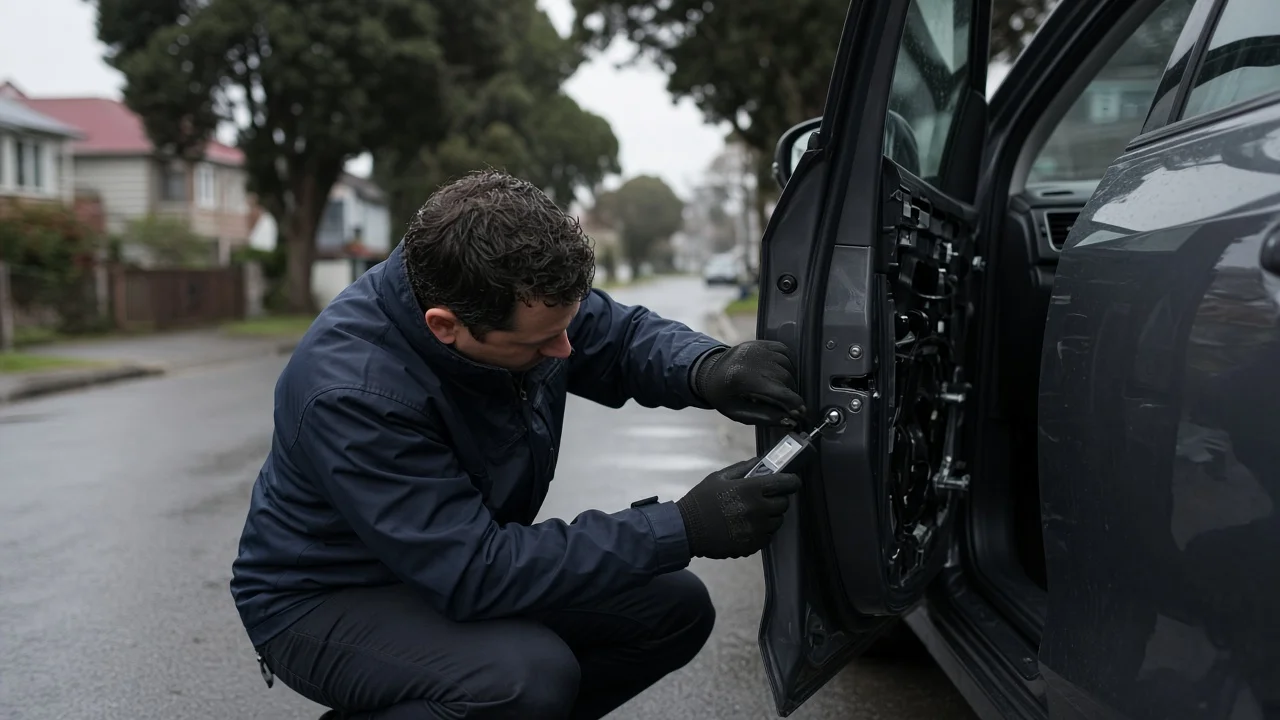
The short answer
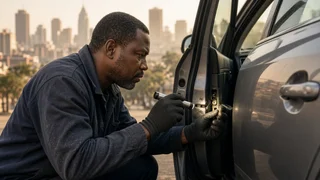
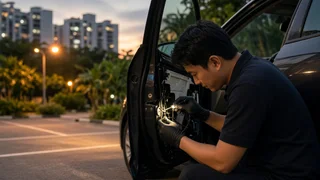
The right repairer for a faulty car door lock in Auckland depends on what has actually failed. Mechanical faults, such as a key that will not turn, a worn lock cylinder, or a broken latch or linkage, are usually handled by an automotive locksmith. Electrical faults, such as central locking that ignores the remote or a single door that no longer responds, usually fall to an auto electrician, a general mechanic with electrical diagnostic equipment, or a franchised dealer. Some businesses cover both, so confirm what a repairer handles before booking.
Three situations change this advice. If the car has been broken into or the lock shows signs of tampering, record the damage and contact your insurer before arranging repairs, because they may have requirements about who does the work. If a door will not latch shut, or could open while the car is moving, do not drive the car until the door is secured. If the repair would replace a lock cylinder, ask whether the new cylinder can be matched to your existing key, or whether you would need to carry a separate key.
What could be causing the problem
A door lock assembly has several parts. The lock cylinder is the keyed barrel on the outside of the door. The latch is the mechanism that holds the door closed. Rods or cables, called the linkage, connect the handles and cylinder to the latch. On cars with central locking, an actuator, a small electric motor usually built into or attached to the latch, moves the lock when it receives a signal. Any of these can fail, and the same symptom can come from more than one of them. Until checks narrow it down, treat each cause below as a possibility, not a diagnosis.
Symptom | Plausible causes | First check | Who usually handles it; Key will not turn or feels stiff | Worn or dirty cylinder, worn key, frozen or seized mechanism, tampering | Try a spare key; look for scratches or damage around the keyhole | Automotive locksmith; Key turns but the door does not lock or unlock | Disconnected or broken linkage, failed latch | Check whether the interior lock control still works that door | Locksmith or mechanic; Remote locks no doors | Weak key fob battery, fob fault, receiver or central locking fault, blown fuse | Try the spare fob; check the fuse for central locking using the owner's manual | Auto electrician or dealer; Remote and switch lock every door but one | Failed actuator in that door, damaged wiring where it passes into the door | Listen at that door for a click or buzz when locking | Auto electrician or mechanic; Door will not open from the outside or the inside | Failed latch, detached linkage, actuator stuck in locked position | On rear doors, check that the child lock is not engaged | Mechanic or locksmith; Door will not stay shut | Failed or misaligned latch, worn striker | Do not drive; check whether the striker on the door frame is loose | Mechanic or locksmith
Checks worth doing before you book
These checks separate a mechanical fault from an electrical one. They need no tools and do not involve taking anything apart.
Find out whether one door or every door is affected. A single door points towards that door's cylinder, latch, linkage or actuator. Every door points towards the remote, a fuse, or the central locking system itself. Compare the key, the remote and the interior switch. If the key works but the remote does not, the mechanical parts are probably fine. If none of them work on one door, the latch or linkage is more likely. Try the spare key and the spare remote. If the spare works, the original key may be worn or the fob battery may be weak. Listen at the affected door while someone presses lock and unlock. A click or buzz with no movement can mean the actuator receives power but cannot move the latch. Silence can mean an actuator or wiring fault. Check the rear child locks before assuming a rear door has failed. Note whether the problem comes and goes, for example only in cold or wet weather, or only after the door has been slammed. Intermittent faults are harder to find, so this detail helps a repairer.
Some workshops will read fault codes from the car's body control module, the computer that manages central locking and related functions. A stored code shows which circuit or function the system has flagged. It does not prove that a particular part is faulty. A code for a door lock circuit, for example, could come from the actuator, a broken wire in the flexible section between the door and the body, a poor connection, or the module. Confirm that the code relates to the locking system, and expect the repairer to test the part before replacing it.
When to stop and get help
Stop driving and arrange repair if a door will not latch, opens on its own, or only stays shut when slammed. Stop forcing a key that will not turn, because forcing it can snap the key inside the cylinder and make the repair more involved. Leave the door trim in place unless you know your car's layout. Many doors contain wiring for side airbags, window motors and mirrors, and removing the trim panel incorrectly can break clips or disturb those systems.
What to ask a repairer
Once you know whether the fault looks mechanical or electrical, these questions help you compare Auckland repairers.
Do you handle this type of fault? Ask whether they work on mechanical locks, electronic central locking, or both. Can you come to the car? Mobile service matters if the car cannot be locked securely or a door will not open. Will you diagnose before quoting for parts? Ask whether a diagnostic fee applies and whether it goes towards the repair. Which part will you use? Ask whether it is genuine, which means from the vehicle manufacturer, or aftermarket, and what warranty covers the part and the labour. Will my existing key still work? If a cylinder is replaced, ask whether it can be recoded to match your key. Can you confirm the part fits my exact car? Door lock parts can differ by model year, trim, body style and market. Many cars in New Zealand are used imports, and their parts may not match the locally sold version of the same model. Have your registration and vehicle identification number (VIN) ready. What does the quote include? Ask for parts, labour and any call-out fee to be listed separately.
Information this guide cannot provide
No verified information was available on repair prices, turnaround times, parts availability, or particular Auckland businesses, so this guide does not name repairers or estimate costs. Get quotes directly from repairers, and check recent independent reviews and warranty terms before choosing one. Part compatibility can only be confirmed against your car's identification details, not from the make and model alone.